

Republican members of the United States House of Representatives have proposed a Bill to “counteract” Chinese mining operations in Nigeria as part of the measures to check targeted killings in the country. Scores of Nigerians have been killed and many abducted by armed men in separate attacks in different parts of Nigeria in recent days.
The Congress identified mining operations as a primary revenue source for violent extremism, adding that the widespread practice of paying “protection money’” to armed groups to ensure operational security.
The House Foreign Affairs Africa Subcommittee Chairman, Chris Smith; his Appropriations Committee counterpart, Tom Cole; and West Virginia Republican Riley Moore on Tuesday co-sponsored the Bill asking the Trump administration to counter “the hostile foreign exploitation” of illegal Chinese mining operations in Nigeria. The bill is expected to move through the House quickly and points to actions already taken by President Donald Trump to combat the persecution in Nigeria, according to a statement yesterday.
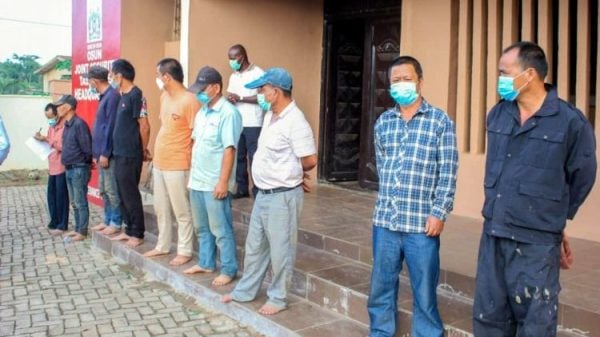
The Bill reads: “The Secretary of State should work with the Government of Nigeria to counteract the hostile foreign exploitation of Chinese illegal mining operations and their destabilising practice of paying protection money to Fulani militias.” The legislators also proposed that individuals and networks, domestic or foreign, that provide support to the Fulani-ethnic militias should be investigated and held accountable.
The United States has proposed targeted measures, including visa bans and asset freezes, against individuals and groups linked to the alleged involvement in religious freedom violations and extremism in Nigeria. Late last year, US President Donald Trump re-designated Nigeria as a “Country of Particular Concern” (CPC) for alleged severe violations of religious freedom.
The designation allows the US government to take policy actions, including sanctions, against countries accused of tolerating or engaging in such violations. But the Federal Government has rejected the characterisation of the crisis as a religious war, insisting that the country’s security challenges are complex and driven by multiple factors, including banditry, terrorism, and competition over land and resources.