
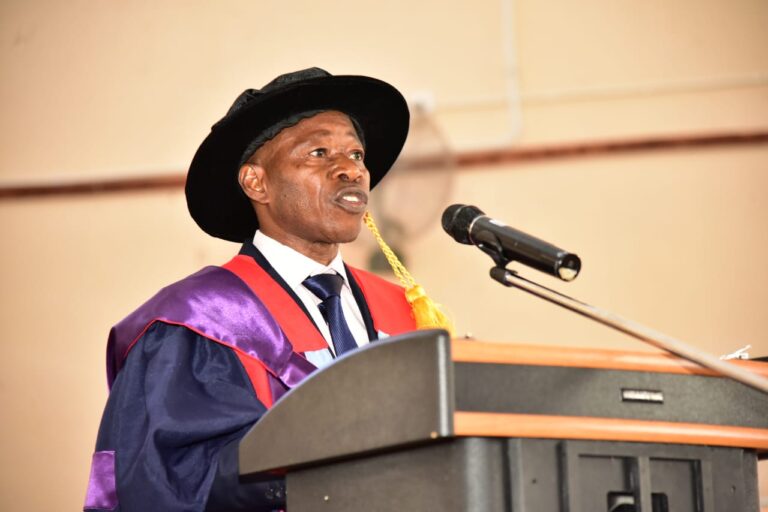


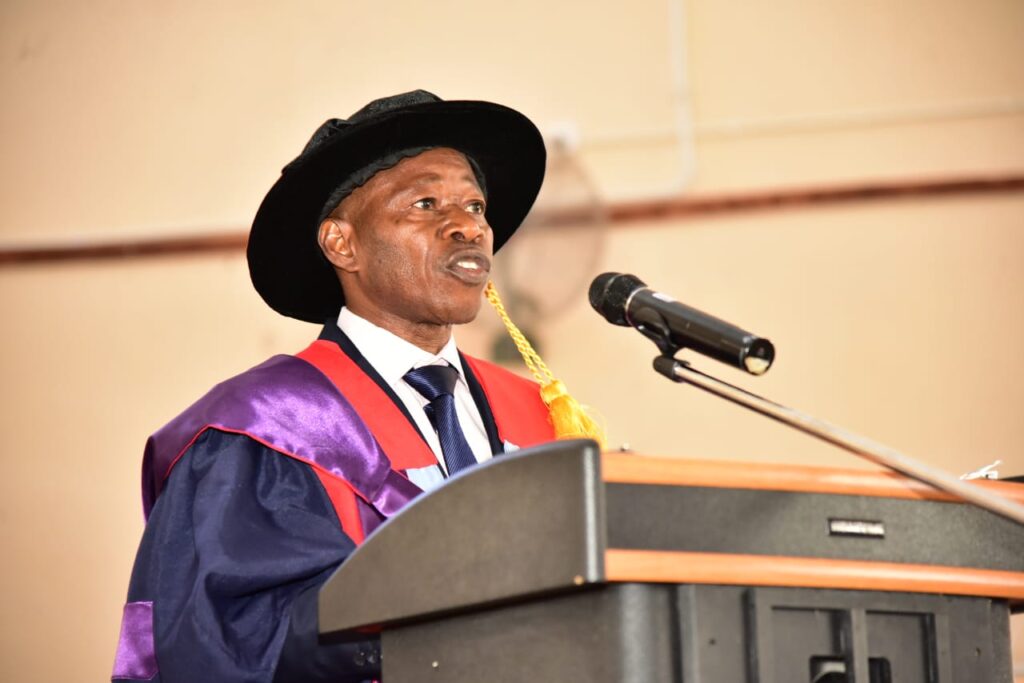
A Professor of Communication Physics at the Federal University of Technology, Akure (FUTA), Joseph Ojo, has called for the intensification of scientific research, which will develop technological solutions that can reduce the impact of rainfall and other adverse weather conditions on communication systems.
He said telecommunication firms in the country should collaborate with universities and associated research institutions to develop home grown strategies and products in the areas of adaptive power control, diversity techniques, improved antenna design, and advanced signal processing methods that help compensate for signal loss during adverse weather conditions and reduce signal interruptions, slower internet speeds, or temporary loss of communication services to the barest minimum.
Ojo made the call while delivering the 194th Inaugural Lecture of the institution with the title, “Communication in Rainy Conditions: A Coat of Many Colours.”
Professor Ojo further highlighted that rain-induced signal loss—commonly known as rain attenuation—poses a serious challenge to satellite communication systems that operate at higher frequency bands.
He explained that frequencies in the microwave and millimetre wave ranges are particularly susceptible to signal degradation when rain droplets absorb and scatter radio waves.
He noted that such disruptions can affect a wide range of services, including television broadcasting, mobile telecommunications, internet connectivity, and satellite navigation systems. In severe cases, users may experience signal interruptions, slower internet speeds, or temporary loss of communication services.
To improve the fidelity of communication and radio signals even in adverse weather conditions, the lecturer suggested site and path diversity mitigation measures, designing and fabricating antennas for improved quality of service and energy sustainability.
He also said implementation of smart grids for transceiver base stations should be adopted to enhance reliable signal availability in rainy and adverse weather conditions.
According to him, “communication in rainy conditions presents significant challenges. Effective strategies are essential to ensure reliable connectivity and safety, especially by accounting for high rainfall rates and the provision of robust infrastructure or adaptive techniques to maintain performance and prevent signal outages.”
He therefore called on Mobile Telecommunication operators in Nigeria to collaborate with universities to fund research activities in the area of radio communication.
Also, he called on the government to develop policies that will make the communication industries support research activities in the ivory towers in Nigeria.
Professor Ojo, who examined the complex scientific relationship between atmospheric conditions and modern communication systems, particularly in regions characterised by heavy rainfall such as Nigeria, said that rainfall plays a significant role in the performance and reliability of communication systems that rely on electromagnetic waves.
According to him, communication signals—especially those used in satellite transmission, microwave communication, and broadcasting—often experience disruptions during periods of heavy rainfall due to the interaction between radio waves and raindrops in the atmosphere.
He described rainfall as more than just a weather phenomenon, noting that it creates complex physical interactions that influence how signals travel through the atmosphere. These interactions include attenuation, scattering, absorption, and depolarisation of electromagnetic waves.
Each of these processes affects signal strength and clarity, often resulting in reduced communication quality during storms or heavy downpours.
Explaining the metaphor behind the title of his lecture, the professor described communication in rainy conditions as a “coat of many colours,” representing the multiple scientific disciplines and technological factors involved in understanding and managing the phenomenon. He noted that atmospheric science, physics, engineering, and telecommunications all play important roles in addressing the challenges posed by rainfall interference.
Professor Ojo, currently the Director of FUTA’s Centre for Space Research and Applications (CESRA), said, “In tropical regions like Nigeria, rainfall intensity is often high, and this significantly affects radio and satellite communication systems. Understanding the physics of rain interaction with electromagnetic signals is essential for designing communication networks that can function efficiently under such environmental conditions.”
According to him, understanding rainfall patterns and atmospheric dynamics is therefore essential for improving the reliability of communication infrastructure in tropical climates.
He stressed the importance of developing predictive models that can estimate the level of signal attenuation caused by rain and help engineers design more resilient communication networks.
He explained that these innovations are particularly important for countries in equatorial and tropical regions, where rainfall is frequent and often intense. Without proper consideration of atmospheric effects, communication networks in such regions may suffer from frequent outages or reduced performance.
Beyond the technical aspects of communication physics, Professor Ojo also highlighted the broader societal implications of reliable communication systems. He noted that telecommunications play a vital role in economic development, education, healthcare, emergency response, and national security. Ensuring that communication networks remain stable during extreme weather conditions is therefore critical to maintaining social and economic activities.
He called for increased collaboration among scientists, engineers, policymakers, and industry stakeholders to address the challenges posed by atmospheric conditions. According to him, strengthening research in communication physics and atmospheric science will help develop innovative technologies capable of sustaining reliable communication even under harsh environmental conditions.
The lecture further underscored the importance of data collection and long-term atmospheric observation. Professor Ojo noted that accurate rainfall measurements and climatic data are essential for building reliable models that predict signal behaviour during storms. These models, he explained, enable engineers to design communication systems that can withstand extreme weather conditions. Through his exploration of the physics behind rain-affected communication, Professor Ojo provided valuable insights into how science and engineering can work together to overcome natural challenges and build more reliable communication networks for the future.
The Vice-Chancellor, Professor Adenike Oladiji, who chaired the event, praised Professor Ojo for his contributions to research and academic scholarship. She described him as a proud alumnus of FUTA who is contributing significantly to knowledge expansion in his field of study as well as collaborating effectively with other alumni to make FUTA globally relevant.








