
CHUKWU DAVID writes on how the Senate screened and confirmed former Chief of Defence Staff, General Christopher Musa, as Minister of Defence
I mmediately the former Minister of Defence, Badaru Abubakar, resigned from his position, citing health grounds, President Bola Tinubu did not waste time in nominating the immediate past Chief of Defence Staff (CDS), General Christopher Misa, as his replacement.
President Tinubu also forwarded General Musa’s name to the Senate for screening and confirmation in accordance with the requirement of the law. In fact, it was not up to 48 hours after Badaru resigned that the President sent Musa’s name to the Senate.
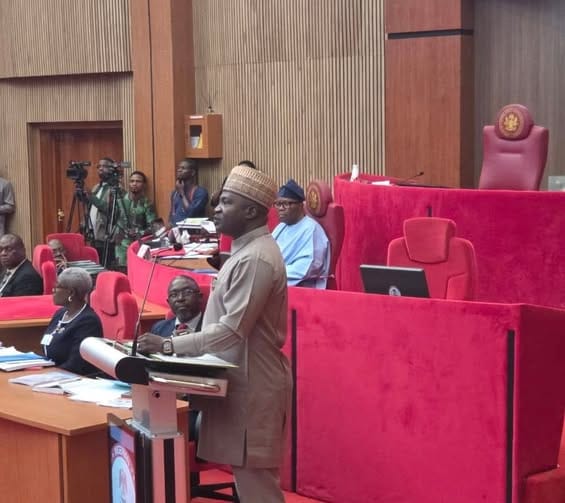
Consequently, the Senate, on Wednesday last week, engaged the then nominee of Mr. President in a very comprehensive and rigorous screening that lasted for more than three hours, with senators taking turn to ask him questions pertaining to worsening insecurity across the country and his blueprint for ending the menace.
During the screening session, the lawmakers demanded clear assurances that the former Chief of Defence Staff can effectively tackle rising insecurity, rescue abducted schoolchildren, and address critical failings within the military hierarchy. Addressing the Senate Committee of the Whole, the President of the Senate, Godswill Akpabio, who described Musa’s nomination as the most widely accepted ministerial appointment in recent times, cited his operational record, humility and responsiveness.
However, there was uproar In Senate, when Senator Sani Musa (Niger East) proposed that General Musa should be allowed to take a bow and go. The senator argued that the nominee was scrutinised in 2023 and has proven his capability to fight insecurity when he served as the Chief of Defence Staff. Some senators initially backed the motion, chanting: “Let him take a bow and go!” but others shouted back in protest, insisting that the nominee must answer hard questions.
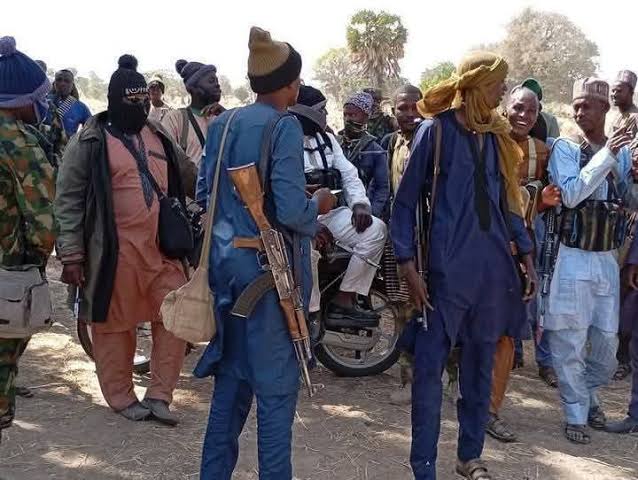
Those who rejected the routine “bow-and-go” cited the case of over 200 schoolchildren still in terrorist’s captivity and a senior military officer, Brigadier General Uba, missing after being abducted by terrorists. Akpabio, who rejected the proposal, insisted that the nominee be subjected to intense scrutiny due to the seriousness of the security challenge facing Nigeria.
His words: “The man standing in front of us could be regarded as the current solution to the security in the country and we’re not here on our own. We’re here to represent our constituents and our constituents will like to hear from him whether his appointment will enable them to sleep well, whether their children will be safe in school. “So, we’re not asking him questions because we don’t like him, we’re asking him question our constituents would have loved to ask him at a time like this.
So, if we come here and we do politics of bow and go, this is not a period we should say bow and go. “Even Donald Trump is on our neck, we have not yet ask him what his response would be to Donald Trump, the President of America, he’s just not anybody, he was the Chief of Defence Staff and now a Minister of Defence of a country and you stand up to say he should take a bow and go with so many questions on the mouth of Nigerians.
With over 200 Nigerian children in the bush, kidnapped and being tortured. “His appointment is ranking all over Nigeria with happiness because Nigerians believe he has something to offer. Give the man an opportunity to give Nigerians hope. When you ask him to take a bow and go, where are the children? Where is Brigadier General Uba? Nigerians want to hear what he will do.
We cannot treat this moment like a routine ceremony.” Responding to some of the questions, General Musa warned that the threats confronting the country are been perpetrated by forces that could only be defeated through unity, collaboration and a whole-of-society approach. He stressed that the solution to Nigeria’s security challenges are no longer purely military in nature and demanded equal commitment from state governments, security agencies and citizens.
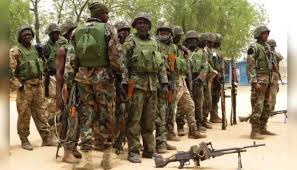
He, however, assured Nigerians that more military personnel would be drafted to areas currently being terrorized by bandits by ensuring the removal of soldiers from check points. His words: “It is the role of the police to man checkpoints. We will draft soldiers to areas under the siege of terrorists.
The enemies we are dealing with are evil forces, who do not mean well for this country. If we do not work together, we will continue giving them the space to perpetrate their acts. Nigeria can win this war, but we must be deliberate, united and determined.” General Musa cautioned that instability across the Sahel, particularly Mali, Burkina Faso and Niger Republic poses direct risk to Nigeria if her borders are not secured and if regional coordination fails.
“Whatever happens in the Sahel eventually finds its way to Nigeria because terrorists believe this country is the ultimate prize,” he said. Senators, who pressed beyond broad strategy, demanded immediate answers on recent operational breaches, including the attack on a Kebbi school, where soldiers reportedly withdrew shortly before kidnappers stormed the premises as well as the abduction of Brigadier General Uba.
Responding, General Musa described both incidents of students’ kidnap and General Uba’s murder as “unacceptable and painful,” promising a thorough investigation and accountability. “I wonder how a brigade commander was alone without his troops.
There are questions that must be answered. No act of indolence or cowardice will be tolerated. Anyone found culpable, whether in the Uba incident or the school attack, will face the law,” he said.
He added that he will immediately review all ongoing operations, assess troops conduct and command structures, and return to the Senate with a detailed list of needs to enhance operational capacity. On concerns over inadequate equipment, obsolete weapons and adoption of modern technology, he said: “We must invest in surveillance systems, communication, intelligence, and advanced weapons. You cannot fight 21stcentury threats with outdated tools.”
General Musa assured the Senate that he will run a Defence Ministry driven by accountability, inter-agency cooperation, regional diplomacy, and community involvement, saying: “The armed forces cannot solve all the problems; security is localized, communities must be empowered as first responders. Governors must work together.
Service chiefs, the CDS, and the ministry must operate seamlessly.” He also promised that any lapses in command, intelligence failures, or deliberate sabotage would be uncovered and punished. “Nigerians deserve to sleep with their two eyes closed. From day one, we will review everything. We will not allow terrorists the space to operate,” he said.
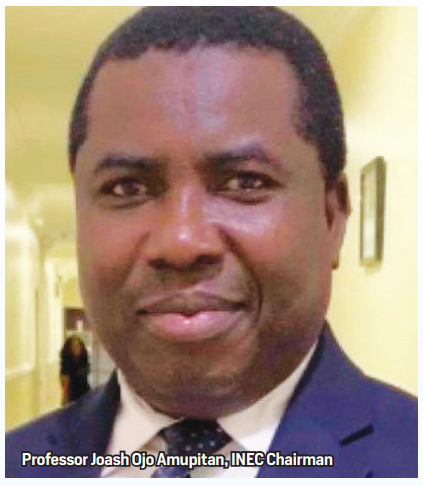
Former Senate Leader, Ali Ndume, in his contribution, urged General Musa, to champion the placement of the Nigerian Army on First Line Charge to guarantee timely and uninterrupted release of funds. According to him, placing the military under statutory transfers, like the Independent National Electoral Commission (INEC), National Assembly, and Niger Delta Development Commission (NDDC), will eliminate bureaucratic delays that often frustrate rapid procurement of arms, ammunition and other operational needs.
Former President of the Senate, Ahmad Lawan, who backed Ndume’s proposal, said the armed forces cannot continue to operate “with bare hands against fire.”
He called for massive and sustained funding in the 2026 budget. Satisfied with the responses provided by General Musa after over three hours of questioning, Akpabio declared that former CDS did very well throughout the screening. He, therefore, put his confirmation to voice vote and it was unanimously supported.