

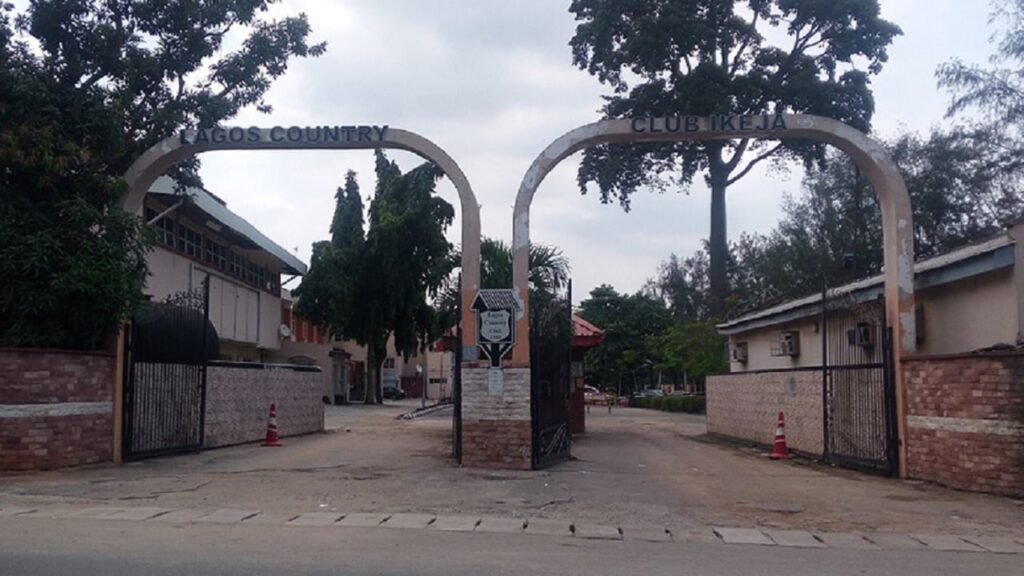
The Lagos Country Club has called on the private sector to deepen investments in local manufacturing to tackle inflation, challenge unfavourable policies, and urged the government to fix structural bottlenecks such as high energy tariffs and chronic power shortages.
In lectures delivered at the forum, the LCC asked the private sector to emulate Dangote Industries’ investment example and help fight inflation. This formed the basis of the conversation at the LCC Business Forum 2.0 held in Lagos on Friday, with the theme, ‘Inflation, Cost of Living and Consumer Purchasing Power: Adaptive Strategies for Nigerians.’
Chairman of the Alliance for Economic Research and Ethics, Dele Oye, said the private sector’s resilience had driven Nigeria’s economic stability in recent months and not government policies.
He argued that despite inflationary pressures, foreign exchange instability, and high borrowing costs, leading industrial groups continued to inject capital into the economy.
Citing Dangote Industries as an example, he said, “Dangote took $20bn and created value. Today, the reason for our stability is not the exchange rate but the role of the private sector. Despite these challenges, some of us took the risk and still put money in the economy.
Oye, who served as the former chairman of the Organised Private Sector of Nigeria, maintained that the Federal Government was applying policy prescriptions unsuitable for its economic structure. He said, “We are using something prescribed for the white man’s land to run an African sector. That is why the result does not respond.”
He insisted that businesses must actively challenge bottlenecks such as costly electricity, poor infrastructure, and hostile policies, warning that silence would worsen economic pressures. “If you don’t talk, one day you won’t be able to pay your membership,” he said.
He criticised the Central Bank of Nigeria’s interest-rate tightening, arguing that it punished the productive sector rather than the public sector responsible for expansionary spending. “What business can you do that you pay 33 per cent interest and declare profit? It is not possible,” he stressed.
Oye urged the private sector to emulate Dangote and other industrial pioneers by investing strategically despite policy resistance. “Do not give up. Find your own value within the system and take advantage just like Dangote,” he said.
On his part, the Chief Economist and Partner at SPM Professionals, Dr Paul Alaje, said Nigeria must prioritise supply-side solutions to curb inflation sustainably.
He said, “People think that once we move monetary policy, inflation will come down. But Nigeria is not a credit-driven economy. The approach should be supply-side.”
He maintained that power remained the most decisive factor for reviving industry. “Nigeria can do what Germany, America, and China did by getting power right. No matter what we do, if energy is not there, we cannot address inflation in the long term,” he said.
Alaje also listed insecurity, distortions in food prices, and structural inefficiencies as major triggers of inflation, adding that “most of the inflation we see in Nigeria today is man-made.”
He commended recent exchange-rate stabilisation but stressed that more work was needed to reduce housing costs, strengthen production, and stabilise supply chains.
Meanwhile, Commissioner for Wealth Creation and Employment, Akinyemi Ajigbotafe, said the Lagos State Government had deployed various adaptive strategies to counter inflation and support livelihoods.
He said, “Our interventions, from the Graduate Internship Programme to the Leather Hub in Mushin and our ICT training programmes, directly boost skills, earnings and consumer purchasing power.”
Ajigbotafe added that billions disbursed through the Lagos State Employment Trust Fund had helped small businesses scale despite rising costs. “These are not handouts; they are investments in adaptive enterprises,” he said.
He stressed that while the government created the enabling environment, “private sector innovation through supply chain efficiencies, digital marketplaces and ethical pricing must serve the meal.”
In his remarks, President of Lagos Country Club, Seyi Adewunmi, stated that the forum had become one of the Club’s key platforms for constructive engagement on national issues. He noted that the present economic climate required the private sector to be more assertive and solution-driven.
Adewunmi noted, “This conversation is not academic; it is unmistakably real. It is felt every day. Behind every inflation index is a family striving to stretch its income, a small business fighting for survival, and a nation yearning for stability.”
He explained that the Club convened the forum to help members strengthen financial resilience, sustain business viability, and improve competitiveness.
“We bring experts so our people can learn and apply insights to their day-to-day activities. We are non-state actors, and we support the government in driving national development,” he added.
The Lagos Country Club said Nigeria’s economic future required a more outspoken and investment-driven private sector. It emphasised that companies must not only build local capacity but also confront policies that undermine industry and worsen inflation.
The club urged businesses to adopt the Dangote model of industrial investment, backward integration, and resilience in the face of systemic challenges such as high energy costs and inadequate power supply.
The event drew senior professionals, economists, policymakers, and business leaders who examined the root causes of inflation and proposed pathways for stabilising consumer purchasing power.
Adewunmi concluded the LCC would continue to convene platforms that promote national development, accountability, and practical economic guidance for Nigerians.