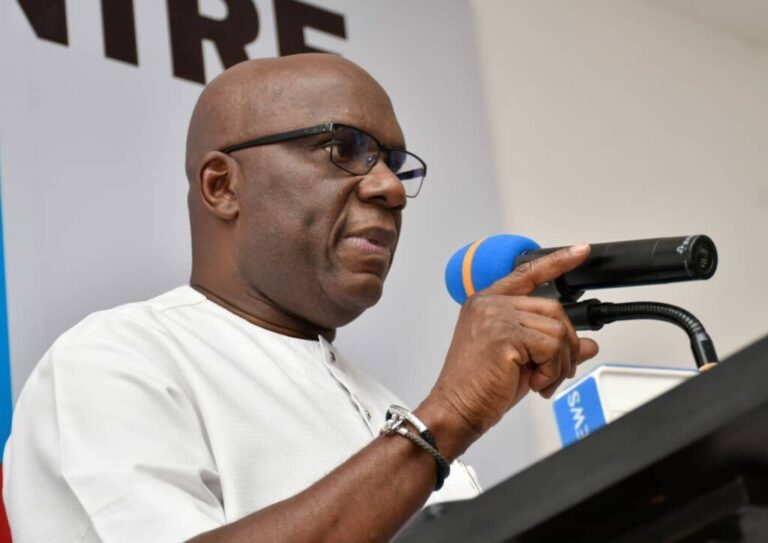




Real estate investor Tayo Oyerokun has said Nigeria’s annual diaspora remittances, estimated at about $21bn, could significantly bridge the country’s housing deficit if properly harnessed through structured investment platforms.
Speaking during the celebration of the 10th-year anniversary of the company in Lagos on Saturday, the property developer and housing advocate stressed that Nigeria must begin to strategically position itself to attract diaspora funds into productive sectors, particularly housing development.
He said, “The Nigeria project has to be sold properly by everyone. Over the last 10 years, there have been enormous opportunities in Nigeria. It may be difficult for many people to see them, but opportunities truly abound, and Nigerians must begin to take advantage of them.”
Oyerokun noted that diaspora remittances currently account for roughly six per cent of Nigeria’s Gross Domestic Product, describing the inflow as a powerful but underutilised economic resource.
According to him, channelling even a fraction of the funds into housing could transform the sector, stressing that much of the remittance inflow currently sits idle within the banking system instead of being deployed for productive investment.
He said, “Yearly remittances coming into Nigeria are about $21 bn. Just imagine a country growing by six per cent annually; that is how huge the contribution of Nigerians in the diaspora is.
“If we are able to capture just 10 to 15 per cent of that money, Nigerians in the diaspora alone can develop over 300,000 housing units every year.
“Some of these monies are simply sitting in banks. The banks use them, and sometimes the opportunities are lost. But if the government creates structured savings schemes or investment accounts in partnership with the Central Bank and commercial banks, the story will change.”
The expert proposed incentive-driven investment platforms capable of offering competitive returns to diaspora investors.
“If the Central Bank of Nigeria offers around eight per cent, imagine structured housing investments delivering 12 to 15 per cent returns. The government will no longer struggle to source funds for developers because the money will already be available to drive real growth,” he explained.
Oyerokun argued that credible investment channels would not only finance housing but also stimulate employment and economic expansion. He identified weak collaboration between government institutions, private developers and diaspora Nigerians as a major barrier to unlocking the potential of remittance inflows.
“This will create jobs and opportunities across the value chain. Once transparent platforms exist, remittances will even double because people will have confidence in where their money is going.
“The connection between government, the private sector and the diaspora has really not been strong. Many Nigerians abroad want to invest, but they do not fully trust government systems. That is why we need a three-way partnership involving credible private organisations.”
Oyerokun urged governments at all levels to work closely with industry groups such as the Real Estate Developers Association of Nigeria to drive sustainable housing development.
“I really want to appeal to state governments to work with developers who genuinely care. Why borrow $2bn when diaspora remittances can bring in $21bn yearly?” he asked.
He added that state governments hold the key to solving Nigeria’s housing shortage because land administration falls under their jurisdiction.
“The states own the land. States like Oyo, Ogun, Delta and Enugu can comfortably develop about 4,000 houses yearly if they begin to think outside the box and partner with the private sector,” he said.
He also commended ongoing collaborations between developers and the Federal Capital Territory administration, noting that similar partnerships should be replicated nationwide.
At the event, Oyerokun also announced the launch of Tayo Oyerokun Consulting, a new firm designed to provide integrated real estate advisory, investment solutions, and housing development services.
The organisation also unveiled a new book focused on housing finance and diaspora investment strategies, aimed at promoting innovative funding models capable of addressing Nigeria’s growing housing demand.