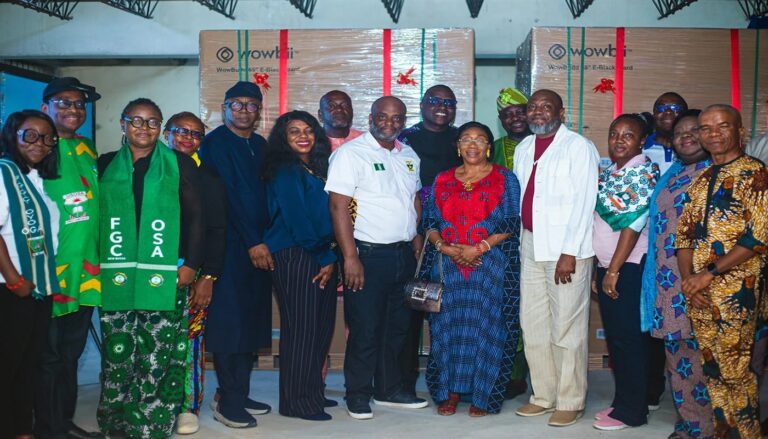




The wife of the Alaafin of Oyo, Ayaba Abiwunmi Owoade, has described Akesan Market in Oyo Town as a historic market of heroic pedigree with a connection and relevance to all markets across Yorubaland.
Speaking while receiving market men and women from the ancient Akesan Market, led by the Iyaloja-General, Alhaja Peju Bakare, who paid a solidarity visit to the palace, Ayaba Owoade emphasized the market institution’s integral role in Yoruba community and culture.
She noted that markets have existed since time immemorial, even before the advent of money, when trading was conducted through barter along farm paths or in front of houses.
“This was because there were no designated spaces for marketing activities aside from pathways and other thoroughfares in settlements. Since that period, markets have been the mainstay of Yoruba communities, as most people were farmers who needed to exchange surplus produce for other commodities and services,” she said.
The Ayaba further highlighted that markets were not only economic hubs but also centers for information dissemination, town meetings, religious and political gatherings, and social engagements. She pointed out that markets continue to play a vital role in local economic development, social interaction, and access to fresh, local goods. They provide low-cost, low-risk retail spaces, acting as incubators for small-scale entrepreneurs, startups, and local artisans.
“They generate direct employment and help retain money within the local economy. Historically, our towns and cities grew around markets, which served as the original civic centers. Markets remain reassuring spaces, giving people a sense of responsibility for their own welfare as they innovate and experiment with ways to live well,” Ayaba Owoade said.
Highlighting the historical link between markets and royal authority, she explained that during the pre-colonial and colonial eras, markets were often sited very close to palaces, the seat of power. Every palace in Yoruba towns traditionally had a nearby market called Oja Oba, meaning the King’s Market, reflecting the belief that the king oversaw both the economic activities of his people and the market itself.
“Among all Yoruba markets, Akesan Market stands out. Known as Akesan Baale Oja, the King of all markets in Yorubaland it was established just a few meters away from the Alaafin’s palace,” she recalled.
Responding, the Iyaloja-General, Chief Mrs. Bakare, described the Alaafin as a “proactive, visionary, resilient, passionate, and peace-loving monarch.”
She pledged the continued support and loyalty of the market women, while praying for the Alaafin’s long life, good health, divine guidance, and the continued development of Oyo Kingdom, Oyo State, and Nigeria as a whole.