
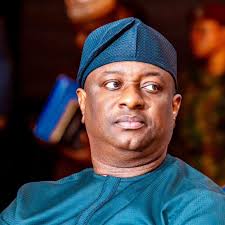
…says govt addressing factors driving fares surge
Minister of Aviation and Aerospace Development, Festus Keyamo, has said the Federal Government has no control on the escalating airfares being charged by airline operators in the country.
Keyamo, made this remark when asked to react to the astronomous airfares being charged in the country necessitating his recent summon by the National Assembly.
The Minister emphasized that the nation’s aviation industry had been fully deregulated for several decades.
Keyamo, who briefed newsmen after the Council meeting chaired by President Bola Tinubu, however disclosed that the Federal Government was working to address issues identified by the operators as factors facilitating high airfares in the country.
He noted that although the Senate had invited him to discuss the recent surge in airfares, he was unable to appear due to his commitments at the Council meeting.
The Minister disclosed that he instructed the Nigerian Civil Aviation Authority (NCAA) and domestic airlines to appear before the Senate Committee in his absence.
He stressed that while the government could not dictate prices in a free market, it remained actively engaged with airlines to address the underlying factors driving high fares.
“Government has absolutely no powers to fix prices for private enterprises. That is what deregulation means. But that does not mean we are leaving the airlines without engagement,” he said.
The minister emphasised that operators have repeatedly raised concerns about access to aircraft, unfavourable lease terms, the absence of local maintenance facilities, and the pressure to source large amounts of foreign exchange to conduct mandatory C-checks abroad factors that all feed into ticket pricing.
Keyamo disclosed that a significant milestone was achieved under the Tinubu administration when, for the first time in nearly twenty years, a major international aircraft lessor returned to the Nigerian market and granted a dry-lease arrangement to a domestic airline at a cost less than one-third of earlier industry rates.
He attributed the development to reforms introduced by the Federal Government, including new practice directions on the Cape Town Convention, which protect the rights of international lessors and boost confidence in Nigeria’s aviation environment.
“With cheaper dry leases coming in, more airlines will have access to aircraft. More aircraft automatically means stronger competition. And competition is what brings prices down in any free economy,” he said.
The Minister projected that over the next few months to a year, Nigerians should begin to feel the impact of increased aircraft availability, improved competition, and lower operating costs.
On the issue of multiple taxes and charges on airlines, an issue that has drawn the attention of ECOWAS, the Minister of Aviation and Aerospace Development confirmed that Nigeria had received a regional advisory urging relief for operators.
He clarified that ECOWAS lacked the authority to compel member states on taxation matters.
He explained that aviation taxes fall under the jurisdiction of federal revenue and financial authorities, not his ministry.
“I cannot wake up one morning and abolish taxes. These revenues go into the Federation Account. The Finance Minister, the tax authorities, and other stakeholders must all be at the table,” he said.
Keyamo disclosed that he had already escalated airlines’ tax concerns to the relevant bodies, adding that both the Minister of Finance and other economic authorities were working collaboratively to review the issues.
He maintained that while government must support operators, it must also sustain the revenue necessary to maintain critical aviation infrastructure nationwide.