




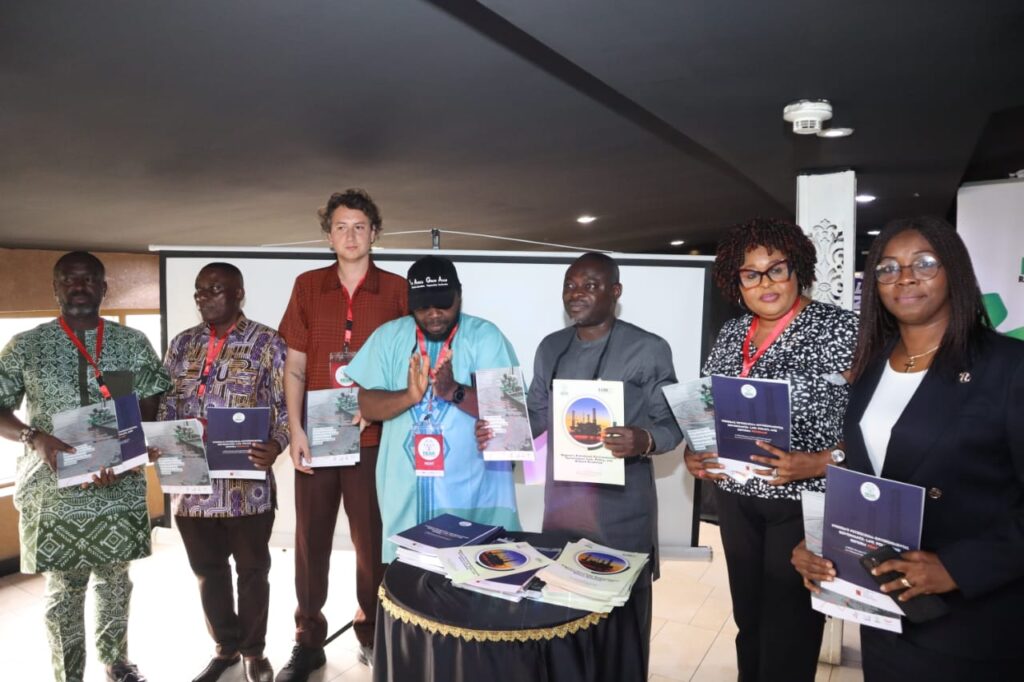
The Human and Environmental Development Agenda (HEDA Resource Centre) has raised concerns over the implementation of the Petroleum Industry Act (PIA) 2021, saying that despite its promises of stronger governance, improved environmental protection, enhanced community development, and greater transparency, the Act has largely fallen short.
According to a statement on Sunday, these observations were detailed in HEDA’s new report on petroleum environmental governance in Nigeria, which also provides a roadmap for legal, policy, and institutional reforms in the country’s oil and gas sector. The report, released with support from the Africa Centre for Energy Policy (ACEP), is titled “Nigeria’s Petroleum-Environmental Governance: Law, Policy, and Reform Roadmap” and comes four years after the PIA’s passage.
HEDA Chairman, Olanrewaju Suraju, said the report aims to address the persistent gap between Nigeria’s extensive legal frameworks and the realities in oil-producing communities.
“The continuing issues around oil spill response, gas flaring, decommissioning obligations, host community development, and beneficial ownership transparency show that regulators, operators, communities, and civil society actors still lack the tools needed to drive accountability,” he said.
The statement noted that HEDA, in collaboration with the Environmental Law Research Institute (ELRI), developed a Stakeholder Accountability Tool and a Simplified Policy Brief. These tools outline statutory obligations under the PIA and other environmental laws, highlight implementation lapses, and provide practical guidance to empower communities, civil society, media, and regulators to demand compliance and promote environmental stewardship.
The report provides a comprehensive analysis of Nigeria’s petroleum environmental governance landscape, examining legal frameworks, institutional structures, and operational mechanisms designed to ensure prevention, mitigation, remediation, and accountability. It draws on doctrinal research, comparative benchmarking, and stakeholder feedback generated through surveys and interviews.
While the study acknowledges that Nigeria possesses the foundational elements of a world-class governance system, it notes that these elements remain fragmented. It calls for clearer institutional mandates, stronger enforcement mechanisms, recalibrated penalties, better management of environmental liabilities, and real-time public access to petroleum-environment data, including emissions, spills, remediation progress, and host community development funding.
The report also recommends modernizing the Environmental Impact Assessment (EIA) regime to reflect climate realities and integrating host communities and credible civil society actors as active partners in monitoring the sector.
Suraju emphasized that “deliberate sequencing and sustained political will” are essential to drive reforms, highlighting priorities such as legislative updates, institutional integration, financial assurance systems, community oversight, capacity strengthening, and improved judicial and administrative efficiency.
“With discipline, transparency, and collaboration, Nigeria can evolve from an extractive state to a responsible energy steward, one that places environmental governance at the heart of sustainable prosperity,” he said.
HEDA reaffirmed its commitment to promoting transparency, accountability, and justice in Nigeria’s extractive sector and vowed to continue advocating to ensure that the PIA and related frameworks deliver tangible benefits for citizens and frontline communities.









