


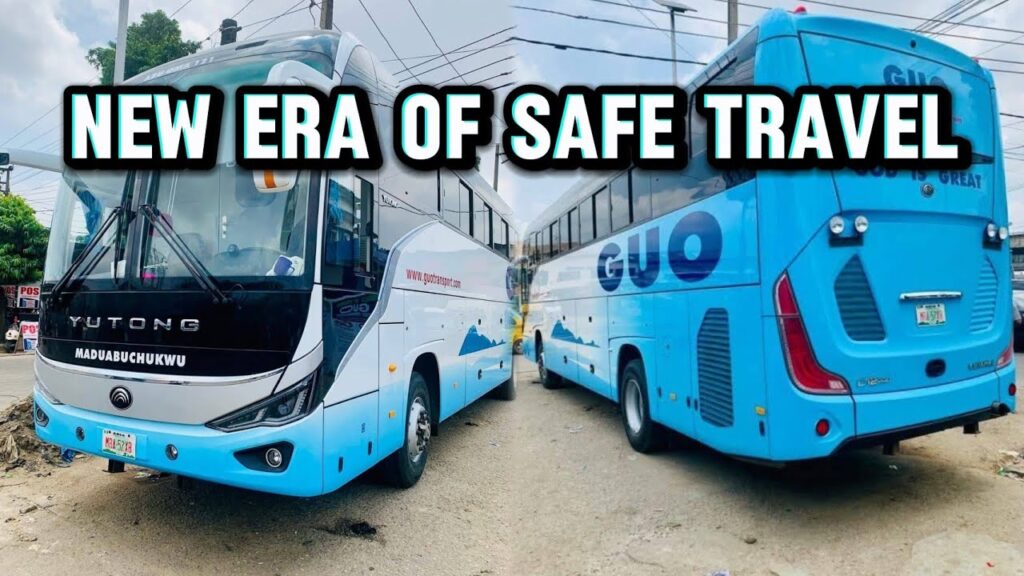
GUO Transport Company Limited, one of Nigeria’s most prominent intercity transport operators, has not deployed bulletproof or armoured buses in its fleet, debunking widespread claims and social media speculation that the company had introduced ballistic-protected vehicles for passenger services.
Investigations by Sunday Telegraph showed that GUO’s operations remain anchored on conventional luxury and mass-transit buses, equipped with standard safety features but without any form of ballistic or bullet-resistant reinforcement. Multiple industry sources confirmed that there has been no procurement, pilot testing or rollout of armoured passenger buses under the GUO brand.
The rumours gained momentum against the backdrop of persistent insecurity on Nigerian highways, where incidents of armed robbery, kidnapping and violent attacks on commuters have heightened public anxiety. For many Nigerians, the suggestion that a major transport company had adopted bulletproof buses appeared to signal a private-sector response to the country’s security challenges.
Company sources dismiss claim
A senior GUO official, who requested anonymity because he was not authorised to speak publicly, described the reports as “false and misleading.”
“At no point has GUO Transport Company procured or deployed bulletproof buses for commercial passenger operations,” the official said. “Our fleet consists of standard factory-built buses designed for comfort, efficiency and road safety, in line with existing transport regulations.”
Experts question feasibility
Transport and safety experts say the idea of bulletproof buses, while appealing in theory, is largely impractical for mass passenger transport. “Armoured vehicles are extremely expensive, heavier, consume more fuel and come with serious maintenance challenges,” said Dr. Samuel Odewale, a transport policy analyst and lecturer at the University of Lagos. “They are designed for diplomatic or military use, not for highvolume commercial transportation.”
Odewale added that introducing armoured buses could also pose safety risks. “In the event of an accident, the added weight may increase impact severity. It is not a silver bullet for insecurity.”
Safety agencies emphasise broader solutions The Federal Road Safety Corps (FRSC) also downplayed the effectiveness of armoured buses as a solution to highway insecurity. FRSC spokesperson, Bisi Kazeem, stressed that commuter safety depends more on systemic measures than vehicle armour.
“Passenger safety on Nigerian roads is best achieved through effective policing, intelligencedriven patrols, roadworthy vehicles, trained drivers and strict enforcement of traffic laws,” Kazeem said. “Armouring buses does not replace the responsibility of government to secure highways.”