

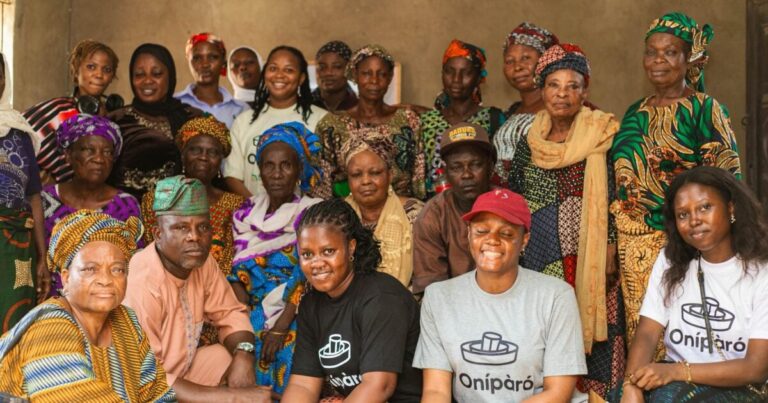


Many women-led enterprises in Nigeria need to strengthen their governance practices, as weak systems continue to limit the growth and sustainability of their businesses, the Centre for Enterprise Governance has warned.
In a statement, the founder of the Centre for Enterprise Governance, Dr Adeyinka Hassan, explained that while women remain highly active in Nigeria’s enterprise landscape, particularly within the micro, small and medium enterprise segment, many struggle to scale their businesses due to governance and structural constraints.
Hassan outlined that governance systems, such as advisory boards, internal controls, and clearly defined decision-making frameworks, are essential for businesses seeking long-term growth and improved access to financing.
“Enterprise governance is fundamental to business sustainability. It provides the structure through which enterprises define responsibilities, ensure accountability, and manage risk effectively.
For women-owned businesses, governance plays a critical role in transforming enterprises from personality-driven ventures into structured organisations capable of attracting investment, strategic partnerships, and institutional financing.
Without governance systems such as advisory boards, internal controls, and clearly defined decision-making frameworks, businesses often struggle to scale or withstand external shocks,” the CEG chief explained.
He stressed that governance gaps remain common among many female-led MSMEs, particularly in areas such as financial discipline and documentation.
“The most common governance gaps include weak separation between personal and business finances, limited documentation of policies and procedures, and the absence of formal advisory structures. Many MSMEs also lack structured risk management systems and effective performance monitoring mechanisms,” Hassan said.
The CEG affirmed that women play a significant role in Nigeria’s enterprise ecosystem but face challenges when transitioning from micro-level operations to larger corporate structures.
According to the CEG chief, “Women play a significant role in Nigeria’s enterprise landscape, particularly within the micro, small and medium enterprise segments. Across sectors such as trade, services, agriculture and the creative economy, women are highly active as founders and operators of businesses, but the challenge lies in scaling.”
He maintained that while participation at the micro and informal levels is substantial, women’s representation declines significantly as businesses grow larger. Hassan advised that “bridging this scale gap requires stronger institutional support, access to capital, and governance structures that help women-led enterprises grow sustainably.”
He added that institutions such as the Centre for Enterprise Governance are working to raise awareness among women entrepreneurs that structured support helps strengthen governance practices.
“There is a growing need to raise awareness and assure more women entrepreneurs that structured support exists to help them strengthen governance practices within their businesses. Through capacity-building initiatives, governance education, and access to practical resources, the Centre for Enterprise Governance seeks to support women-led enterprises in positioning themselves for sustainable growth and improved access to finance,” Hassan said.
He explained that mentorship and advisory boards could significantly improve the growth prospects of women-led enterprises by strengthening strategic oversight and decision-making.
“Mentorship provides guidance, confidence and access to networks, while structured board advisory systems introduce accountability and strategic discipline into the enterprise. When women entrepreneurs are supported by experienced advisors or governance mentors, they gain access to critical perspectives on strategy, risk management, financial planning and growth opportunities. This structured oversight significantly enhances decision quality and positions the business for long-term sustainability,” Hassan said.
Hassan also called on financial institutions to play a stronger role in supporting governance development within women-led enterprises.
“Financial institutions can play a catalytic role by linking access to finance with governance improvement initiatives. Beyond lending, banks and development finance institutions can support governance training, financial management systems and reporting structures within women-led enterprises,” he said.
The CEG boss acknowledged progress in the banking sector, noting that regulatory interventions encouraging diversity had increased women’s representation on boards.
Hassan added that strengthening governance capacity among women entrepreneurs remains critical for improving business resilience and access to finance.
“Empowering women-led enterprises with stronger governance capabilities is not only a gender inclusion objective; it is an economic imperative. Strengthening governance within women-led MSMEs improves business resilience, enhances access to finance, and positions these enterprises to contribute more meaningfully to national economic development,” Hassan said.