It is a pleasant surprise to learn that the Sokoto State 2026 Appropriation Bill of ₦758.7 billion prescribes a capital expenditure of 72 per cent and a slim 28 per cent for recurrent cost, otherwise known as operational expenditure.
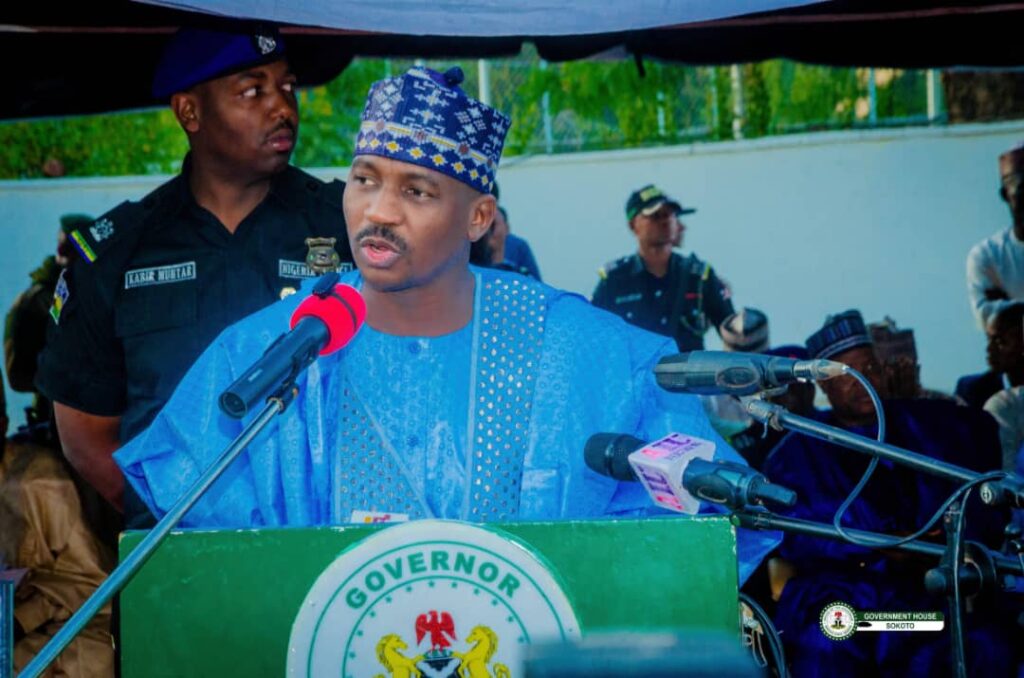
This bill was laid before the State House of Assembly by Governor Ahmad Aliyu of Sokoto on December 17, 2026. Anyone with a modicum of knowledge of global public finance practice would readily agree that a capital-to-recurrent expenditure ratio of 72:28 per cent is nothing short of a miracle—the sort of miracle that rarely happens in our political landscape.
While Governor Aliyu’s administration rates quite high in placing strong emphasis on capital spending, it is fair to note that a few other governors in the Northwest zone also performed well, especially Kebbi and Kaduna States, both of which crossed the 70 percent capital vote mark, compared to Lagos State, which earmarked 52 percent of next year’s income to projects of enduring value.
The intentional focus on capital expenditure has been the defining feature of Governor Ahmad Aliyu’s annual fiscal plans since the inception of his tenure.
The total 2026 budget is ₦758.7 billion, with the bulk of revenues projected to come from the Federal Accounts Allocation Committee (FAAC), which will contribute ₦389.3 billion. An additional ₦233.8 billion is expected from grants, aids, capital development funds, and opening balances, while ₦74.5 billion will come from internally generated revenue (IGR).
In the appropriation bill, the government allocates ₦551.4 billion (72 percent) to capital projects and ₦207.2 billion (28 percent) to operational expenses. By directing a substantial share of public resources toward capital spending, Sokoto State positions its economy for expansion through infrastructure development, improved service delivery, and enhanced production capacity.
The Ahmad Aliyu administration plans to spend ₦72 out of every ₦100 that enters its coffers on long-lasting projects such as roads and bridges; expansion of water supply, power, and transportation facilities; and the construction of school and hospital structures.
This public expenditure profile, which prioritizes enduring projects over personnel costs, contrasts sharply with practices even in advanced democracies.
Ordinarily, it would be understandable if a sub-national government prepares a fiscal plan in which operational costs consume 60 to 80 percent of its yearly budget, given the labour-intensive nature of governance. Salaries, pensions, equipment maintenance, consumables, utility bills, and debt servicing constitute unavoidable obligations.
Against this backdrop, it is remarkable that the Sokoto State Government expects to meet all recurrent obligations in 2026 while devoting 72 percent of income to capital projects. The budget therefore goes beyond a mere projection of income and expenditure profiles, standing out as a blueprint for transformative governance.
Another notable feature of the budget is the citizen-driven approach adopted during its formulation. Through town hall meetings across all three senatorial districts, 23 local government areas, and 244 political wards, residents, civil society groups, women’s organizations, youth groups, persons with disabilities, and private sector stakeholders contributed their priorities.
The Ministry of Budget and Economic Planning also partnered with organizations such as UNICEF to integrate community perspectives into the plan.
This engagement helped shape sectoral priorities aligned with grassroots socio-economic needs while remaining attentive to global best practices. The allocation of ₦115.9 billion to education ensures adequate funding in line with UNESCO’s recommendations.
This investment builds on last year’s progress by supporting school infrastructure, teacher training, improved learning environments, and skill acquisition among the youth.
In healthcare, ₦122.7 billion—over 16 percent of the total budget—has been allocated, exceeding the Abuja Declaration benchmark of 15 percent.
According to the 2026 Appropriation Bill, this funding targets the completion and upgrading of major health facilities, including the Sokoto State University Teaching Hospital and hospitals in Binji, Tambuwal, and Sabon Birni, alongside the procurement of ambulances and modern medical equipment.
The road and transportation sector receives ₦109.1 billion for construction, rehabilitation, public transportation improvements, and connectivity enhancements aimed at reducing travel costs and facilitating trade.
These investments recognize transportation infrastructure as a catalyst for economic participation and market access.
Security remains a cornerstone of the 2026 budget, with ₦45.2 billion earmarked for patrol vehicles, motorcycles, logistics, and capacity building for security agencies.
Given ongoing challenges posed by banditry and violent crime in parts of the Northwest, this allocation also supports community-based safety initiatives essential for business confidence and investment.
The 2026 budget builds on the 9-Point Smart Agenda of the Ahmad Aliyu administration, which guides policy priorities in infrastructure, education, health, security, agriculture, and social welfare.
In the 2025 budget, 66 percent of revenues were committed to capital projects, and the 2026 budget sustains this trajectory while responding to emerging socio-economic challenges.
Fiscal responsibility remains a defining feature of Sokoto State’s financial management. Unlike many sub-national governments, the state reportedly executed significant projects in 2025 without borrowing, maintaining prompt payments to contractors and avoiding the debt trap. This posture allows resources to be deployed toward productive investments rather than debt servicing.
The prioritization of religious affairs reflects campaign commitments and local values. An allocation of ₦17.47 billion supports the construction and rehabilitation of mosques and Islamiyya schools, Da’awah activities, the remodeling of Sultan Bello and Sultan Abubakar III Jumu’at Mosques, and the traditional feeding of the Sokoto State ummah during Ramadan.
Other key allocations include humanitarian services, poverty reduction, and youth empowerment (₦33.9 billion); water resources (₦41.1 billion); and agriculture (₦18.7 billion), which remains vital for food production and employment. Investments in water resources support households, industry, and agriculture, while youth empowerment initiatives promote economic inclusion.
Overall, the strategic distribution of funds in the 2026 budget reflects a holistic approach to development, addressing infrastructure, human capital, security, and social welfare.
Heavy investment in education and healthcare strengthens workforce productivity, while improvements in security and infrastructure enhance the state’s attractiveness to investors.
The participatory budgeting process strengthens democratic governance, accountability, and public trust. As the government moves from planning to implementation, the success of the budget will depend on effective execution, sustained stakeholder engagement, and adaptive governance.
If realized as envisioned, the 2026 budget could serve as a model for other states pursuing socio-economic transformation.