


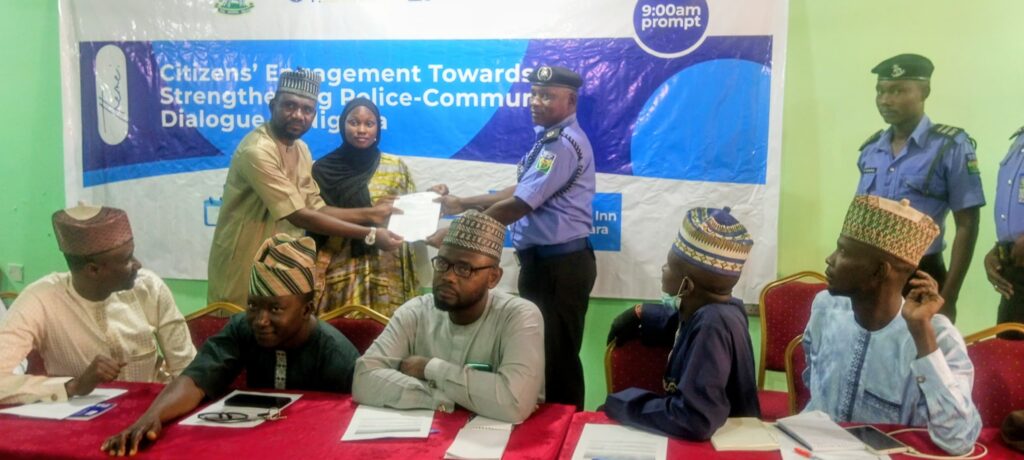
A non-governmental organization, CLEEN Foundation, has launched intervention meetings on citizen engagement towards strengthening police-community dialogue across the most-hit states in the North, including Kaduna, Plateau, Benue, and Zamfara, with a view to identifying immediate demands by the police and other sister agencies, as well as citizens, for better security services.
Speaking in Gusau, the Zamfara State capital, the Executive Director of CLEEN Foundation, Mr. Peter Maduoma, represented by the Project Manager, Mrs. Chigozirim Kori, emphasized that strengthening police–citizen engagement is critical to improving public trust, accountability, and effective policing in Nigeria.
According to Kori, the establishment of structured, inclusive, and state-specific platforms for dialogue in Zamfara State would contribute meaningfully to ongoing police reform and community policing efforts, as it would provide a sense of belonging to both parties and facilitate well-secured communities.
“Citizens frequently perceive the police as unapproachable or unresponsive, while police officers cite public hostility, misinformation, and lack of cooperation as operational constraints. Participants included community members, government representatives, academia, heads of civil society organizations, and security agencies.
“International best practices demonstrate that structured, inclusive, and well-facilitated police–citizen engagement platforms are critical for improving accountability, managing expectations, co-producing security solutions, and rebuilding trust, especially in fragile contexts.
“There is, therefore, a clear need for deliberate interventions that allow citizens to openly deliberate on policing issues and directly interface with state police leadership in a constructive, non-adversarial environment.”
Also in attendance was the Commissioner of Police, CP Ibrahim B. Maikaba, who was represented by ACP Abubakar. He appreciated the CLEEN Foundation for organizing the event and promised to forward the demands to the police command for consideration.
However, he pointed out that some issues raised would require further discussions and assured participants that a meeting would be convened by the police with some of those actively involved in drafting the charter of demands presented, for further deliberations.