
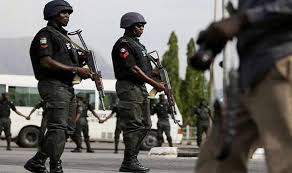
A former Chairman of the Police Service Commission (PSC), Chief Simon Okeke, has declared strong support for the establishment of state police, insisting the move is essential to addressing Nigeria’s worsening security challenges.
Okeke, who described Nigeria’s centralised policing structure as an aberration for a federal system, made the remarks in Abuja during the public presentation of My Stewardship: A Compendium of Police Service Commission Media Engagements, 2013 to 2015, authored by a former PSC Head of Press and Public Relations, Ikechukwu Ani.
According to him, no federal nation in the world operates a wholly centralised police model, warning that Nigeria will continue to “move in circles of insecurity” until states are empowered to tackle their own security threats.
“Nigeria is the only federal state in the world that has a centralised policing system, and that should not be the case. Until the country allows the states to address their own security threats, we will continue to move in circles of insecurity,” he said.
He stressed that governors—who the Constitution recognises as chief security officers of their states—lack the legal authority to direct police commissioners under them. He noted that commissioners take orders only from the Inspector-General of Police, making it difficult for governors to respond promptly to threats.
“For a Commissioner of Police to obey an order from a governor, he must first obtain clearance from the Inspector-General of Police. Without such clearance, he will act otherwise,” he explained.
Okeke argued that the solution lies in decentralising policing, while putting necessary safeguards in place to prevent abuses by state governors.
“Like every other institution, state police has its downsides, but I am optimistic that the National Assembly will put adequate checks and balances in place to prevent abuse. Measures must be established to ensure that state police are not used to pursue personal interests or target opposition voices,” he added.
Speaking on the book, Ani said the work captures his media engagements from 2013 to 2025 and documents how the Commission leveraged the media to promote accountability in policing.
“What I have done is to look at my media engagements, the policies, and how the Commission used the media to promote accountability. The book provides a brief account of what the Commission has been from the beginning to the present day,” he said.