

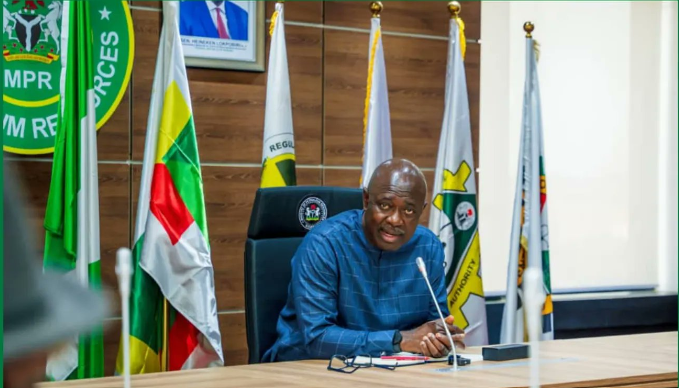


The Federal Government and the World Bank have pledged continued support to the ongoing collaboration to sustain irrigation, power generation and food security projects across the country.
This disclosure was made in Abuja at the official flag-off and the second meeting of the project’s Steering Committee held in Abuja on Tuesday, March 10.
Speaking at the event, Minister of Water Resources and Sanitation, Prof. Joseph Utsev, said that the present administration of President Bola Tinubu has a deliberate policy of sustaining projects initiated to enhance people’s lives and welfare.
Utsev noted that the Federal Government and the World Bank were launching the Sustainable Power and Irrigation for Nigeria (SPIN) Project for the purpose of strengthening irrigation development, improving dam safety, and expanding sustainable power generation to boost food security and economic growth across states in the country.
He stated that “ the SPIN Project is a flagship programme under the Renewed Hope Agenda of Bola Ahmed Tinubu, and aimed at strengthening food security, economic resilience, and infrastructure development”.
According to him, “ the project, supported by the World Bank, will strengthen dam safety, improve water resource management, expand irrigation systems, and support hydropower generation”.
“ The initiative will also help Nigeria transition from reliance on rain-fed agriculture to climate-resilient irrigation systems capable of supporting year-round farming and increased food production, alongside effective monitoring and project management”.
Also speaking, the World Bank Global Director for Water, Saroj Kumar Jha, said that the World Bank was keying into the SPIN Project as a way of sustaining “ the achievements of the Transforming Irrigation Management in Nigeria (TRIMING) Project, which reached over 1.7 million people and expanded irrigation to more than 43,000 hectares of farmland before concluding in 2025”.
The World Bank Director added, “ the SPIN Project will further strengthen irrigation development, improve water management institutions, promote hydropower development, and attract private sector investment into irrigation and agricultural value chains.
“ The programme aims to rehabilitate about 40,000 hectares of irrigated land while improving dam safety and water storage management across Nigeria’s more than 400 dams”.