


…Service nets ₦7.28 trillion revenue in 2025
The Federal Government has given its nod to the customs authority to identify and weed out bottlenecks capable of constraining the clearance of goods within the shortest time across the trade ecosystem.
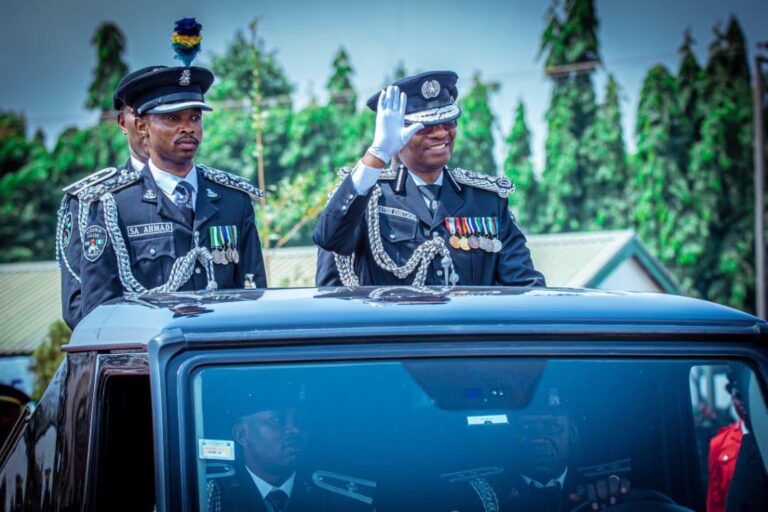
The Minister of State for Finance, Dr Doris Uzoka-Anite, conveyed this commitment on Monday in Abuja at the launch of the Customs time release study. The occasion was the 2026 World Customs Day celebration, themed: ” Customs protecting society through vigilance and commitment”
This was as the Nigeria Customs Service disclosed that it earned ₦7.281 trillion revenue in the 2025 fiscal year, thus exceeding ₦6.584 trillion target by a variance of ₦697 billion, representing growth of over 10 per cent against the target.
Compared to 2024 collections, the Service’s total revenue rose from ₦6.1 trillion to ₦7.28 trillion, an increase of approximately ₦1.18 trillion, or about 19 percent yearon-year.
Speaking to the relevance of Customs’ time release study, a strategic policy instrument that enables governments to measure performance, identify bottlenecks, reduce transaction costs, and enhance transparency across the trade ecosystem, Dr Anite said the study will track the number of hours and days it will take goods to transit from the cleaning point to delivery.
” By objectively measuring the time required for goods to move across borders, Nigeria is taking a decisive step toward smarter regulations and better-driven decision-making.
“The successful implementation of the TRS directly supports the federal government’s ease of doing business agenda, strengthens Nigeria’s competitiveness, and enforces our commitment to creating trade-related economies of economic growth and development”.
“The customs place is central in all these areas. Beyond trade facilitation, the Nigerian customs service continues to play a critical role in safeguarding a non-violent generation, national security, and the protection of society.
“The unit is to enhance risk management, technology compliance, inter-agency collaboration, and post-TRS controls.
Studies have demonstrated that good rules and trade facilitation are not mutually exclusive, but mutually reinforcing, and for this, I commend all of you. As Chairman of the Nigerian Customs Service Board, I assure all stakeholders of its greater focus on greater support for reforms that strengthen institutional capacity, promote transparency, and modernise border management”, said the Minister.
In a goodwill message by Secretary General of the World Customs Organisation ( WCO), Ian Saunders, urged members of WCO to use the occasion of customs international day celebration to help the world to better understand the key roles customs play in protecting society and lives.
“I encourage members to actively participate in WCO- led operations and to make full use of WCO standards, guidance and tools that are tailored to the needs of customs administration..The strength of our vigilance comes from using all the tools at our disposal “, said WCO Secretary General.
Providing insights on customs’ performance last year, Comptroller General of Customs Wale Adeniyi said that in the immediate past fiscal year 2025, the customs collected a total of ₦7.281 trillion in revenue, exceeding the target of ₦6.584 trillion with a positive variance of ₦697 billion, representing a growth of over 10 per cent against the target.
He added that compared to 2024 collections, the total revenue rose from ₦6.1 trillion to ₦7.28 trillion, showing an increase of approximately ₦1.18 trillion, or about 19 percent yearon-year.
” We present these figures not as self-congratulation, but as evidence that reform is yielding tangible outcomes. The gains came not from arbitrary enforcement or the burdening of legitimate traders, but from improved compliance, better data use, digital tools, and disciplined enforcement.
More importantly, this performance was achieved while deepening collaboration with the private sector and upholding facilitation commitments”.
He added that the Service recorded over 2500 seizures, with an aggregate value of more than ₦59 billion in prohibited and harmful goods removed from
circulation nationwide.
The seizures, Adeniyi Said cut across narcotics, counterfeit pharmaceuticals, wildlife products, arms and ammunition, petroleum products, vehicles, and substandard consumer goods.
“This most certainly prevented real harm — addiction, unsafe treatment, violent crime, subsidy exploitation, environmental degradation, and treaty violations before they occurred.
However, vigilance must coexist with facilitation. A modern Customs administration must be able to detect high-risk consignments without suffocating lawful trade.
“This is why today’s second event—the launch of the Time Release Study—is significant. The TRS marks a major step toward making Nigeria’s trade gateways secure, efficient, predictable, and globally competitive.
It signals our commitment to move from opinion-driven reforms to evidence-based reforms, and from complaints-driven policy to data-drivenpolicy”.
He said the study, which was conducted at Tincan Island Port, provides customs with the most comprehensive measurement of clearance performance in our recent history.
“It reveals encouraging realities and uncomfortable truths. It shows, on the one hand, that examination times themselves are relatively efficient, and that
Nigeria has the capacity to clear goods quickly.
“It shows, on the other hand, that excessive idle periods—often due to fragmented scheduling, manual documentation, and poor coordination—extend clearance times unnecessarily and erode competitiveness.
“In other words, our challenge is not that we cannot move goods fast; it is that goods are not allowed to move fast”, he said.









