The Federal Government has unveiled a new national prize scheme that would reward Nigeria’s most outstanding student researchers with cash awards of up to ₦20 million.
The initiative, known as the Nigeria National Laureate Annual Prize Programme, was approved by the Federal Government to recognise exceptional dissertations and theses produced by students in accredited universities, polytechnics and colleges of education.
It is aimed at promoting academic excellence and innovation across the country’s tertiary institutions.
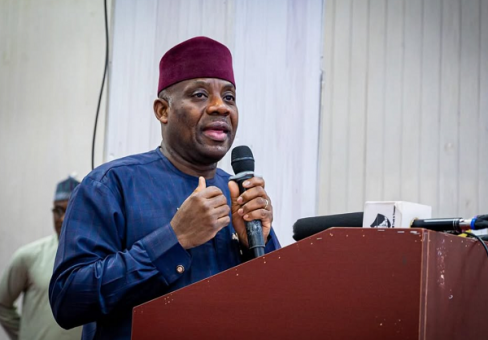
Announcing the programme on Tuesday, the Minister of Education, Dr Maruf Alausa, said the initiative was designed to reposition academic research as a major driver of national development and elevate scholarly achievements to the level of national prestige.
Under the programme, undergraduate dissertation winners would receive ₦5 million, master’s thesis winners ₦10 million, while doctoral thesis winners would be awarded ₦20 million alongside national recognition.
Alausa described the initiative as a strategic intervention aimed at reshaping Nigeria’s educational incentive structure by placing academic excellence and research innovation at the centre of national recognition.
He said: “By elevating our students to the status of celebrated National Laureates, we are ensuring that the rigour of research and academic excellence is matched with the highest level of national prestige and financial reward.
The minister noted that the programme reflects the Federal Government’s broader plan to transform Nigeria into a knowledge-driven and innovation-led economy where intellectual capital is recognised as a critical resource for development.
According to him, the prize scheme would also help change the perception that academic research is merely a graduation requirement.
“While it is not wrong to celebrate social influencers, this must not be at the expense of innovators. With the National Laureate Prize, we are signalling a new era where a student’s thesis is no longer merely a graduation requirement but a potential blueprint for national industrialisation and development,” Alausa added.
To ensure sustainability, the minister said the programme would be funded by the Nigeria Education Repository and Databank (NERD) and its strategic partners, rather than drawing from public funds.
He also announced the constitution of a 10-member NERD National Laureate Prize Committee, chaired by former Minister of Power, Prof. Abubakar Sambo, to oversee the implementation of the initiative.
Other members include Prof. Solomon Nwhator, Prof. Tolulope Ariyomo, Prof. Francis F. Uba, and Prof. Carol Arinze-Umobi, alongside representatives of the Nigerian Academy of Letters, Nigerian Academy of Sciences, National Universities Commission, National Board for Technical Education, National Commission for Colleges of Education, Tertiary Education Trust Fund, and the Federal Ministry of Education.
In recognition of exemplary national service, the government also announced that some prizes under the programme would be named after distinguished Nigerians, with the inaugural honour dedicated to Dr Stella Adadevoh for her courage and sacrifice during Nigeria’s Ebola outbreak response.
The minister disclosed that tertiary institutions across the country had been directed to identify and submit their best academic works for national consideration, while the Prize Committee retains the authority to identify outstanding research from across institutions.
According to the programme timeline, the Prize Committee would be inaugurated soon, while the national call for submissions would open in May 2026 through the NERD portal.
The evaluation process would run from June to September 2026, culminating in the National Laureate Gala scheduled for November 2026 in Abuja, where the winning scholars will be honoured.
Alausa expressed optimism that the initiative would inspire students across Nigeria to pursue groundbreaking research capable of addressing national challenges.
“This programme is about celebrating intellect, rewarding curiosity, and inspiring a generation of Nigerian scholars whose research can shape the future of our nation,” he said.