


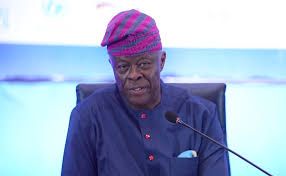
The Federal Government has said it plans to invest more in the economy, rely more on domestic resources and reduce its dependence on borrowing. Minister of Finance, Wale Edun, said this while speaking on Bloomberg Television at the ongoing 56th World Economic Forum in Davos, Switzerland, yesterday. “The issue now is to focus on revenue, focus on domestic resource mobilisation,” he said.
“We’re hoping to rely less on borrowing,” Edun added. The minister’s remarks come as Nigeria implements fiscal reforms aimed at strengthening its economy. He emphasised the need to focus on revenue generation, stating that while the country could access international bond markets, if necessary, the government’s priority is to mobilise its own resources.
He outlined the government’s efforts to raise tax revenue and strengthen fiscal sustainability amid mounting global economic pressures. Edun also highlighted strategies aimed at reducing borrowing while expanding revenue generation.
The minister further noted that Nigeria remains open to international capital markets if needed, but domestic reforms are central to the government’s fiscal policy. Since assuming office in 2023, President Bola Tinubu’s administration has introduced several economic reforms to drive growth and stabilise public finances.
These measures include removing currency restrictions, ending a costly fuel subsidy, and overhauling the nation’s tax framework. Other measures introduced by the Federal Government include the tax reforms, which aim to raise revenue to 18% of GDP next year, up from roughly 14% currently.
The minister also noted that the Federal Government’s policies target longterm economic sustainability while reducing reliance on external debt. These initiatives, he emphasised, are part of broader efforts to modernise Nigeria’s economy and strengthen investor confidence. Economic forecasts indi