
The Federal Government has proposed a sum of N135.22bn in the 2026 budget to cover expenses related to electoral disputes and post-election processes, signalling a major financial commitment to managing issues that often arise after elections.
The allocation is contained in the House of Representatives Order Paper dated March 31, 2026, which includes details of the 2026 Appropriation Bill.
Findings show that the provision falls under Service-Wide Votes, a pool of funds centrally controlled by the government to handle obligations that are not tied to any specific ministry, department, or agency.
This category typically caters to contingency expenses, national commitments, and financial responsibilities that cut across multiple institutions.
The N135.22bn earmarked for electoral adjudication suggests that the government anticipates continued financial pressure from legal disputes, settlements, and administrative demands linked to elections.
Further breakdown of the budget shows that the allocation is part of the Consolidated Revenue Fund charges, estimated at N3.70tn, with the election-related provision accounting for about 3.65 per cent of that amount.
The proposal comes alongside a significantly larger statutory transfer of N1.01tn to the Independent National Electoral Commission, which represents about 21 per cent of the total statutory transfers of N4.80tn.
READ ALSO:
Statutory transfers are funds allocated by law to key institutions such as the electoral body, the legislature, and the judiciary. These allocations are released directly from the Consolidated Revenue Fund and are not subject to executive control, ensuring a level of financial independence for these institutions.
Earlier, the Independent National Electoral Commission had informed the National Assembly that it would require N873.78bn to conduct the 2027 general elections, along with N171bn for its operations in 2026. The amount proposed for the 2027 elections is significantly higher than the N313.4bn spent on the 2023 polls.
The newly introduced N135.22bn provision has, however, drawn criticism from opposition parties and civil society organisations, who questioned both its necessity and transparency.
The Peoples Democratic Party raised concerns that the allocation suggests the electoral body may already be anticipating disputes arising from the 2027 elections.
Speaking on the development, the party’s National Publicity Secretary, Ini Ememobong, said, “It means that INEC itself is anticipating that it will not do well and that people will not accept the outcome of the results.
“Because if INEC becomes very transparent, post-election litigation will be drastically reduced. It is the lack of transparency and the obvious opacity of INEC during elections that result in post-election litigation.
“However, INEC, in every election, is meant to be neutral. So I am wondering what they are funding.”
He further questioned the scale of legal spending, noting that many legal services should already be handled internally, while warning against possible external influence.
Ememobong also urged authorities to focus on strengthening democratic institutions ahead of the elections, stating, “My advice is that the APC-led Federal Government, INEC, and everyone involved in the 2027 elections should take a step back to ensure we protect the country and democracy before talking about elections and partisanship.”
On its part, the African Democratic Congress acknowledged that it is normal for the electoral body to prepare for legal disputes but expressed concern about the size of the proposed budget, describing it as excessive.
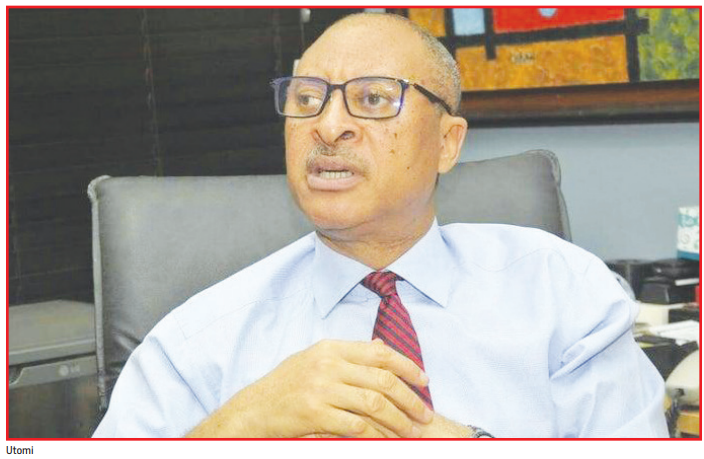
Political economist, Prof Pat Utomi, also faulted the provision, arguing that election contests are driven by candidates, not the government.
“It is not the Federal Government that goes to elections, it is the individual candidates, so why should the Federal Government have a budget for it? They should not,” he said.
He added that if the allocation is meant for the electoral body, it should be reflected within its own budget, stressing, “If the budget is for INEC, then it should be in the INEC budget, not the FG’s budget. Although the budget process in Nigeria is broken and has been a pure mess.”
Human rights lawyer, Femi Falana (SAN), also criticised the amount, describing it as unnecessarily high.
“It is on the very high side. Apart from the fact that INEC has its legal department that services all its offices in the 36 states of the Federation, INEC does not pay more than N3m per brief, even to a senior advocate.
This is due to the fact that INEC maintains a neutral position in the majority of pre-election cases,” he said.
Providing further context, Falana noted, “In 2023, INEC was joined as a party in less than 3,500 pre-election cases, election petitions, and appeals arising from them.”
He added that recent legal developments could reduce such cases, saying, “With the ouster of the jurisdiction of the courts in the internal affairs of political parties, the number of pre-election cases will be substantially reduced, and if INEC conducts credible elections, there may be few election petitions and appeals.”
He concluded that the projected spending appears excessive, stating, “Altogether, INEC may not spend up to N20 billion on election legal battles.”
Civil society organisations also weighed in on the development, warning that the allocation raises concerns about the credibility of Nigeria’s electoral system.
Anthony Ubani of #FixPolitics Africa described the provision as a troubling indicator of deeper systemic issues.
“The N135.22bn allocation for post-election legal battles is a troubling signal about the state of our democracy,” he said.
He added, “Yes, electoral disputes are normal, and the judiciary must be funded. But when a country begins to budget this heavily for post-election litigation, it suggests that elections are no longer expected to be trusted; they are expected to be contested.”
According to him, “A credible electoral system should settle outcomes at the ballot box, not in the courtroom. But in Nigeria, elections are increasingly fought in three stages: primaries, voting day, and then the tribunal. This weakens public confidence and shifts the real battleground away from the people.”
Ubani further warned, “When politicians believe the outcome will be decided in court, compliance drops, manipulation increases, and the system begins to reward strategy over integrity.
“Instead of fixing the root causes, weak electoral laws, poor transparency, weak enforcement, and flawed processes, we are budgeting to manage the consequences. That is backward.”
He called for reforms, including the adoption of real-time electronic transmission of results, stating that such measures could significantly reduce electoral malpractice and litigation.
“Nigeria must invest more in electoral integrity than in electoral disputes. The goal should be clear: elections that are credible enough to be accepted, not endlessly litigated. Anything less keeps us trapped in a cycle of distrust, cost, and democratic decline,” he said.
Similarly, Debo Adeniran of the Centre for Anti-Corruption and Open Leadership said the allocation could only be justified under specific circumstances.
“It could only be appropriate if it is allocated for legal battles by or against INEC. But if it is for legal battles involving the ruling party, that would be unwarranted. That would be abnormal,” he said.
He cautioned against duplication, noting that the electoral body already receives substantial funding and should manage its own legal expenses.
Auwal Rafsanjani of the Civil Society Legislative Advocacy Centre also raised concerns, suggesting that the allocation signals expectations of widespread disputes.
“The idea of this huge amount of money for an anticipated legal tussle on the election shows that there appears to be already a premeditated plan to create conditions for an election dispute,” he said.
He questioned the logic behind the spending, adding, “And why is it that Nigeria is spending so much money to conduct an election, and the election ends up in unsatisfactory conduct?”
Rafsanjani stressed that credible elections would reduce the need for litigation, urging authorities to prioritise transparency and fairness in the electoral process.