
The Federal Government (FG) and the Nigeria Association of Women Journalists (NAWOJ) have taken proactive steps to boost women’s leadership roles in newsrooms across the country.
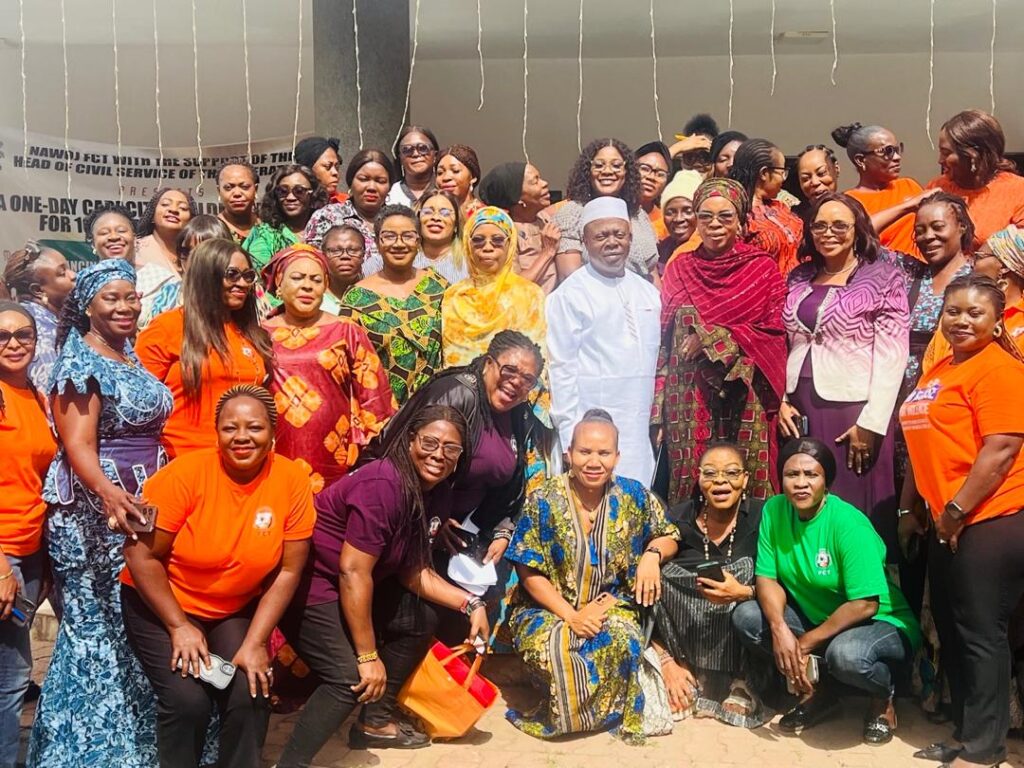
At the One-Day Capacity Building Training for 100 female journalists themed, “Workplace Diversification: Advancing Female Journalists’ Role in the Newsroom” in Abuja, organizers highlighted that the training aims to promote gender equality and amplify women’s voices in the media.
The Head of the Civil Service of the Federation, Didi Esther Walson-Jack, endorsed the program, reaffirming the government’s commitment to professional development and inclusivity. Represented by Elisha Benjamin, Director of Learning and Development, Walson-Jack noted that women have always been central to nation-building, often working twice as hard for half the recognition. She emphasized that this trend is gradually changing.
“Across government and the Public Service, policies, reforms, and leadership opportunities are opening doors wider than ever before,” she said. “Workplace diversification is not charity, symbolism, or tokenism. It is a strategic necessity. When women sit at the table, institutions make better decisions, stories become richer, and the national narrative becomes more complete.”
She stressed the media’s crucial role in shaping worldviews, informing policy, influencing culture, and framing public perception. “When women are underrepresented in newsrooms, an essential perspective—defined by empathy, nuance, and lived experience—is missing. True diversification is not merely about increasing numbers but ensuring that women’s voices, leadership, and perspectives are fully reflected in the stories that define our nation.”
Grace Ike, Chairman of the Nigeria Union of Journalists (NUJ), FCT Council, assured that women’s voices in journalism can no longer be pushed aside, ignored, or silenced.
“As the NUJ FCT Chairman, I am fully aware that female journalists carry a heavier burden in the newsroom. They work twice as hard to be seen, heard, and taken seriously. Many face harassment, discrimination, limited opportunities, unfair assignments, and the quiet but painful struggle of being underestimated simply because they are women. This is why NAWOJ exists. It is not just an organization; it is a shield, a voice, a movement—a space where women in media can stand together and fight for fairness, respect, and equal opportunity.”
Ike lamented that women are still underrepresented in leadership positions and are often sidelined during major assignments. “They are expected to manage with less while giving more. The truth is simple: there is no strong newsroom without strong women,” she said. She further emphasized the training as an opportunity to build capacity, strengthen confidence, and equip female journalists with the tools needed to break barriers that have held them back for too long.
NAWOJ National Chairperson, Hajiya Aisha Ibrahim, reaffirmed the association’s commitment to advancing gender inclusion, describing newsroom diversification as essential for credible journalism. The initiative targets the underrepresentation of women in leadership and editorial decision-making roles.
Earlier, NAWOJ FCT Chairperson, Bassey Ita-Ikpang, stressed that the training aims to promote women’s participation in media leadership, bridging gaps in decision-making and editorial positions.
“This training is born out of a collective desire to see women take their rightful place in newsrooms, to strengthen professional capacities, embrace digital transformation, and ensure women thrive in leadership and in life,” she said.
“We understand the realities facing many female journalists today, the pressure of meeting deadlines, demands at home, struggle for visibility, and the challenge of breaking leadership barriers. This is why we have carefully curated today’s sessions to address both professional and personal needs.”
Speakers at the event included Eno Oluto on Amplifying Women’s Voices in Leadership, Hajiya Halima Musa, Director of News at NTA, on Balancing Work Responsibilities and the Home Front, Zainab Okino, Chairman of the Editorial Board at Blueprint Newspapers, on Leadership and Career Growth for Women Journalists, and Joseph John Funsho, a Digitech expert, on Digital Skills for the Modern Newsroom (MoJo, Social Media & AI Tools).
The event demonstrated a strong commitment by both the Federal Government and NAWOJ to empower female journalists, strengthen newsroom diversity, and create more inclusive and equitable media environments nationwide.