



The Federal Government has unveiled a major shift in Nigeria’s education policy, launching a new programme aimed at transforming university students from job seekers into entrepreneurs and innovators.
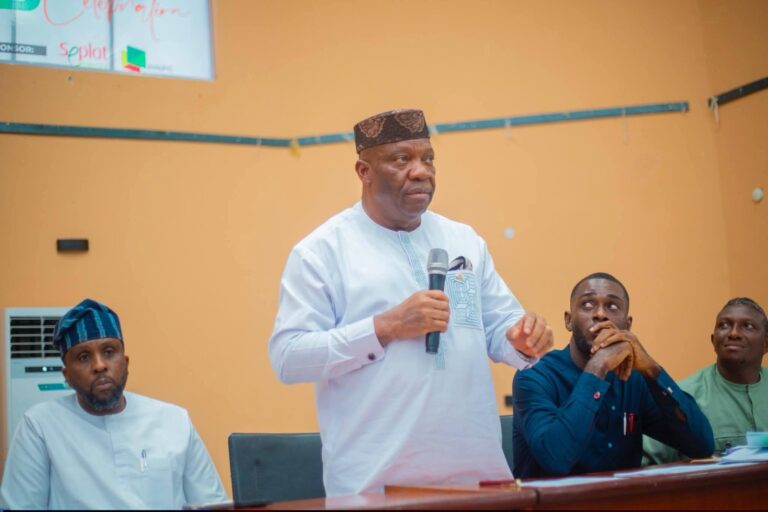
The Minister of Education, Dr Maruf Alausa, who spoke at the official launch of the Entrepreneurship, Innovation and Business Incubation Certification (EIBIC) programme on Friday in Abuja, explained that the initiative marks the beginning of a new paradigm in Nigerian education.
He said: “Today marks not just the launch of a programme, but the beginning of a new paradigm in Nigerian education, one that shifts our young people from job seekers to job creators, from passive learners to active innovators, and from graduates to nation-builders.”
The Minister warned that Nigeria’s current education model was no longer sufficient to meet the demands of a rapidly evolving global economy, stressing that urgent reforms were needed to bridge the gap between schooling and employability.
“Nigeria stands at a critical juncture. Our youthful population is both our greatest asset and our most urgent responsibility. Traditional models of education… are no longer sufficient to address the realities of the 21st-century economy.
“The world is changing rapidly. Technology is reshaping industries, and many traditional jobs are disappearing, even as new opportunities emerge. If we do not prepare our young people adequately, we risk widening the gap between education and employability.”
Describing the programme as both timely and necessary, Alausa said EIBIC would embed entrepreneurship across all academic disciplines and equip students with practical, market-ready skills.
“It is designed to enable students to convert their knowledge, talents, and passions into viable enterprises. It will equip them with practical skills; innovation, business planning, financial literacy, and venture development and ultimately reduce unemployment.”
The minister further described EIBIC as a
Students’ Enterprise Compass, noting that it would guide young Nigerians toward productivity, innovation, and self-reliance.
Alausa linked the initiative to President Bola Tinubu’s economic agenda, saying it aligns with efforts to build a knowledge-driven and innovation-led economy.
“This initiative aligns perfectly with the Renewed Hope Agenda to build a resilient, knowledge-driven, and innovation-led economy.”
He added that the programme was also central to the Ministry’s Nigeria Education Sector Renewal Initiative, which focuses on strengthening STEM education, promoting employability, and deepening collaboration between academia and industry.
Explaining how the programme would work, the minister said it adopts a structured, multi-level approach that exposes students to entrepreneurship from their first year through to graduation.
“There is early exposure at the 100 level to ignite entrepreneurial thinking, progressive skill development through the 200 and 300 levels, and full business incubation, mentorship, and venture creation at the final stages.
“This ensures that entrepreneurship is not treated as a theoretical concept, but as a lived experience, one that culminates in real businesses, real innovation, and real impact.”
He said the long-term impact of the initiative would extend beyond individual students to the broader economy.
“It will reduce youth unemployment, stimulate innovation and productivity, support wealth creation, and foster a culture of problem-solving and creativity across our nation.
“When our universities become hubs of innovation and enterprise, Nigeria will not only educate its youth, it will empower them to transform the economy.”
The minister called on key stakeholders to ensure the programme’s success, urging universities, lecturers, and industry players to
Take ownership.
“I call on Vice-Chancellors and University Administrators to fully integrate and institutionalise this programme. Faculty members must mentor students beyond the classroom, while industry partners and investors must collaborate actively in supporting student ventures.”
While calling for “a whole-of-society approach” since government alone could not drive the reform, the minister urged students to take the opportunity seriously, saying, “Our students must seize this opportunity with seriousness, creativity, and determination.
“The future of Nigeria lies not in the number of certificates we issue, but in the number of innovators, entrepreneurs, and leaders we produce,” he added.
He expressed confidence that the initiative would reshape the country’s economic trajectory if properly implemented.
“If we implement it faithfully, scale it strategically, and sustain it collectively, we will build a generation that does not wait for opportunities but creates them. A generation that does not fear the future but shapes it.”