
The Federal Government has launched a renewed drive to extend social protection to over 60 million Nigerians in the informal economy, declaring that a just, equitable, and resilient country cannot be built while such a large portion of the workforce remains vulnerable.
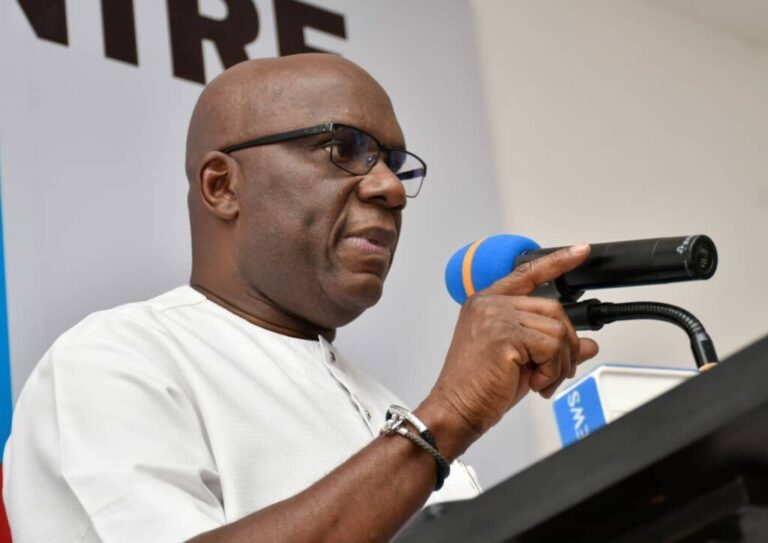
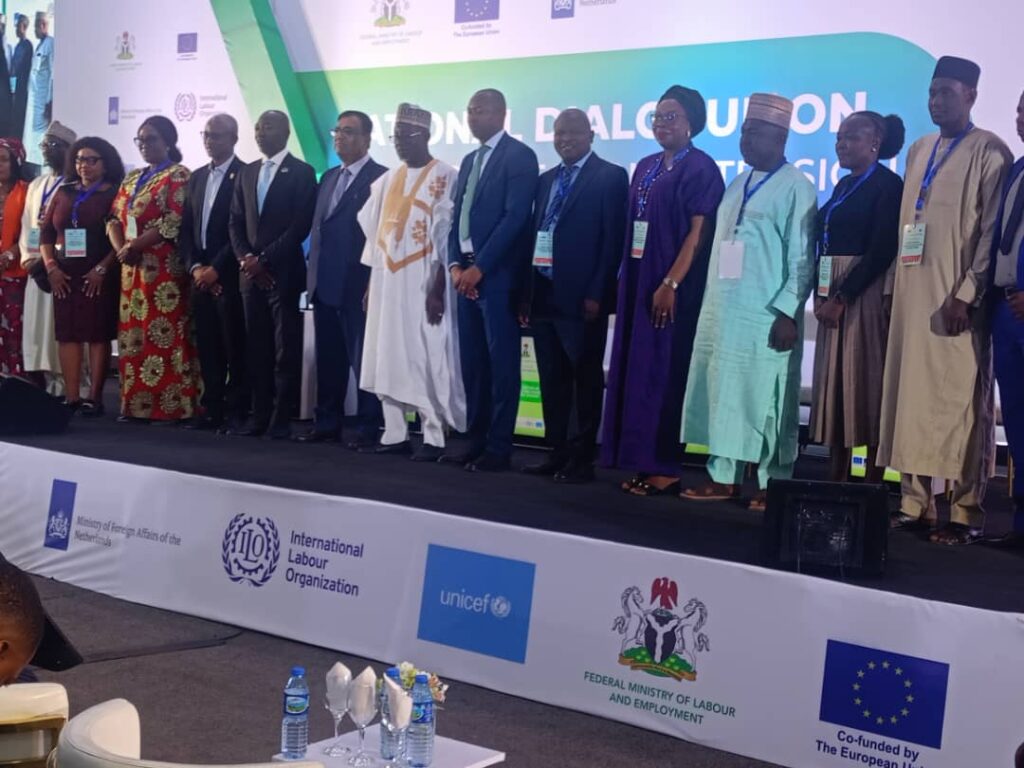
Minister of Labour and Employment, Mohammed Dingyadi, made the announcement on Tuesday at the two-day National Dialogue on Extending Social Protection to the Informal Economy in Abuja.
He emphasized that millions of Nigerians who work in markets, on roadsides, farms, workshops, and homes remain unprotected despite contributing significantly to the nation’s economy.
“I can see young people who live daily in markets, farms, roadsides, and workshops across our nation, often without protection, voice, or recognition,” Dingyadi said.
“Today, we write a new chapter in our collective journey to give dignity, inclusion, and social protection to the over 60 million Nigerians who make up our informal economy.”
Dingyadi highlighted that more than 65 percent of Nigeria’s workforce operates outside formal systems, leaving traders, farmers, transport workers, artisans, vulcanisers, tailors, domestic workers, and caregivers without pensions, health insurance, maternity protection, or workplace injury compensation.
“A single illness can drive a family into poverty. An accident at work can leave a breadwinner helpless. Women must choose between health and work because maternity protection is absent. Social protection is not charity. It is a human right,” he stressed.
The Minister noted that the Renewed Hope Agenda under President Bola Ahmed Tinubu recognises the obligation to provide safety nets for all citizens, especially the vulnerable. He cited ongoing expansion of contributory schemes under the National Health Insurance Authority (NHIA), the National Social Insurance Trust Fund (NSITF), and the Micro Pension Plan, as well as pilot programmes with the ILO, UNICEF, and the World Bank. Efforts are also being made to formalize micro-businesses and strengthen labour inspections in informal clusters.
Dingyadi emphasized that the dialogue must produce a national framework with time-bound targets for expanding coverage and financing, as well as collaboration across federal, state, and local governments, cooperatives, labour unions, civil society, fintechs, and development partners.
“We are standing at the crossroads of history. We can choose to perpetuate systems that leave millions in the shadow, or we can build bridges from informality to inclusion. Let this dialogue be remembered as the spark that ignited a movement towards a Nigeria where every hand that labours is protected by the state,” he said.
Dr. Vanessa Phala, Director of the ILO Office for Nigeria, Ghana, Liberia, Sierra Leone, and Liaison Office for ECOWAS, commended the initiative but noted that 85.2 percent of Nigerians still lack access to social protection. She reaffirmed the ILO’s commitment to supporting Nigeria in extending legal coverage, removing administrative barriers, improving financing mechanisms, and strengthening compliance and incentives for formalization.
“This requires a comprehensive strategy to overcome barriers to coverage. In most cases, a combination of measures will be necessary to address these barriers effectively, equitably, and sustainably,” she said.
Minister of State for Labour and Employment, Hon. Nkeiruka Onyejeocha, represented by Mr. Emmanuel Igbinosun, described the dialogue as a “national conversation about inclusion, dignity, and fairness,” aligning with the Renewed Hope Agenda’s commitment to ensure no worker is left behind.
The Nigeria Employers’ Consultative Association (NECA), represented by Mr. Thompson Akpabio, also pledged support, highlighting Nigeria’s diverse economic and geographical realities. He noted that NECA’s Network of Entrepreneurial Women (NEW) and SME programmes could complement government efforts if backed by strong policy outcomes from the dialogue.
The two-day national dialogue is expected to produce actionable frameworks, financing strategies, and monitoring mechanisms for extending social protection to informal workers across the country.