



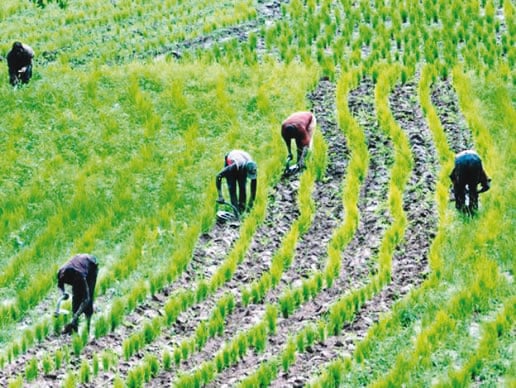
The Federal Government, in partnership with the International Fund for Agricultural Development and the Ondo State Government, is set to empower a total of 14,800 youths in agricultural production.
The programme, tagged IFAD/FG/Livelihood Improvement Family Enterprise-Niger Delta Project, will take place in 100 communities in the 10 local government areas of the state, while the beneficiaries (also known as incubatees) would be trained and empowered in cocoa, cassava, fishery and poultry production.
The Ondo State Project Coordinator of the programme, Mr Olawale Ademola, disclosed this at a roundtable meeting with media practitioners in Akure, the Ondo State capital, on Thursday.
According to the state coordinator, the first phase of the project ended in April 2025, but the development partner had extended the phase in what he called ‘additional financing’ of the project following the successful implementation of the programme in the state.
He recalled that no fewer than 4,182 incubatees were trained and empowered in the first phase of the project.
Ademola mentioned the local governments where the programme would be taking place to include Akure North, Ondo East, Ile-Oluji/Oke Igbo and Akoko South-West, Owo, Irele, Ilaje, Idanre, Ese-Odo, and Akoko North-West.
Ademola said, “The project has been able to have impacts on the youths in the state. Because of this, the project has been extended for another three years. This is additional financing. It ought to have started last year, but we could not do it, but we have an additional three years.
“In the next three years, we are targeting a total of 14,800 youths to be beneficiaries; 5,800 are regular incubatees, and 9,000 are for business development services.
“The IFAD has done enough in Nigeria, in collaboration with the Federal Government and the state government. It is funding the project in six states of the Niger Delta: Ondo, Edo, Delta, Bayelsa, Abia, and Cross River State.
“In the first phase of the project, 4,182 were trained in four major aspects of agriculture: cocoa, fishery, cassava and poultry production in 100 communities in 10 local governments. We are enjoying the partnership of the government because it is paying its counterpart funds.”
He, however noted that the project was facing some challenges, which include insecurity, insincerity on the part of the beneficiaries, inflation, and low levels of literacy, among others, adding that the organisation had been able to take measures to address the challenges.
In his remarks, the state Agribusiness Promotion Officer of the organisation, Mr Bodunwa Isaiah, explained that the objectives of the project include food sufficiency, employment generation for the youths, and revenue generation, among others.
Also speaking, the State Rural Institute Gender and Youth Officer of the organisation, Mrs Bolanle Akinyede, said the incubation (training) involved the trainer and trainee model, explaining that the project required youths who had passion and interest in agriculture.
“We make sure that the beneficiaries of the projects have interest and passion in agriculture because we see agriculture as a business,” she stated.