

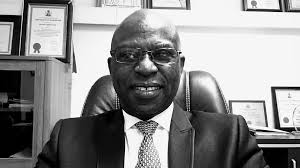
A former Rector of the Nigerian College of Aviation Technology, Zaria, Samuel Caulcrick, has identified economic instability, high operating costs, and weak investor confidence as key reasons foreign investors continue to shy away from Nigeria’s aviation sector.
Speaking on the investment climate, Caulcrick said while Nigeria has made efforts to attract investors, the country has failed to provide the necessary assurances on returns. He said, “Investors have heard us, but what are we offering to ensure their confidence in the expected returns on investment?” adding that confidence remains the bedrock of sustainable capital inflow.
He pointed to widespread financial leakages as a major deterrent, noting that illicit financial flows, oil theft, and illegal mining collectively drain between $17.72bn and $46bn annually from the economy.
He said, “These significant leakages, combined with a difficult business environment, create volatility that hampers long-term foreign direct investment and encourages short-term, speculative ‘hot money’ inflows rather than stable, productive capital.”
The aviation expert further warned that such leakages weaken the government’s capacity to invest in infrastructure critical to the sector.
While saying foreign exchange instability continues to discourage long-term commitments, he also said, “Investors are aware that all these leakages reduce government revenue available for infrastructure development to improve returns on their investments.”
Highlighting sector-specific concerns, Caulcrick recalled that blocked airline funds, which rose to about $850m as of June 2023, sent negative signals to investors despite the government clearing most of the backlog by April 2024. He explained that the episode “underscored the difficulties foreign investors face trying to repatriate funds and the sector’s associated risks.”
He also listed high operating costs, including taxes and charges such as the 5 per cent Ticket Sales Charge and Cargo Sales Charge, as barriers to investment. “If we want investors to bring in capital to the aviation sector, we have to demonstrate our willingness to reduce the operating costs in the aviation sector,” he said.
However, another industry expert, who spoke in confidence due to the nature of the matter, argued that the focus should not be solely on attracting foreign investors but on strengthening the local airline ecosystem.
“I’m not so sure that our priority is seeking foreign investors in the local airline industry. The priority issue is access to cheaper financing and/or access to aircraft leases,” he said.
According to the expert, foreign capital will naturally flow into the sector when local airlines demonstrate consistency and strong performance. “People won’t just come and put money in a business they don’t understand and cannot do proper due diligence on,” he noted.
He further emphasised that building a sustainable airline business requires time, discipline, and transparency. “It is unrealistic to expect a local airline to just become big and successful overnight. We must be able to show a track record of world-class corporate governance, a strategy that we are following, and managerial discipline,” he said.
The expert added that recent government interventions have begun to address some longstanding challenges. “We must give credit to the minister for tackling a couple of the key obstacles. For the first time in a long time, the government has carried out its ‘enabling’ responsibility. Now we must take advantage of these new, improved conditions to leverage our businesses,” he said.
Also weighing in, aviation analyst and retired Group Captain, John Ojikutu, urged caution in pushing for policy changes without a proper understanding of existing revenue structures. “We need to look into all these lapses before going into aircraft leasing to avoid another name-calling from foreign investors,” he said.
Ojikutu called for a thorough review of aviation charges and revenue distribution, particularly the Ticket Sales Charge. “Before you call for the downward review of the TSC and CSC, please find out how much is really being collected yearly and check if shareholders, NAMA, NCAT, NSIB, and NIMET get an appropriate percentage sharing,” he stated.