
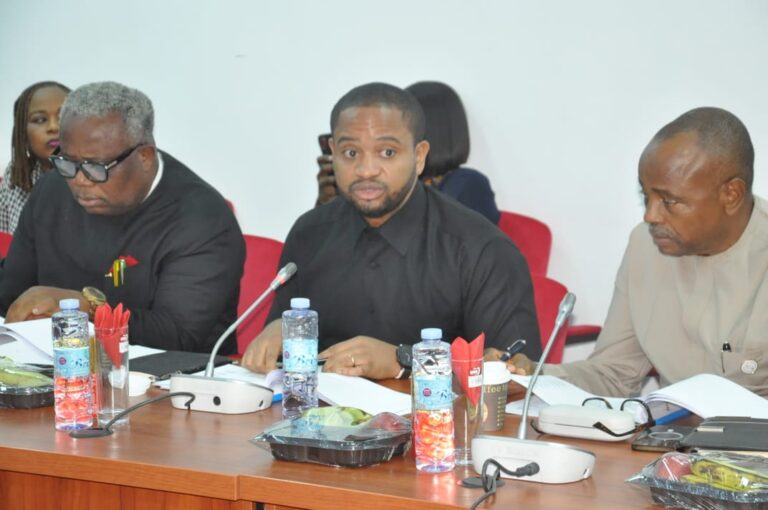



The Federal High Court in Abuja yesterday dismissed a no-case submission made by Saleh Mamman, former Minister of Power during the administration of President Muhammadu Buhari. Trial Judge, Justice James Omotosho, in a ruling on the no-case submission, held that the Economic and Financial Crimes Commission (EFCC) had been able to establish a prima facie case against Mamman.
He held that the evidence tendered was such that the defendant must proffer some explanations or put in a defence to the allegation made against him, especially considering the seriousness of the offences.
The judge, however, said that Mamman was still innocent until proven guilty. Mamman was appointed minister by the late former President in August 2019 and was sacked in September 2021. The EFCC, in the charge marked: FHC/ABJ/ CR/273/2024, had preferred a 12-count amended charge against the ex-minister as sole defendant.
The commission, in July 2024, arraigned Mamman on alleged money laundering and conspiracy with officials at the ministry and some private companies to “indirectly convert” the sum of N33.8 billion meant for the Zungeru and Mambilla Hydro Electric Power projects.
The former minister, however, pleaded not guilty to the charges. The anti-graft agency, in proving its case, called 17 prosecution witnesses (PWs) and tendered 43 exhibits against the defendant before closing its case.
However, Mamman, through his lawyer, filed a no-case submission on November 19. The former minister, who formulated one issue for determination, said the prosecution failed to present credible and reliable evidence before the court to sustain a conviction against him or for him to enter his defence.
Justice Omotosho has, however, ordered Mamman to open his defence in line with Section 36 of the 1999 Constitution to give explanations on some of the evidence tendered by the EFCC. Justice Omotosho further restated that holding that a prima facie case had been established did not necessarily imply that the court found Mamman guilty of the charge.
According to the judge, the right of a defendant to defend himself/herself is a fundamental right provided under Section 36 of the Constitution of the Federal Republic of Nigeria, 1999 (as amended). “Such right cannot be taken from a defendant except where a defendant expressly or by conduct waives the same.” The judge subsequently fixed February 23 next year for the former minister to open his defence.