



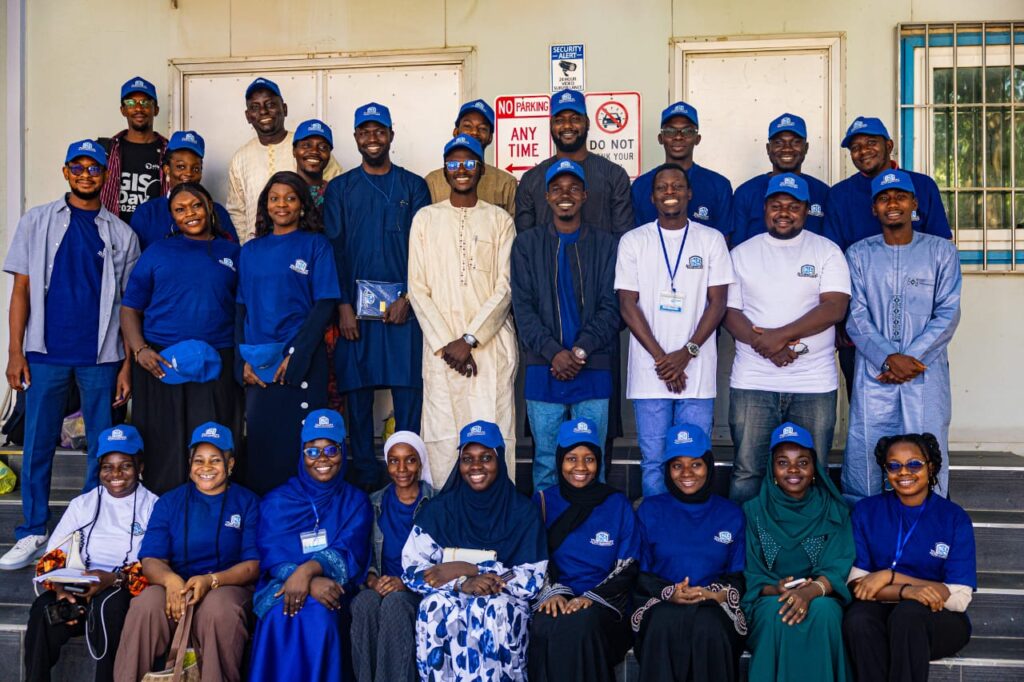
eHealth Africa Academy has successfully graduated 92 students across Nigeria and beyond, building their capacities in Advanced JavaScript and Data Analytics.
This is part of eHealth Africa’s goal to bridge the tech skills gap, especially among young people.
The 16-week Advanced JavaScript and 6-week Data Analytics cohorts empowered young people across Nigeria and Africa with relevant, in-demand digital skills to grow their careers, advance their knowledge, and create opportunities for themselves.
The Academy, which kicked off in 2016, has continued to up-skill young Africans by providing free training to build their technological capacity.
The program serves as one of eHealth Africa’s community development initiatives while contributing toward achieving Sustainable Development Goals (SDGs) 4 and 5.
Speaking during the graduation ceremony of the 7th and 8th Cohorts in Kano, Jamil Aliyu Galadanci, the Technical Lead, said this year was especially significant because, for the first time, the Academy ran two cohorts.
He said, “In order to maintain the quality and impact of the Academy, we constantly assess industry trends and market demand. Based on this, we introduced a data analytics cohort alongside our software development cohort.”
According to him, the advanced cohort allows participants to go deeper into their skills, making them more competitive and attractive to employers.
“The introduction of data analytics was driven by growing demand across nearly every sector, as we are now in a data-driven age where organisations need professionals who can interpret and use data effectively,” he said.
Having been running the eHA Academy for about a decade, there has been an immense impact, especially among young people. He said,
“Some of our former graduates are now part of our staff, while others have gone on to become partners and community leaders, including helping to establish open-source communities in Kano.
“There’s nothing more fulfilling than knowing we’ve made a meaningful difference in the lives of young people,” he added.
Representing the Kano State Commissioner of Science and Technology at the ceremony, the Permanent Secretary of the Ministry, Abba Danguguwa, described the eHA Academy as a human resource and capacity-building initiative that complements government efforts.
He said, “The Kano State Government has its own roadmap, and what eHealth AFRICA is doing aligns with what the government has already envisioned. Therefore, we will carefully review their future plans to ensure alignment with the overall vision and development goals of Kano State.”
He called on the graduates to harness their new skills to deliver on the responsibility of bridging the tech skills gap. “To the graduating students, I want to emphasise that you have been equipped with the right skills, knowledge, and experience to help you navigate the complexities of providing solutions to community problems,” he said.
One of the mentors of the eHA Academy, Muflihat Abdulmajeed, who joined the Academy as a student in 2020, revealed how she transitioned from a biology student to a software engineer.
From graduating from the Academy to becoming a mentor and joining eHealth Africa as an intern, Muflihat described the transition as a life-changing experience.
She said, “I had always wanted to be part of something impactful, and being a software engineer provides many opportunities to make a positive impact on society.” She called on the graduates to build on the skills they have learned, adding, “This is not the end of the journey. What you’ve been given are the basics, and these basics can take you as far as you want to go as a software engineer.”
Overall, the consistent graduation of students year in year out underscores eHealth Africa Academy’s continued commitment to developing a skilled, future-ready digital workforce.
By equipping young people with practical, in-demand technology skills, eHA Academy is not only improving employability but also contributing to sustainable development and innovation across Nigeria and Africa.