
A operative of the Economic and Financial Crimes Commission (EFCC), Rasheeda Chindaya, has narrated how over 600 Nigerian youths were trained in cyber fraud without legitimate employment.
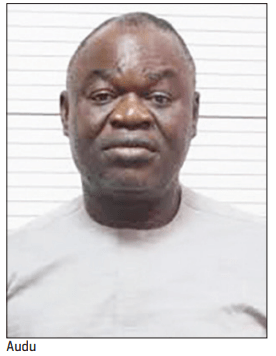
Chindaya made the narration before Justice Rahman Oshodi of a Lagos Special Offences Court in Ikeja while testifying in the trial of one, Friday Audu, accused of coordinating a vast international cryptocurrency investment and romance scam network which culminated in the landmark arrest of 792 persons in December 2024.
Audu is standing trial alongside a company, Genting International Ltd, on an amended eight-count charge bordering on forgery, impersonation, possession of fraudulent documents, and computer-related fraud, preferred against him by the EFCC. In her testimony, Chindaya alleged that the over 600 youths were connected to a sophisticated cybercrime syndicate engaged in cryptocurrency investment fraud, computer-related fraud, money laundering and romance scams.
Speaking on the outcome of investigations carried out by the anti-graft agency, Chindaya told the court that at incorporation, Genting International Ltd had Nasiru Barau and Yakubu as Directors, with a shared capital structure of N10 million and N18 million respectively.
She said both Directors were later removed in 2025 and replaced with one, Ifeanyi, who had a N12 million shareholding, and one, Matthew, who held N18 million in shares.
She said investigations showed that Genting International Ltd was presented as a gaming company. According to her, a search conducted on the company’s accounts revealed that the Bank Verification Number (BVN) linked to the accounts matched that of Friday Audu.
The BVN, she said, was connected to about 10 corporate accounts with several vendors involved in the transactions. She further told the court that the investigation uncovered financial links between Genting International Ltd and other companies, including YENGJIEPENG, BT8 Housing Nigeria Limited, and BNN Construction Limited.
Chindaya said letters of investigation were written to several banks, including which confirmed that Genting International Ltd operated accounts with balances running into billions of naira, including a peak balance of about N34 billion at a point.
Some of the inflows, she said, were traced to Bureau De Change (BDC) operators and entities such as Truly Reality and Garuba. “Further investigation revealed that many of the individuals involved were BDC operators and that some Chinese nationals arrested in the operation were linked to a notorious syndicate known as Hunang”, she added. She told the court that Truly Reality was linked to one, Chukwuemeka Okeke, who was also linked to Friday Audu.
According to the EFCC operative, Audu was the sole signatory to Genting International Ltd’s bank accounts. She said documents obtained from the bank included a request dated August for an increase in the company’s bank limit, as well as a board resolution nominating Audu as the sole signatory.
She added that funds were routinely transferred from Genting’s accounts to BDC operators for conversion into USDT (cryptocurrency), which was paid through digital wallets. One such wallet, she said, was created in May 2024, with its last transaction recorded in October 2024. The wallet reportedly received about N97 million, which investigations revealed to be proceeds of an earlier fraud later transferred into Genting’s Bank account.
Chindaya further testified that debits from the accounts included staff salaries, purchases, and payments to several Chinese companies. She said Audu personally received about N74 million, which was paid into his personal account and later traced to his FCMB account. She told the court that funds from the account were used to furnish Audu’s office, purchase furniture, diesel, and meet other expenses.
The witness also testified about another gaming company, Anhongs, whose account was opened in August. She said docu- ments obtained from the bank showed that Audu was also the sole signatory to the account and that the same Genting email address was used for its operations.
According to her, further investigations linked the company to a suspect arrested at an address on Jolayemi Street in Lagos. Chindaya told the court that of the 792 suspects arrested, 193 were foreigners, including 145 Chinese nationals, about 40 Filipinos, a Tunisian, and others, while the remaining suspects were Nigerian youths, mostly aged 27 and above.
She explained that investigations revealed that Nigerians and foreigners were recruited separately. The Nigerians were recruited through social media advertisements, with fast typing skills as the main qualification.
She said the recruits were assigned roles such as scammers, marketers, and supervisors and were trained using prepared scripts and documents on how to deceive victims.
According to her, scammers were given phones or dating app profiles, particularly on Tinder, and were instructed to communicate strictly via chats, not calls.
Once victims were convinced, she said, they were handed over to marketers who persuaded them to make payments on fake websites. After payments were made, victims were blocked.
She added that victims who were ready to pay were often transferred to Chinese operators so that no single unit of the operation fully understood the entire fraud structure.
Chindaya said Nigerian recruits earned betweenN200,000 and N800,000 monthly, while foreigners were paid between $500 and $1,000. She added that some Nigerians who attempted to withdraw from the operation were threatened with the withholding of their salaries. Further hearing in the case has been adjourned to February 24 and 26, 2026, for continuation of trial.