


The Chairmen of the Economic and Financial Crimes Commission (EFCC), Ola Olukoyede and Independent Corrupt Practices and Other Related Offences Commission (ICPC), Musa Aliyu, have raised concerns over the persistent delay in the judicial resolution of high-profile corruption cases.
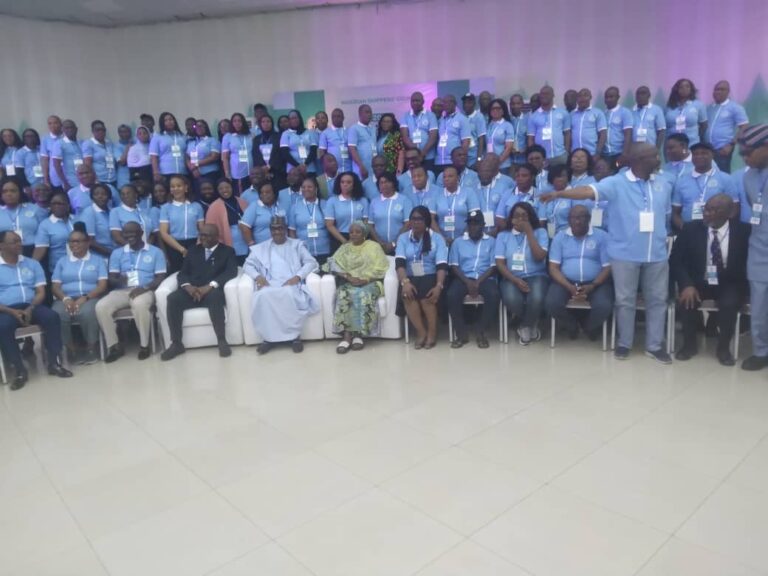
The Chairmen spoke at the ninth meeting of the Corruption and Financial Crimes Cases Trial Monitoring Committee (COTRIMCO), a body established by the National Judicial Council to monitor the progress of corruption-related trials across the country, in Abuja.
The EFCC Chairman argued that the willingness of some courts to entertain what he termed frivolous applications has significantly contributed to the slow pace of corruption trials.
In a statement made available to newsmen in Abuja by the NJC spokesperson, Kemi Babalola-Ogedengbe, Olukoyede addressed the committee on March 3 and expressed concern about what he described as the liberal use of judicial discretion in certain sensitive cases.
He warned that prolonged proceedings weaken efforts aimed at ensuring swift justice in financial crime cases.
READ ALSO:
Olukoyede suggested that addressing the challenge would require the introduction of clear benchmarks to guide acceptable judicial conduct.
He also noted that there should be consequences for actions or misconduct capable of obstructing the course of justice.
Correspondingly, the ICPC Chairman, who appeared before the committee a day later, advocated the adoption of a practice direction that would guide courts in the management of corruption trials nationwide.
He proposed that corruption cases should have specific timelines for completion, similar to the framework used in election petition tribunals, to ensure faster resolution.
Aliyu cited examples from Kenya and Zambia, where practice directions have been introduced to streamline corruption trials, adding that similar measures could help improve efficiency in Nigeria’s justice system.
He also urged COTRIMCO to develop mechanisms that would strengthen prosecution standards and promote consistency in the interpretation and application of judicial principles in criminal proceedings.
Both anti-graft chiefs acknowledged progress recorded so far in prosecuting high-profile corruption cases in the country.
Chairman of COTRIMCO and retired Supreme Court Justice, Suleiman Galadima, also commended the collaboration between the NJC and anti-corruption agencies, describing the partnership as productive.
Galadima noted that the cooperation has yielded notable results.
“According to him, the EFCC secured 1,417 convictions in the first and second quarters of 2025 alone, while the ICPC initiated 43 new cases and recorded nine convictions during the period under review.
“Although Justice Galadima noted a decline in the number of cases currently being prosecuted by the ICPC, he explained that the development was due to the Commission’s increasing focus on preventive and proactive strategies aimed at curbing corruption before it escalates into prosecutable offences.
“He reaffirmed the Council’s commitment to strengthening institutional cooperation in the fight against corruption.
“Stakeholders at the meeting also reiterated their commitment to improving efficiency, accountability and integrity in the handling of corruption and financial crimes cases across the country,” the statement reads.