

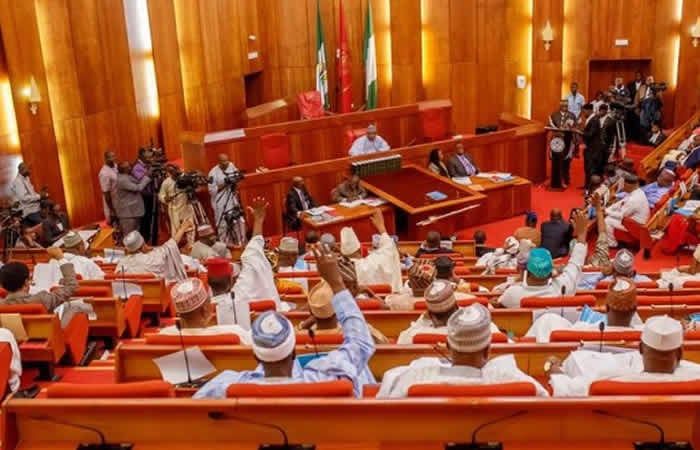
The Kwankwasiyya Movement has declared its full support for the ongoing nationwide protests against the Nigerian Senate’s decision to amend the Electoral Act in a way that weakens provisions for the real-time electronic transmission of election results.
In a statement issued on Tuesday, the movement’s spokesperson, Habibu Sale Mohammed, described the Senate’s action as “retrogressive” and a serious setback to Nigeria’s democratic development. He said the amendment threatens years of progress made toward transparent and credible elections.
“This decision represents a direct threat to Nigeria’s democratic progress and a betrayal of the collective demand by Nigerians for transparent, credible, and technology-driven elections,” Mohammed said.
According to him, weakening safeguards around result transmission at a time when public confidence in electoral institutions needs strengthening sends the wrong signal to citizens and the international community.
“Nigerians are justified in interpreting this move as a deliberate attempt to reopen the door to electoral manipulation and the subversion of the people’s will,” the Kwankwasiyya spokesperson stated.
The movement also aligned itself with the positions of several civil society and governance institutions that have opposed the Senate’s decision, including the Centre for Democracy and Development (CDD) through CEMESO, the Kukah Centre, and the International Press Centre (IPC).
“These organisations have consistently called on the Senate to adopt the position already taken by the House of Representatives on real-time electronic transmission of results,” Mohammed said, adding that the issue “is not partisan, but a national democratic imperative.”
He further commended Nigerians from different backgrounds who have continued to mobilise peacefully against what he described as “legislative regression,” praising the role of civil society groups, professional bodies, opposition parties, the Obedient Movement, other youth-led movements, and other pro-democracy platforms.
“This moment has once again demonstrated that Nigerians, irrespective of political, ethnic, or religious differences, can unite in defence of democracy,” Mohammed said.
Reaffirming the movement’s stance, he stressed that credible elections depend on transparent and verifiable processes, insisting that electronic transmission of results has become a basic democratic requirement.
“Real-time electronic transmission of results is no longer optional; it is a minimum democratic standard,” he said.
Mohammed concluded by urging protesters across the country to remain peaceful and law-abiding, describing the campaign for credible elections as fundamental to Nigeria’s future.
“The struggle for credible elections is a struggle for the soul of Nigeria and must be pursued with unity, discipline, and unwavering commitment,” he added.