



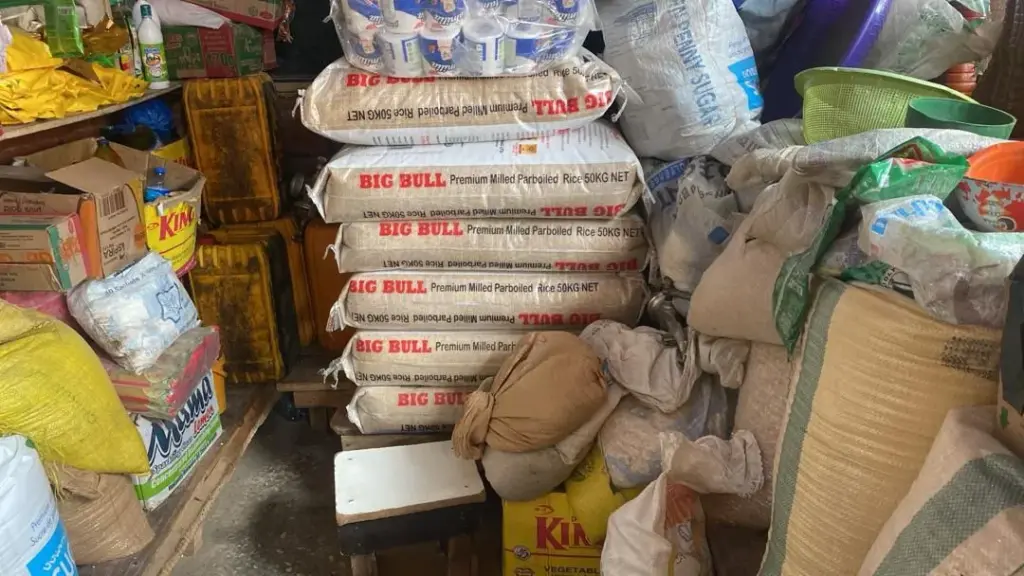
Low purchasing power may hinder celebration.
With just four days to Christmas, a general survey of local markets has revealed a drop in the prices of some food items across some markets, offering some relief to consumers. However, despite the price crash, the low purchasing power of Nigerians continues to affect the sale of goods and services nationwide.
Although traders had anticipated increased sales following the reduction in food prices, many consumers are unable to make significant purchases for the yuletide due to financial constraints. While weak demand has triggered widespread price reductions, many markets remain unusually quiet for this time of the year. Households are grappling with high living costs and are largely waiting for income inflows.
For many Nigerians, the current economic situation has worsened matters, as low income levels persist amid rising costs of daily essentials driven by inflation. A visit to several markets showed that prices of foodstuffs and other goods have declined reasonably, largely due to weaker purchasing power compared to the high costs recorded during the festive period last year. While some consumers expressed satisfaction with the moderate price reductions, traders lamented that patronage remains low despite the significant drop in prices.
Prices of food items stable in Ondo State
At Isinkan Market in Akure, the state capital prices of staple items were found to be stable or significantly lower, yet buyers were few. A similar situation was observed at Sabo Market, where traders said business remained dull despite the festive period.
A 50kg bag of rice sells for between ₦55,000 and ₦80,000, depending on location and quality, while a plastic measure of beans goes for between ₦1,200 and ₦2,200. Palm oil sells at ₦62,000 per keg and ₦2,000 per bottle. 10kg bag of semovita costs ₦17,800, with the 1kg pack selling at ₦1,800. Garri, which once sold for ₦1,600 per plastic, now goes for as low as ₦500.
Broiler chickens sell for between ₦30,000 and ₦35,000, while old layers go for ₦8,000 to ₦9,000 depending on size. Despite these sharp reductions, traders said sales are being delayed by cash shortages. For instance, Chief Fehintola Ogunmola said sales remained generally low even with Christmas just days away, but noted that civil servants traditionally account for most festive shoppers.
Traders said that they are holding on to unsold goods and have slashed prices to stay afloat, while transport costs and government policies continue to strain operations. However, many believe that the price cuts have positioned the markets for a quick rebound once wages are paid.
Also, farmers and traders are selling at cheap rates to avoid losses. In Ondo South Senatorial District, traders in Okitipupa, Igbokoda, and Ese-Odo local government areas reported similar experiences. Prices of rice, chicken, groundnut oil, yams, fish, and garri have dropped considerably, raising expectations of improved patronage when salaries are paid.
A rice seller, Mr Ikechukwu Ejimadu, described the situation as challenging, but said that early payment of salaries could still salvage the festive season. In Okitipupa, Mr Anthony Ekenwa linked the fall in prices to improved naira exchange rates, noting that although patronage remains weak, the sharp drop in prices could increase sales once workers receive their salaries.
According to him, local rice dropped from ₦90,000 to ₦60,000 per bag, while foreign rice fell from ₦150,000 to ₦75,000. At Igbokoda and Igbekebo markets, traders reported lower prices for fish, garri, and condiments with many expressing hope that salary payments would translate to increased turnout in the coming days.
The Chairperson of the Market Women Association, Okitipupa Main Market, Mrs Funke Ajibulu, attributed the lull to economic hardship, but expressed optimism that markets would rebound once wages are released. In Akoko, traders at Ibaka, Okusa, Supare, and Ikare markets also reported price drops alongside weak patronage.
A grocery seller, Mrs Iyabo Ajiwoju, said that the prices of food items have improved and could lead to better celebrations during Christmas once salaries are paid. She said; “One rubber of foreign rice sells for ₦2,000, beans for ₦1,300, and semovita for ₦3,200.
Half a bag of rice goes for ₦25,000. Once people are paid, sales will improve.” A yam seller, Mrs Grace Adaji, said that large tubers sell for ₦7,000, while a provision store operator, Mrs Amaka Linus, said that spaghetti now sells for ₦800, detergents for ₦1,700, and macaroni for ₦1,000, adding that traders are hopeful of improved sales.
In Ore, headquarters of Odigbo Local Government Area, traders are experiencing increased sales. Surveys at Sabo and Reserve markets showed a sharp fall in prices of staples such as rice and beans, with traders linking better patronage to early income inflows.
A trader, Mrs Kemi Oriowo said that a bag of rice now sells for between ₦60,000 and ₦70,000, down from ₦80,000 and ₦90,000, adding that she recorded rapid sales and nearly exhausted her stock.
Reduction of prices experienced in Ekiti State
In Ekiti State prices of food items such as rice, meat, chicken tomato and garri have witnessed considerable reduction. When Saturday Telegraph visited the popular Oja Oba market, in Ado Ekiti state capital, some market sellers confirmed that there is reduction in the prices of the commodities except for items such as palm oil, and pepper which they said have no significant change in the prices.
For instance a bag of foreign rice, which was earlier sold between N90,000 and N100,000 now goes for between N58,000 and N60,000. A measure of beansm, which was sold for N2,500, now goes for between N1,200 and N1,500. A kilo of meat, which was sold for N9,000 now goes for N7,000. A kilo of chicken, which was sold for N8,000 is now N6,000.
A kilo of Turkey, which sold for N9,000 now goes for N7,000. A plastic of gaari, which was sold for N1,500 now goes for N300. However some pepper sellers, who spoke with our correspondent, stated that there has been a high reduction in the price of pepper, while the price of palm oil is static. It was revealed that a bag of rice is now sold for N50,000, while a kongo of beans, which was sold for between N1,900 and N2,000 has now reduced to N1,300.
Oloyin beans, which was N2,500 is now N1,600. Also, a kongo of garri, which was sold for about N700 and N800 has now reduced to N400. The survey revealed that 5 litres of red oil, which was N15,000 is now sold for N10,200, while the prices of chickens, depending on the sizes, now range between N20,000 and N40,000.
But on the contrary, prices of meat have continued to rise, rather than reducing, while the prices of soft drinks have remained the same with a pack of 50clo soft drinks selling for N4,7000, and 35cl selling for N3,400.
Foodstuff sellers lament poor patronage in Osun State
Traders in Osogbo, Osun State capital, yesterday, lamented poor patronage and unfavourable business condition. Speaking with Saturday Telegraph, a soft drink seller at Zone 5, Aigbagbon, Okinni, Mrs Farinde Adenike lamented that they’re experiencing low patronage due to harsh economy and scarcity or resources.
“I sell soft drinks and alcoholic drinks. We are experiencing low patronage due to harsh economy. In fact, it doesn’t even look as if we are in the festive period. “The major challenge we have is the high cost of transportation, and customers complain because things are expensive.
We heard that the price of petrol has been reduced, but we are yet to feel its impacts and things still remain the same. Many customers complain and buy less than before.
Some even leave without buying anything.” Mrs Elizabeth Ifelola, who sells onion and tomato at Owode-Ede market, attributed some of the challenges to high cost of transportation, saying that most people make few purchases due to low income.
“Transportation is a serious problem. Also, some goods get spoiled easily, especially tomatoes and pepper, which leads to loss. I try to reduce the quantity of what I buy and sell quickly so that the goods will not spoil. “Things were better than it is now few months back.
Then, prices of items were still manageable, and customers were buying more. As the year progressed, the cost of goods and transportation increased, which affected sales. At this period, market is very low because many customers complain about high prices and buy few items,” she said.
Corroborating her, Another trader at Igbona market, Osogbo, Alhaja Kudirat Aribidesi said, “I sell 50 kilogram bag of Nigerian rice at N59,000 and despite that we recorded low patronage. “I bought a pack of tomato paste at N10,200, but I sell at N10,600.
I bought 25 litres palm oil at N30,000 and I sell a 75cl bottle at N900. “Most customers complain of low purchasing power. The government should consider subsidising transportation of foodstuff to reduce cost of food items.” It’s a mixed trend for commodity prices in Owerri, as small businesses groan A survey of staple items in Owerri, the capital of Imo State, revealed that the price of rice has dropped significantly.
A bag of rice that sold for ₦75,000 few months ago is now selling for ₦50,000. Beans has also recorded a modest reduction with a paint plastic now selling for ₦4,000 compared to ₦5,000 that it previously sold for. The prices of vegetable oil have similarly declined.
A litre of oil that cost around ₦2,200 is now selling for approximately ₦1,900. However, not all commodities are following this downward trend. The cost of powder milk has increased sharply, rising from ₦18,000 to ₦22,000 per paint plastic.
This spike is particularly troubling for bakers, caterers, and consumers. The mixed price situation is already taking a toll on small-scale food businesses. Speaking on the impact, Ella Ayozie, owner of Ella Cakes & Events, expressed deep concern about the rising cost of production despite some reduction in food prices.
According to her, the increased cost of powder milk is affecting her bakery operations from yoghurt production to production of cakes and pastries. She disclosed that her monthly electricity bill that was about ₦10,000, earlier in the year has risen to about ₦30,000, while the high cost of petrol has affected cost of transportation.
She noted that the reported reduction of fuel by Dangote refinery was yet to reflect on the prices of fuel at the filling stations in the area. “It’s not just about increasing prices; it’s about staying afloat,” she said, noting that continued pressures on production cost may force her to pass expenses on to customers or reduce production.
Ayozie however, called on governments at all levels to urgently address the economic challenges confronting small businesses, particularly through policies that stabilise energy costs and support local producers.