



…says ₦58 trillion figure remains meaningless to average Nigerians without a relatable presentation
With Nigeria’s 2026 national budget projected at approximately ₦58.18 trillion, data analyst Adeola Yusuf says the real challenge is not the size of the figure but the failure to translate it into terms Nigerians can understand and relate to in their everyday lives.
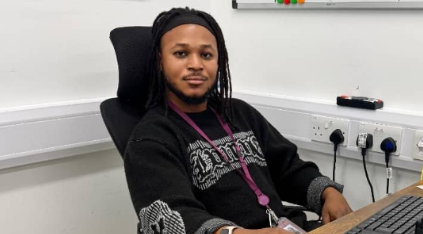
Speaking with journalists in Lagos, Yusuf, who has professional experience across both public and private sectors, argued that data analytics and visualisation tools are essential for turning abstract budget figures into meaningful insights.
“₦58.18 trillion is a meaningless number to the average Nigerian because it is presented in a way people cannot relate to,” Yusuf said. “Data tools and visualisation can break the budget down per citizen, per household, or per day. They can show how much actually goes to healthcare, education, security, infrastructure, and debt servicing, not buried in PDFs, but presented visually.”
He explained that properly contextualised data could reveal uncomfortable truths often lost in headline figures. “You can show what the budget means per region per month, how little of the revenue is allocated to healthcare, or how debt servicing alone may exceed spending on education. That level of clarity changes the conversation.”
According to Yusuf, interactive dashboards, mobile-friendly charts, and simple infographics can help Nigerians understand why fuel prices rise, why hospitals lack equipment, and why basic services remain underfunded despite large national budgets.
Yusuf described his professional focus as operating “at the intersection of data, public value, and real-world decision making.”
“I’ve never been interested in data for data’s sake,” he said. “What drives my work is using data to make complex systems understandable, whether it is housing demand in a local authority, operational spending in facilities management, or financial risk signals in treasury and compliance environments.”
He noted that working across both private and public sectors has shaped his analytical approach. “In the private sector, the pressure is clear, efficiency, cost control, performance, and risk management.
In the public sector, the stakes are higher: fairness, accountability, service delivery, and human impact. My motivation comes from bridging those worlds, bringing private sector rigour into public services while keeping transparency and ethics at the centre.”
Yusuf emphasised that the effective use of data can save money, time, and, in some cases, lives, particularly in sectors that affect vulnerable populations. “Housing, homelessness, healthcare, and social care are areas where poor decisions carry real human costs. Data allows decision makers to see problems early and act before crises escalate.”
He described data not merely as a reporting function but as a “control mechanism.” In local government and housing contexts, Yusuf has worked with operational datasets to identify demand patterns, track outcomes rather than spending alone, and highlight inefficiencies where resources are consumed by reactive interventions instead of preventive support. In facilities management, he has developed dashboards that track labour hours, overtime, agency costs, and site-level spending in near real time, allowing clear comparison between planned budgets and actual outcomes.
“In finance and treasury environments, data underpins risk monitoring, transaction tracking, and audit readiness,” he explained. “Once numbers are visible, timely, and comparable, excuses disappear. Decisions become evidence-based rather than instinct-driven.”
Looking ahead, Yusuf believes artificial intelligence and big data will significantly reshape governance, sustainability, and business performance, if applied responsibly. He said AI can help governments detect fraud and inefficiencies earlier, evaluate policy impacts through long-term modelling, and improve transparency through automated reporting. In sustainability planning, analytics can support smarter energy use, better housing stock management, and more effective infrastructure investment.
For businesses, Yusuf said AI shifts analytics from simply explaining past events to predicting future risks and consequences. “That predictive layer, asking what will happen if we do nothing, is where real value lies,” he said. However, he warned against blind automation. “Technology should support judgment, not replace it. Poor-quality data combined with AI only produces faster mistakes. Governance frameworks, data standards, and explainability must come first.”
On collaboration, Yusuf called for stronger partnerships between journalists, civil society organisations, government agencies, and data professionals.
“Government must publish clean, machine-readable datasets. Analysts translate figures into insight, journalists tell stories rooted in lived experience, and civil society provides context and accountability. When analysts are involved early, budgets stop being political theatre and start becoming measurable social contracts.”
He concluded with a guiding principle that underpins his work. “Data is power only when it is understood. My work is about turning numbers into clarity, and clarity into better decisions that genuinely improve lives, whether in Nigeria or the United Kingdom, in housing or in finance.”








