
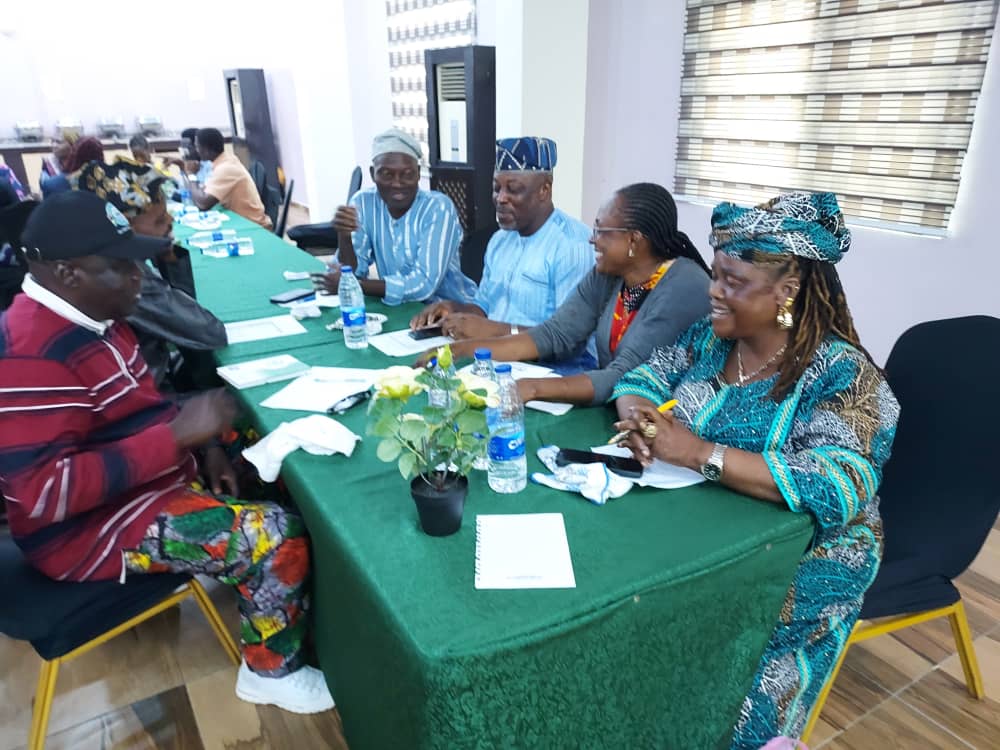
Community, religious, and traditional leaders have pledged to champion safe nutrition as civil society seeks to curb malnutrition through local advocacy.
For decades, Nigeria has battled with malnutrition, a crisis often overshadowed by louder headlines of insecurity and economic hardship. But behind the statistics are silent drivers, unregulated foods, including unbranded and unfortified edible oils, that make their way into kitchens daily.
Now, the Civil Society Scaling Up Nutrition in Nigeria (CS-SUNN) believes the solution lies in empowering grassroots voices to lead the change.
At a town hall meeting in Lagos, organised with support from eHealth Africa and the Global Alliance for Improved Nutrition (GAIN), CS-SUNN convened an unusual coalition: chiefs, pastors, imams, community development chairpersons, and consumer advocates. The objective was simple but urgent: to build a united front to phase out unbranded and unfortified oils and safeguard public health.
The stakes were made clear from the start. Citing alarming figures, Lagos State Nutrition Officer, Mrs Taiwo Fadairo (represented by Mojibolanle Belo), warned that 49.5 per cent of women aged 15–49 in the state are anaemic, while child stunting has risen from 8.9 per cent in 2011 to 39.4 per cent in 2022.
“Investing in nutrition is crucial for improving the status of vulnerable groups and combating malnutrition,” Belo said, pointing to funding gaps and limited manpower as key bottlenecks.
But while government enforcement remains critical, CS-SUNN argued that true change must come from trusted community figures who shape behaviour at the grassroots.
“Nutrition is not just about policy; it is about practice,” one CS-SUNN facilitator told participants. “People listen to their religious leaders, their chiefs, and their local association heads. If you speak, they will act.”
That message resonated with many in the room. Mr Lawal Bolanle Jamiu, a community leader from Ajeromi-Ifelodun, described how he plans to spread the word:
“Any programme I attend like this one, I usually go back and relay it to the Community Development Council. They will invite me to their meetings, and I’ll share what I have learned. That is how information goes far.”
For some, the dangers of unbranded oil were already lived realities. Alhaja Musiliat Olaseni, Chairperson of a CDA in Agege, recalled her personal experience: “When you pour some of these oils into the frying pan, the smell alone tells you it’s not good. Some are so red, it looks like colouring was mixed in. Others look adulterated. With what I’ve heard today, I will ensure people in my community know the risks. It is only God who has been protecting us.”
Religious leaders also pledged to take the message to their congregations. Bishop Godstime Ikumapayi of the Christian Association of Nigeria said:
“To eat unbranded oil is terrible. It may look cheap, but the health costs are much higher. My role is to bring advocacy to churches. Information is vital; if one is not informed, the person will be deformed.”
From Apapa, Chief Joseph Omobolanle Ogunmola, Baale of Marine Beach, promised to call a community-wide meeting:
“When I get home, I will gather my people and tell them that branded oil is what they should be buying, because of the quality and fortification. May we not die untimely.”
Consumer rights advocates added their voice. Oghenerukevwe Winifred of the Consumer Advocacy and Empowerment Foundation (CADEF) stressed vigilance:
“Most times, when you go to the market, you see unbranded oils congealed. If a cooking ingredient changes with the weather, something is wrong. This is a call for everyone to open their eyes and be very aware of what they buy.”
Others pointed to wider food safety concerns. Femi Emiko, of the World Health Committee in Shomolu-Bariga, highlighted the risky practices of food vendors:
“Those who fry foods for sale often adulterate oils, topping up used oils with new ones. It poses serious hazards for unsuspecting consumers. After this programme, I will put in more effort to sensitise people, even the customers, so they understand the risks.”
As the meeting wound down, participants reached a consensus: tackling unbranded oil consumption requires more than laws and penalties. It requires collective will, community advocacy, and the voices of trusted leaders echoing from pulpits, palaces, and town halls.
“Charity begins at home,” said Rabiu Adeniran Kazeem, CDC chairman in Egbe/Idimu LCDA. “We need to enlighten our wives and families first, then cascade the information to our local and state-level meetings. If we start this way, the message will go far.”
For CS-SUNN, the Lagos town hall was not the end but the beginning of a broader movement. By equipping grassroots leaders with knowledge, the organisation hopes to multiply its impact across communities.
As one participant puts it bluntly: “Health is wealth, and knowledge is power. If our people know better, they will do better.”