
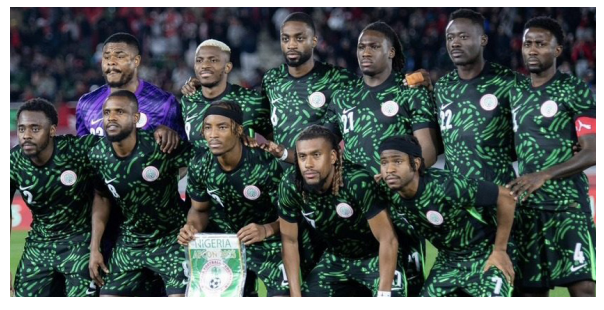
Nigeria’s absence from the 2026 FIFA World Cup has been confirmed, following FIFA’s dismissal of the country’s petition against the Democratic Republic of Congo. For the Super Eagles, this ruling marks the end of a struggling qualification campaign. The fallout includes billions of naira in lost revenue and missed exposure for players, businesses, and journalists. SEGUN BAILEY writes that this situation represents not just a sporting failure, but a national setback measured in naira and kobo.
Nigeria’s qualification campaign began with optimism after the Super Eagles were drawn alongside relatively lower-ranked opponents such as Lesotho, Zimbabwe, Rwanda, and the Benin Republic. Many Nigerians believed qualification would be straightforward. On paper, these were teams Nigeria was expected to beat comfortably. But football is not played on paper, and what followed was a campaign filled with mistakes, missed chances and poor results.
The first warning sign came when Nigeria could only manage a draw at home against Lesotho. It was a result that shocked many fans and immediately raised questions about the team’s readiness. That concern grew stronger when the Eagles played another draw against Zimbabwe in their second match. Instead of correcting those early slipups, the team continued to struggle.
After reaching the final of the 2023 Africa Cup of Nations, expectations were high that the Super Eagles would carry that form into the World Cup qualifiers. But that did not happen. Nigeria returned to the qualifiers and played out another draw against South Africa. Soon after, things went from bad to worse when the Eagles suffered a disappointing defeat to Benin Republic at a neutral venue. That loss, in particular, exposed serious weaknesses in the team.
By the time the Super Eagles began to show some level of improvement, it was already too late. The early damage had put them in a difficult position, forcing them to chase results under pressure. A late push helped Nigeria secure a playoff spot, giving fans a small ray of hope. But even that opportunity ended in heartbreak. The Eagles opened the playoff with a resounding victory against Gabon but a shambolic showing in the final against DR Congo saw the team played a 1-1 draw before losing 4-3 on penalties. It was a painful exit, and for many Nigerians, it felt like a repeat of familiar disappointments.
A former international, Friday Elaho who spoke with New Telegraph, said the team’s problems were clear from the beginning. “You cannot struggle against teams that are far below you and expect to qualify easily. Those early matches were very important. Once they failed to win them, they put themselves under unnecessary pressure. By the time they tried to recover, it was already too late,” he said
FIFA ruling ends last hope
After the playoff defeat, the Nigeria Football Federation (NFF) made a last attempt to rescue the situation by taking a case to FIFA. The NFF questioned the eligibility of some DR Congo players. However, FIFA dismissed the complaint and ruled in favour of DR Congo. For many football stakeholders, that decision did not come as a surprise.
Elaho said Nigeria should not have depended on such an approach. “You cannot lose on the pitch and then expect FIFA to change the result for you. These matters are decided based on strong evidence, not emotions. The real issue was how the team performed during the qualifiers,” Elaho added. “The petition was a ploy by the NFF to just buy time so that people will not criticise them for how we failed and why we failed,” another ex-international, Friday Ekpo, said.
“Why did it take the NFF so long to appoint coaches? During the qualifiers alone, three different coaches managed the team and yet nothing came out of it,” he said. He added that both the administrators and the players must share responsibility for the missed opportunity. “The NFF and the players bungled Nigeria’s chances. We were in one of the easiest groups but we still failed to qualify. And when another opportunity came again, we still messed it up,” Ekpo said.
Huge financial loss for Nigeria
Nigeria’s failure to qualify is not just about missing the World Cup. It also means losing a huge amount of money. Since Nigeria first qualified for the World Cup in 1994, the country has benefited financially from participating in the tournament. At the 1994 World Cup, Nigeria earned millions of dollars despite not going all the way.
Over the years, FIFA has continued to increase the prize money for participating countries. At the 2010 World Cup, Nigeria earned about $9 million after exiting in the group stage. In 2014, the Super Eagles made it to the Round of 16 and earned about $10.5 million. At the 2018 World Cup, the team received about $9.5 million. These earnings show that even just qualifying for the World Cup brings significant financial benefits.
2026 World Cup would have been the biggest yet
The 2026 World Cup, to be hosted by the United States, Canada and Mexico, is expected to be the biggest and most profitable in history. FIFA has already approved a record financial package of $727 million, with $655 million set aside as prize money. Each country that qualifies is guaranteed at least $10.5 million. Teams that go further in the competition will earn much more, with the winners expected to receive up to $50 million.
A sports finance expert, Segun Adeyeye, explained what Nigeria has lost. “If Nigeria had qualified and reached the Round of 16, they could have earned over $15 million. If they went further, it could be close to $20 million. When you convert that to naira, it is a very large amount of money. This is money that comes in within a short period,” he said.
Effect on business and the economy
Nigeria’s absence will also affect many businesses. According to sports marketing expert Kehinde Adeeyo, the World Cup is not just about football, it is a global business platform. “When a country like Nigeria is not there, many things are affected. Sponsorship deals reduce.
Tourism is affected. Hotels, airlines, media companies and even small businesses feel the impact,” he said. Nigeria has one of the largest fan bases in Africa, and Nigerian supporters are known to travel and spend money during major tournaments. Without the Super Eagles at the World Cup, that level of economic activity will drop.
Loss of commercial opportunities
One clear example of Nigeria’s commercial strength was seen during the 2018 World Cup when Nike produced the Super Eagles jersey. The jersey became a global sensation, with over three million people placing orders before it was even released.
That kind of success is unlikely to happen in 2026 because Nigeria will not be part of the tournament. Branding expert Eze Gabriel said the impact is significant. “The Super Eagles jersey is not just a football shirt. It represents Nigerian culture and identity. When Nigeria is not at the World Cup, the demand reduces, and that means less income for everyone involved,” he said.
Players miss big opportunities
The World Cup is also very important for players. Former international Waidi Akanni said the tournament gives players a chance to change their careers. “This is where players get noticed by top clubs.
This is where big transfers happen. Many players improve their careers because of their performance at the World Cup,” he said. He pointed out that players like Austin ‘Jay-Jay’ Okocha became more popular globally because of their performances on that stage. Now, a new generation of Nigerian players will miss that opportunity. Even top stars like Victor Osimhen will not have the chance to showcase themselves at the biggest football stage in the world.
Media also affected
The impact goes beyond players and officials. It also affects journalists, photographers and content creators who are expected to cover the event. “When Nigeria qualifies, brands come in with sponsorships and partnerships. There are more opportunities for journalists, but when we are not there, you can hardly see any brand that will want to sponsor journalists to the tournament because they believe it might be difficult to get value for such investment when the Eagles are not there. ,” he said.
Millions of Nigerians feel the impact
Former Super Eagles player Segun Odegbami explained that the effect of missing the World Cup is very wide. “There are many Nigerians who depend on football for their daily income. You have traders, transport workers, viewing centre operators, journalists and many others. When Nigeria is not at the World Cup, all these people are affected,” he said.








