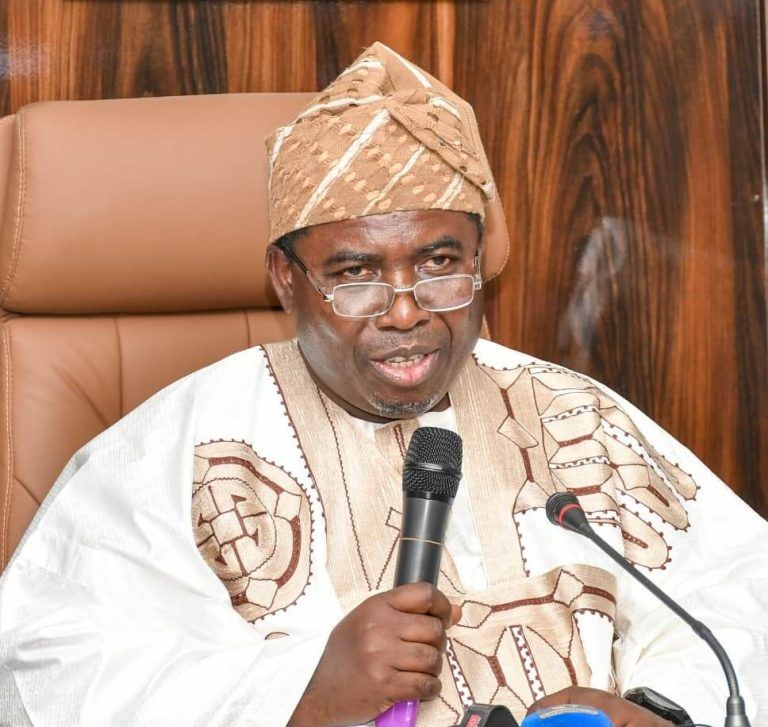

The President of the Cocoa Farmers Alliance Association of Africa, Adeola Adegoke, has called for a harmonised cocoa pricing model across African markets, warning that existing pricing frameworks are failing to deliver meaningful benefits to farmers despite their original intent.
Adegoke, in an open letter to cocoa farmers across the continent, lamented that producers continue to face declining incomes and market uncertainties, even after a historic price rally in 2024.
He said, “We understand that cocoa farmers are currently going through a difficult time due to the downturn in cocoa prices over the past year. No origin countries in Africa are currently immune from this terrible situation, which has negatively impacted the good enthusiasm exhibited by all of us during the cocoa price boom in 2024.”
The COFAAA president noted that while governments introduced pricing models such as regulated and semi-regulated systems to shield farmers from volatility, the mechanisms have not achieved their intended outcomes.
He stated, “At COFAAA, we find it concerning that the current pricing models do not seem to be delivering the intended benefits for cocoa farmers. These systems were designed to help stabilise prices across cocoa-producing countries, yet in practice, prices have been quickly adjusted to match international market fluctuations.”
Adegoke added that the situation has eroded the expected stability such policies were meant to guarantee, calling for a continent-wide rethink of cocoa pricing structures.
He further raised concerns about the disconnect between the global chocolate market and the welfare of African farmers, stressing that producers continue to grapple with structural challenges despite underpinning global supply.
He said, “Global chocolate consumption has long been sustained by the hard work of African cocoa farmers, many of whom continue to face serious challenges, including low incomes, child labour risks, limited access to education, poor infrastructure, inadequate healthcare and growing security concerns such as illegal mining.”
The COFAAA president questioned the sustainability of current pricing interventions, including the Living Income Differential introduced by Ghana and Côte d’Ivoire.
He said, “It is concerning to see that over the past year, despite the sharp downturn in cocoa prices, the impact of the Living Income Differential has not been as strong as many had hoped.”
Adegoke, however, acknowledged the initiative as a step in the right direction, adding that it requires further clarity and evaluation to determine its long-term viability.
He said, “We respectfully encourage the Conseil du Café-Cacao, Ghana COCOBOD and the Ivory Coast, Ghana Cocoa Initiative to provide further clarity on the current status and future direction of the LID.”
To address the challenges, COFAAA has inaugurated a Global Members Assembly and Empowerment Forum to develop a unified African position on cocoa pricing and farmer welfare.
Adegoke said the forum would appraise current market developments and propose solutions, noting that Africa produces about 70 per cent of global cocoa but earns less than six per cent of the over $147bn global chocolate market.
He said the initiative would also explore measures to support farmers with inputs and safety nets to cushion the impact of falling prices across producing countries.
Adegoke noted, “COFAAA as an organisation representing the producers in the continent has set up a COFAAA Global Members Assembly and Empowerment Forum to appraise the current development as it affects us as a continent and come up with a position.”
He disclosed that the forum would include about 20 farmers per country, with participation from Côte d’Ivoire, Ghana, Cameroon, Nigeria, Uganda and Sierra Leone, alongside expert-led subcommittees.
Adegoke added that public discourse would begin on 21 March 2026, via a virtual session to enable wider participation among stakeholders.
He said, “We cannot continue doing the same things in the same way in Africa and expect a different outcome.”