


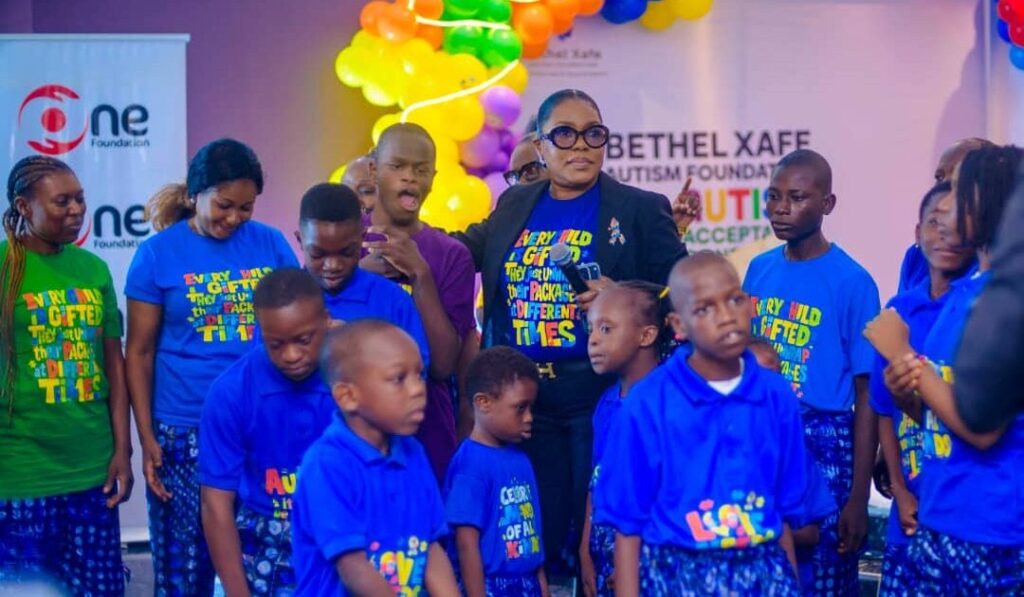
Stakeholders, educators and parents gathered in Lagos for the 2026 Autism Acceptance Conference, where advocates called for stronger support systems and greater inclusion for children living on the autism spectrum, highlighting persistent gaps between policy discussions and everyday realities faced by families.
The conference, organised recently by the Bethel Xafe Autism Foundation to coincide with World Autism Awareness Day, brought together experts, child advocates and carers to promote acceptance of neurodiversity and practical solutions aimed at improving outcomes for autistic children in Nigeria.
In her opening address, Founder of the Bethel Xafe Autism Foundation, Dr Oluwatosin Akande, urged society to move beyond awareness campaigns towards meaningful acceptance and inclusion.
“It is an honour and privilege to welcome you to the 2026 Autism Acceptance Conference,” Akande said, noting that global conversations on autism must now evolve.
“For decades, the conversation has focused on awareness… the time has come for acceptance.”
She said the conference theme, “When Inclusion Becomes a Lifestyle, Not Just a Policy”, challenges institutions and communities to close the gap between commitments made on paper and the lived experiences of individuals on the autism spectrum.
“To embrace inclusion as a lifestyle is to recognise that diversity in neurology is not an aberration to be corrected but a variation to be celebrated,” she said, calling for education systems, labour markets and communities to be redesigned to accommodate neurodivergent individuals.
The event featured presentations from advocates and professionals, including Mr Remi Olutimayin; actress and autism child advocate Heavenly-Dera Osadebe; Dr Adeola Ekine, special adviser to the president of the Nigerian Union of Journalists; and Mrs Solape Azazi, an international behaviour analyst and founder of Cradle Lounge.
Speakers emphasised the need for collaboration among policymakers, schools and civil society organisations to ensure children with autism receive adequate educational and social support.
Akande said the foundation’s work focuses on bridging the gap between policy and practice through therapy programmes, family support services and advocacy initiatives, while calling on partners to support sustainable inclusion efforts.
“The work of transforming societies is resource-intensive,” she said. “It requires collective will and collaborative investment from all stakeholders.”
A highlight of the conference was an exhibition where children on the autism spectrum presented handmade beadwork they created as part of empowerment activities supported by the foundation.
The presentations drew applause from attendees and underscored the event’s central message that children with autism can develop skills and confidence when provided structured guidance and supportive environments.
Organisers said such activities help challenge stereotypes and demonstrate the capabilities of neurodivergent children beyond commonly held misconceptions.
The conference also featured emotional testimonies from parents, including teacher Helen Olonikadi, who recounted her journey raising a child later diagnosed with autism after years of confusion and limited professional guidance.
Olonikadi described struggling to understand her child’s developmental differences and facing advice from some people to isolate or give up on him before eventually finding support through the Bethel Xafe Autism Foundation.
“I learned patience from him,” she said, explaining how repeated teaching and consistent encouragement helped her child gradually develop communication and social skills. “The child has found you; now find your child,” she added, encouraging other parents to embrace acceptance rather than despair.
She said access to structured support changed both her parenting approach and professional outlook as a teacher, helping her better understand children with special learning needs.
Project Lead for Education at Sterling One Foundation, Samuel Ajayi, called for inclusive school environments and stronger policy attention to disability education, noting that specialised schools remain limited and often inaccessible to many families.
“Our schools are very important, and this should be a message to policymakers,” he said, urging authorities to make learning environments accessible so children with disabilities can study closer to their communities.
He added that inclusion requires collective responsibility from educators, institutions and society to ensure every child feels safe and supported.
Autism Spectrum Disorder is a developmental condition affecting communication, behaviour and social interaction. Advocates at the conference stressed that autism is not a disease but a different way of experiencing the world and that with appropriate support, children can learn, grow and thrive.
Participants said Nigeria has made gradual progress in autism awareness, but acceptance and structured support systems remain limited, leaving many families to navigate diagnosis, therapy and education largely on their own.
Closing the conference, organisers urged attendees to become ambassadors of inclusion in their communities.
“Let us listen, let us learn, and let us leave here as ambassadors of a new ideology,” Akande said. “Inclusion must not remain a document we file away but a life we live every day.”