
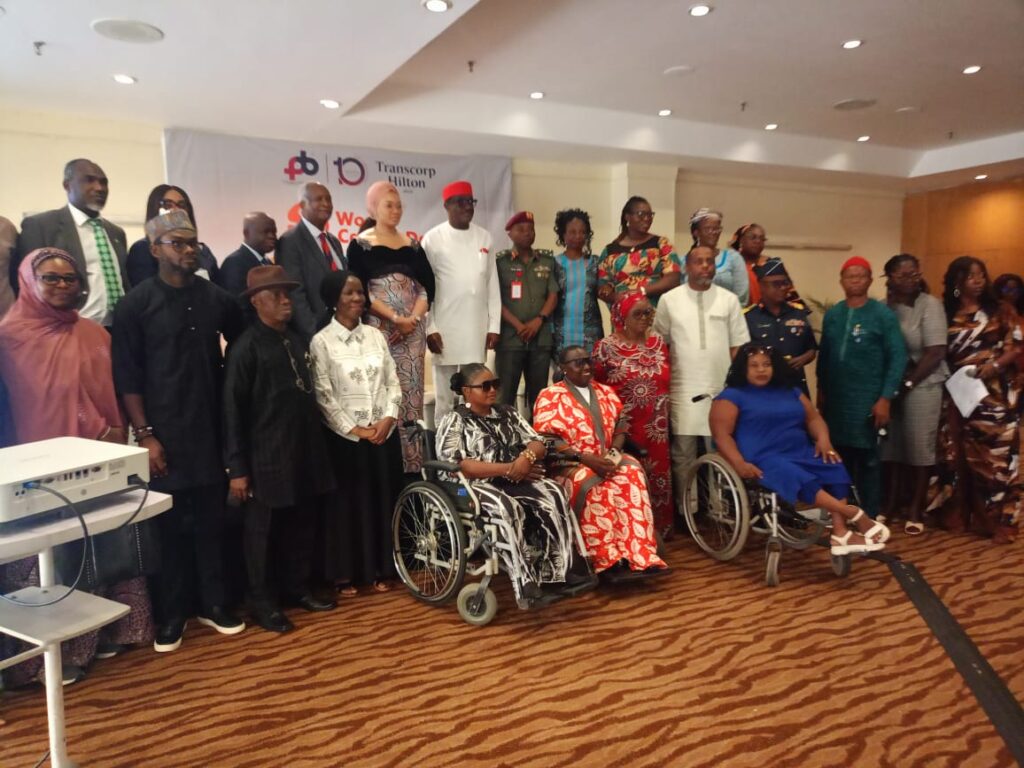
The First Lady of Imo State and Chairperson, First Ladies Against Cancer (FLAC), Barrister Chioma Uzodinma, has raised a fresh alarm over Nigeria’s cancer crisis, calling for an urgent upward review of the Cancer Health Fund as insecurity, poverty and soaring treatment costs push thousands of vulnerable Nigerians to avoidable deaths.
Uzodinma, who sounded the warning on Tuesday in Abuja at the World Cancer Day Symposium organised by Project PINK BLUE, declared that cancer care in Nigeria has become “financially catastrophic” for families already battered by conflict, displacement and economic hardship.
According to her, Nigeria records about 128,000 new cancer cases annually, yet many patients are shut out of screening and treatment because care is either unaffordable, inaccessible or unsafe to reach.
She said: “Too many Nigerians are facing catastrophic healthcare costs because cancer care is either unaffordable or inaccessible, especially in conflict-affected communities.”
According to her, the current Cancer Health Fund is too limited in scope and coverage, forcing patients to depend on out-of-pocket payments that often lead families to sell assets or abandon treatment.
“Thousands of deaths we record every year are avoidable if cancers are detected early and treated without interruption,” Uzodinma warned.
Speaking at the event themed ‘Cancer, conflicts and insecurity in Nigeria: What can we do to ensure access to cancer care for vulnerable communities amid conflicts and insecurity?’ she urged the Federal Government to aggressively expand cancer services under the National Health Insurance Scheme (NHIS) to guarantee financial protection for patients nationwide.
Citing Imo State as an example, she said residents enrolled under the state health insurance scheme currently enjoy free screening for multiple cancers.
“In Imo State today, once you are registered under the insurance scheme, you can access free cancer screening; all types. We are advocating that more states follow this example,” she said.
Uzodinma also warned that insecurity has become a major barrier to care, particularly in the North East, North West and parts of the South East, where health facilities have been shut down and health workers forced to flee due to attacks, kidnappings and killings.
She noted that prolonged disruptions, including sit-at-home orders in parts of the South East, have delayed chemotherapy sessions, follow-up visits and palliative care.
“These are not just statistics. They are mothers, fathers and children whose lives are cut short because care is unavailable or unsafe to access,” she said.
The FLAC chairperson pressed for strict implementation of the National Cancer Control Plan across states, intensified community and radio-based awareness campaigns to tackle stigma and late presentation, and policy reforms to stem brain drain among oncologists through better incentives and working conditions.
She also called for the expansion of the executive order granting zero tax on pharmaceutical inputs, arguing that cheaper local drug production would improve access to quality cancer medicines, especially in underserved and conflict-prone areas.
According to her, rebuilding hospitals, transport routes and medical supply chains destroyed by conflict is critical to restoring access to care, while sustained investment in local research and cancer data systems would strengthen evidence-based decision-making.
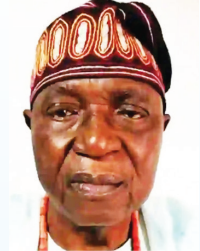
Former Senator representing Abia North, Mao Ohuabunwa, described cancer treatment as a national emergency, particularly in areas ravaged by insecurity.
“Insecurity has blocked access to screening and treatment, worsening cancer deaths. Cancer care should be treated as a national emergency, especially in vulnerable regions.
“We are having difficulties here. Imagine those in conflict areas; how do they even move? It is not possible,” he said.
A breast cancer survivor and patient navigator with Project PINK BLUE, Mercy Spoporuchi, identified insecurity and poor distribution of treatment centres as major obstacles to survival, lamenting that patients often travel over 500 kilometres to access care.
“Imagine if every state had a functional cancer centre. People would not travel such long distances just to survive,” she said.
Spoporuchi recalled cases of patients who travelled to Abuja for treatment but died after returning home due to the absence of emergency care facilities in their states.
“These are only the cases we know. There are many more we don’t. Insecurity and lack of access to care remain deadly realities for cancer patients,” she added.
In his remarks, the Director-General of the National Institute for Cancer Research and Treatment (NICRAT), Prof. Aliyu Malami, identified weak coordination, limited decentralisation and inadequate funding as key challenges confronting cancer control in Nigeria.
Represented by the Director of Clinical Services, Prof. Musa Ali-Gombe, he said although funding for cancer care has increased steadily since 2020, it remains far below national needs, noting that the National Cancer Health Fund currently provides free treatment for breast, cervical and prostate cancers in selected centres due to funding and specialist constraints.
Ali-Gombe added that plans were underway to expand both the number of centres and the range of cancers covered, stressing that cancer care must be integrated into national security and humanitarian response plans.
Earlier, Project PINK BLUE Senior Finance and Administration Officer Lead, Godwin Kagior, said the symposium was convened to push stakeholders beyond discussion to concrete action.
“Behind every statistic is a human life whose chance of survival depends on the systems we build,” he said.
Cancer survivors and advocates at the event shared personal stories of misdiagnosis, late presentation and loss, reinforcing calls for cancer care to be treated as a national emergency and fully integrated into Nigeria’s health, security and development frameworks.