
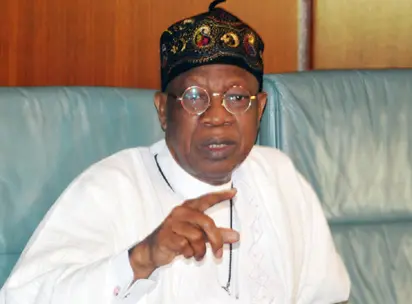
Alhaji Lai Mohammed is a former Minister of Information and Culture. In this interview monitored on Arise Television, he speaks on his new book on the compelling narrative of former President Muhammadu Buhari administration’s media moments, offering an insider’s perspective on the policies, programmes and values that defined the tenure, among other issues, ANAYO EZUGWU reports
It is not easy writing a book, especially one as big as that. What is the book all about?
Actually this book, “Headlines and Soundbites: Media Moments That Define An Anministration,’ is my own personal effort to write a piece of Nigerian history from a vantage point of the longest serving Minister of Information and Culture.
For eight years, I was privileged to be at the centre of policy making, government communication, the centre of tourism, the centre of national orientation and culture. Therefore I found it a duty and an obligation to let the world know what actually transpired. What are those facts behind the headlines and the soundbites? That’s exactly what this book is all about.
How much does it capture the essence of the Buhari administration’s media moments?
From my perspective, I think it tries to really cover the eight years from the perspective of an insider, from somebody who was there from the beginning to the end. And that is why in the book, you will read about the toughest moments in my career as a minister. Moments when I felt like resigning, when I was actually told by my family to resign.
You’re going to find in that book difficult decisions that one had to make. You’ll find in the book also how the iconic National Theatre was rescued from disuse. You also find how we helped to prevent P&ID from defrauding Nigeria of $9.6 billion because to many people it was probably a matter of law, but we believe that was a matter of public opinion and court of law. So you find this in the book also.
Posterity will be kind to Buhari because when he came certain parts of this country were not even accessible, so when you look at that and what he left, you would begin to appreciate him
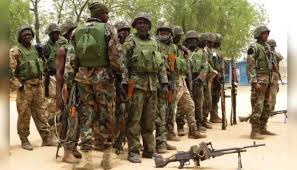
You also find in the book, how we used the media to push back narratives, especially when naysayers claimed that the military had actually not recovered territories such as Kauri, Konduga, Bama.
You also find in the book how we were able to engage and went over to bring back our girls to accompany us to Yola from where we made sorties in NAF aircraft over Sambisa to see firsthand exactly what the military were doing to rescue these girls. So, from the beginning to the end, you’re going to find moments that define the Buhari administration.
There was considerable scepticism about the actions of government over things. For example, the Twitter ban and the CNN controversy over the #EndSARS Lekki toll gate incident. Is it also in the book?
This is what is in that book. For instance, I know when I say one of the most decisions I took that was suspending Twitter’s operation in Nigeria. I had to take the decision on national interest because a time came when Twitter became the platform of choice for all those who are destabilizing the country. So there are some decisions like that that you have to take.
You won’t be popular if you are a Minister of Information. It was President Buhari’s tweet, which was then deleted that triggered the ban. And you find it in this book. I went to President Buhari and said: Sir, we need to suspend the service of Twitter.
And he asked: Is it because they deleted my tweet? I said, no, sir. And I gave him instances and examples. You see, I’d been an advocate of regulating the social media for a very long time, if you remember. I started by advocacy. I started by visiting media houses. I started by trying to work with them. But it was clear in my mind that an unregulated social media could be a disaster. So, actually, that was not the trigger.
If you monitored me between 2016 and 2023, I was always on the issue of social media. And I kept saying, I’m not trying to stifle free press, but we must regulate the social media. You mentioned the issue of CNN. Honestly, that pushback, I still stand by it. Nobody ever said that no one died during the EndSARS. People died n Abuja, Lagos, Kano and other places. But what we were saying is that CNN was not at the tollgate.
CNN relied on second-hand thought and information. And my argument was very simple. If a man has a goat and the goat does not come home one night, he will go out and look for that goat. Now, five years on today, nobody has come to tell us that his son or ward went to the tollgate and he didn’t come back. We never said there was no death. People died in Alimosho. People died many places during the EndSARS. As a matter of fact, 37 policemen were killed, six soldiers were killed. EndSARS was unfortunate, it was tragic, but that there was a massacre at the tollgate is fake news.
How did you balance crisis management, such as the #EndSARS protest and public enlightenment during your tenure?
feedback to government. And we did it in many forms. We organized town hall meetings, which you’ll find in thebbook. Town hall meetings were unique, because this was a platform where policymakers spoke to the governed, and the governed spoke back to them.
As a minister, I used to meet every fourth night with bureau chiefs, so I could carry them along. As a minister, we were meeting every month. Myself, Garba Shehu, and Femi Adesina, we were meeting with the Minister of Defence, Minister of Police Affairs, Chief of Army Staff, and we were inviting title editors, and we were discussing issues that were not meant for publication, so we could build confidence. And they saw what many people did not see.
I have had the unique opportunity, having been a spokesperson for the opposition for 10 years, I’m back-to-back Minister of Information for eight years, and I know the difference. So, that’s why it was easy for me to handle the portfolio of government information, because I’ve been out there, I’ve been on the other side.
And you were driven largely by, as you said, national interest…
I was slightly driven by national interest and I was driven by passion. Honestly, when you are out there, you hardly ever think about self-preservation. As a matter of fact, towards the last two years of my office as a minister, I couldn’t wait for it to end.
And when you talk about self-preservation, being a minister, you always know that there’s an end to your tenure and when you leave, people will see where the dead bodies are buried. You see, it’s really Twitter people who are rabble-rousers.
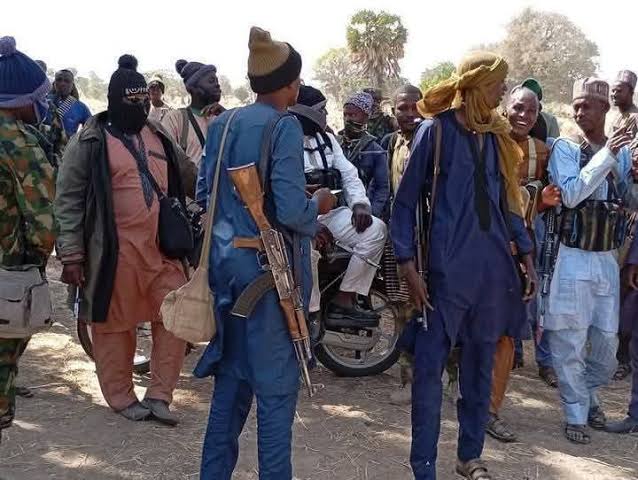
Those were not the only challenges we had. We had real-life challenges. We had Boko Haram. We had banditry. We had herdsmen/farmers clashes. We had IPOB. Those are real challenges we had. Of course, Twitter, became the platform of choice for all of them. And in a democracy, when you know that you are going to spend four years, if you do well, you will be elected.
If you don’t do well, you’ll be voted out, your concentration will be how do we leave a legacy and how do we make a difference in the lives of people. Honestly, I don’t think, and I’m speaking for many of my friends, we never saw preserving the administration as a priority, no. We saw preserving Nigeria as a priority because there’s a country called Nigeria.
What lessons do you think current and future leaders can draw from your experience in managing Nigeria’s narrative and is that also contained in the book?
Yes. Somebody asked me, what is the central theme of that book? The central message or number one is that Nigerian contemporary history would not be fully understood unless those who have been inside are allowed and encouraged to tell their own stories.
Two, this kind of book is actually for posterity. It’s to educate the public. And it’s also to inspire future leaders because it’s not just about successes. There are some failures inside this book.
What are the failures, mention one?
I might not even call it a failure, just a challenge. For instance, during the EndSARS, one of the toughest moments in my life, when my family met, they asked me to resign. It was a very tough moment because they were bullied online and offline. They said, look, wait a minute, we are not benefiting from this thing, so why are you exposing us? I had to sit them down and tell them, it’s not as easy as that. There are things I know. There are things that I see that you cannot see.
In the book you paid special tributes to your late boss, President Buhari. How would you say your relationship with him shaped your approach to the job?
Well, in the chapter I dedicate to him, I said mentor, friend, and boss. This was all three to me. He did communicate a lot with me. As a matter of fact, there are a few anecdotes in this book. I will tell you one, for instance. In the run-up to the merger in 2013, we used to go to Kaduna often, led by Asiwaju Bola Tinubuand Bisi Akande. I used to accompany them. And most times, when President Buhari invited me for lunch, if it fell on a Thursday or a Monday, I would decline because I used to normally fast on Mondays and Thursdays.
So one day, he said to Asiwaju, doesn’t he like me? Does he dislike me? Why does he not eat in my house? Asiwaju explained to me, he said, look, Lai fast on Mondays and Thursdays. Then after a while, he called me to his office. He said, Lai, tell me the truth, how many people have you killed? I said, no. He said, why are you atoning every day by fasting? That was before he became president. And when he became president, he didn’t change much.
Even when he became president, I remember I went to him one day, and that was a time when some of my colleagues as ministers wanted to run for presidency. Some wanted to be governors, some wanted to be senators. So, as he was leaving the council chambers, just offhandedly, he said, well, I’ve seen many of you people. I’ve seen your posters. If anybody wants to be president or anybody wants to be a governor, you should please resign.
And I said, this is big news and I hope I’m hearing well. I followed him up, so that he can really make clarity. I said, Your Excellency, you know I’m going to have a press conference now. Are you really saying that anybody that wants to be president should resign? He said, yes, they want to come here, I let them go and campaign also. And that is him.
We never said there was no death. People died in Alimosho. People died many places during the EndSARS. As a matter of fact, 37 policemen were killed, six soldiers were killed
In terms of legacy, how do you think his leadership will be remembered in Nigerian history?
I think posterity will be kind to him. Because you see, when I came in 2015, certain parts of this country, north-East in particular, like Borno, Yobe and Bauchi states were not even accessible. When I went to Kauri, Bama, and Konduga, and Maduguri on December 5, 2015, which is in the book, there was no life there.
I traveled from Maduguri to Bama, about 70 kilometers, there was no one single vehicle that traveled on the road. When I landed in Bama, I thought I was in Afghanistan. The entire town was in Arabic. All signs, all road signs were in Arabic.
That was the effectiveness of Boko Haram then. They actually had their caliphate, their headquarters there, where they actually imposed and deposed emirs and they ran government in the 20 local governments in Borno State. There were only seven with the federal government, and 13 were under the complete control of Boko Haram. So, when you look at that and what he left, you would begin to appreciate him.
But in his state, Katsina, more local governments were taken over by bandits while he was in office…
I remember the first thing that the governor told us was that the earliest recorded history of banditry in Katsina was in 1891. So, for people to understand banditry, they need the historical context, the issue of inclusion and then governance, and the issue of effectiveness of government.
You see, and this is what is very important for me, be it banditry, be it Boko Haram, they have absolutely nothing to do with ethnicity or religion. When I was presenting a paper to the Council of Foreign Relations in Washington, I made this clear. I said, Kebbi and Katsina are the headquarters of banditry. The bandits are Hausa-Fulani and they are Muslims.
Their victims are Hausa-Fulani and they are Muslims. Therefore, you can’t read religious motives. That’s why I told you that the issue of banditry is quite different from Boko Haram. Boko Haram is religiously inspired. Banditry is about resources and, of course, even when we put up that argument about desert encroachment, climate change, they all work to help, not just banditry, even farmers-herders clashes.
But the important thing is that a government has a responsibility and you will do your best to ensure that you secure the lives and property of the citizens. And this, Buhari did to his own ability. Alscwe purposely chose December 17 as the launch date because it is the posthumous birthday of President Buhari. If he were alive, he would have made it there.
What was it that struck you the most about the media moments that you chronicled in that book?
I think what struck me most is, one, the fact that when you are made a minister, there’s no textbook and there’s no guide. You just need to be very inventive. You have to be very resourceful. You have to be very bold. Actually, you must be ahead of the news. You must be ahead of journalists. And I’ll give you two examples.
For instance, when about 200 girls were kidnapped in Dapchi, I didn’t wait for journalists. I went there myself. I got there before everybody and I went there because I wanted to take possession of the narrative. And when I saw that this issue of bringing back our girls was getting toxic, I engaged them because I was always engaging the military.
I said, look, the military, they are not resting. Every night, they make searches over Sambisa Forest. So, I persuaded them and they agreed. And we went together to Yola, from Yola to Sambisa for two nights. We were flying, air force sorties. By the time they came back from that trip, they issued a statement saying that the Air Force component of the Nigerian military was doing its best to find these girls.So, you have to engage. You have to reach out.