EMMANUEL MASHA writes on the recent symposium organised by the BRACED Commission in Port Harcourt, Rivers State to discuss issues confronting the region
From the outside, it is somewhat difficult to understand the workings of the BRACED Commission, the regional development body that the governors of the six South-South states established in 2010 shortly after the first South-South Economic Summit in 2009 in Calabar, Cross River State. Over the years, one of the challenges of the commission has been the inability to diversify the region’s economy, and to truly act as a bloc in trade within and outside the region, as well as the challenge of poor intra-regional trade among member states.
There is also the issue of uneven progress among member states, which affects their participation and commitment in driving forward the objectives of the BRACED Commission. While some are core oil producing states that get favourable allocation and taxes from oil and gas exploration (Delta, Rivers, Bayelsa and Akwa Ibom), others like Edo and Cross Rivers States struggle with revenue generation.
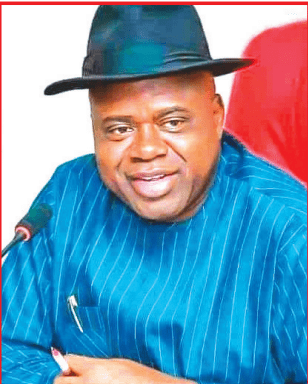
In recent times, the BRACED Commission, currently chaired by the governor of Bayelsa State, Douye Diri, and has Amb. Joe Keshi as its Director General has been making moves to enthrone a sustainable development model that contrasts the extraction development model, which has impoverished the region, caused environmental degradation, and affected agricultural output. Diri, who took over from the immediate past governor of Edo State, Godwin Obaseki, as leader of the regional body strongly supports regional economic development, and improvement in agriculture.
While Keshi works towards the actualization of a region that survives outside oil, through cooperation and the active participation of state governments for a stronger regional economy. At a recent symposium organised by the BRACED Commission in Port Harcourt, Rivers State and attended by the heads of members states’ investment agencies, and other stakeholders; some of the issues confronting the region were discussed.
The argument is that development don’t just happen, it is planned and executed with the needed political will. Presentations and discussions at the symposium centred on the need to move the region’s economy from a resource-dependent model to one that is diversified, and valueadded, with a strong emphasis on blue economy, agriculture and manufacturing. They also agreed to work closely to embrace sustainable agriculture, and make the region an industrial hub. The consensus is that crude oil extraction and sale cannot transform the region as an economic powerhouse.
This position aligns with some experts, who have argued that the South-South region, as the country’s economic mainstay should be executing its own economic blueprint for transformation.
The thinking in some quarters is that the Federal Government does not really care; that it will continue to sideline the region, and that the political leadership of member states must play active role to chart BRACED path to South-South’s economic prosperity. These days, stakeholders no longer wonder why goods meant for use in the region are shipped in through the Lagos ports even when there are functional ports in Calabar, Port Harcourt and Warri.
A few days ago, Nigeria signed a £747 million agreement with Britain to upgrade the Lagos ports. Who takes care of the ports in the SouthSouth? Are youths in the region not supposed to be working in the ports like their counterparts in Lagos? The above scenario and others explain the renewed hunger to transform the region into a manufacturing hub with plentiful jobs for the unemployed and draw millions of people out of poverty. For that to happen, the region’s stakeholders know that they must create the enabling environment for intra-regional trade to thrive and for foreign direct investment to become a reality.
As urbanization encircles most towns and cities in the region, the pace of integration by member states has become a serious concern to the BRACED Commission, and it wants results. A communique issued at the symposium read in part: “The BRACED states possess plentiful natural resources, fertile soil, vibrant cultural traditions and valuable positions along international trade routes.
The South-South region is far more than a resource base. It is also a gateway to Nigeria’s economy.” The communique also acknowledged the major challenges to investment in the region, which include infrastructural shortcoming, environmental issues, governance deficiencies, an unwelcoming business environment and restricted regional integration.
The symposium also resolved to enhance cooperation, collaboration and synergy among regional investment commissions to achieve collective development objective. It also urged the state governments, investors, development partners and civil society to join hands in transforming the BRACED states into a beacon of regional cooperation and economic dynamism.
One of the top presentations at the symposium was delivered by the Director General of Bayelsa State Investment Promotion Agency, Mrs. Patience Abah, who spoke on the topic: Closing the value capture gap, xrayed the contributions of the region to the national economy. She observed that the combined Gross Domestic Product (GDP) of the BRACED States between 2024 and 2025 stands at approximately 21.5 per cent of the country’s GDP.
“In nominal terms, the region injected roughly $34 trillion (Naira) into the national economy in 2024. Converted at current market exchange rates (approximately N1,400– N1,450/the combined GDP of the region sits in the range of $75 billion to $85 billion,” she points out. She outlined the disparity of ‘80/20 Trap as a stark statistical mismatch, adding that “the South-South region accounts for over 80 per cent of Nigeria’s foreign exchange earnings (via crude and gas exports).
Despite this, the region captures only 21.5 per cent of Nigeria’s Nominal GDP.” Abah, who was chosen to lead in advancing the regional economic objectives of the commission, also frowned at a situation whereby a state like Bayesla would sell its raw materials, but hardly retains the wealth that comes from their production.
She added: “The Value Capture Gap is the ‘Economic Leakage’ that occurs when a region provides the world with high-value raw materials (like Bayelsa’s oil and gas) but fails to retain the wealth created during the processing, refining, and distribution of those materials. It is not a ‘lack of wealth,’ but a failure to harness and add value to resources.”
She concluded that the BRACED states as the country’s energy tank should be transformed to match the value it brings to the country. “The South-South is currently Nigeria’s ‘Energy Tank.’ Our goal through Economic Integration is to become Africa’s ‘Industrial Engine.’ We should no longer be content with being the source of wealth; we must be the site of its transformation,” she said.