



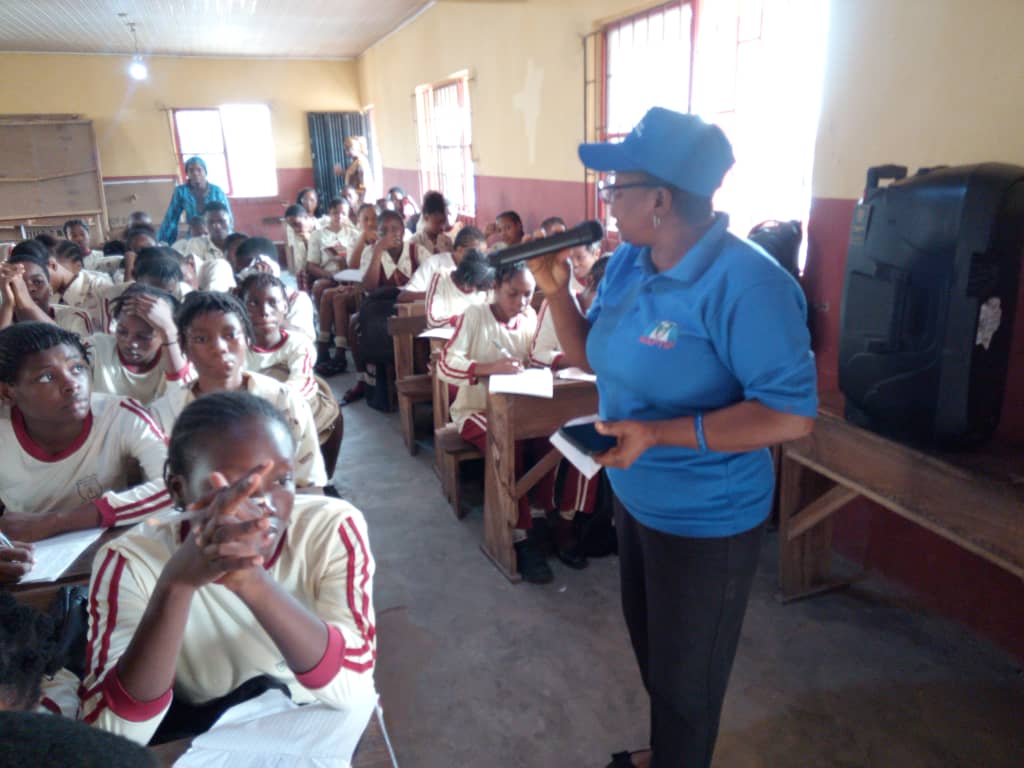
300 students of the Shulamite College in Ojo, Lagos, sat in rapt attention as hard truths about human trafficking, child marriage and sexual and gender-based violence were laid bare before them.
The one-day sensitisation programme, organised by the Bella Foundation for Child and Maternal Care in partnership with Evoca Foundation and Nommontu Foundation in January, brought together 270 female and 30 male students in a deliberate effort to confront issues that disproportionately affect girls.
From the moment the national anthem signalled the start of the programme at 9:33 a.m., the atmosphere was charged with purpose.
Founder and Chief Executive Officer of the foundation, Bella Akhagba, set the tone in her welcome address, urging students to listen carefully and arm themselves with knowledge that could “save them from harm.”
“These issues are very prevalent today. Silence and denial are the major problems,” she said. “We want young people to learn to speak up and report any form of abuse, trafficking or forced marriage.”
A representative of the National Agency for the Prohibition of Trafficking in Persons (NAPTIP) delivered a presentation on illegal migration and human trafficking, defining it as the recruitment, transportation or harbouring of persons through coercion or deception for exploitation.
She explained the two major forms—internal and external trafficking—and highlighted common forms of exploitation, including sexual exploitation, forced labour, debt bondage, forced begging and baby sale.
“Trafficking thrives on push and pull factors such as poverty, unemployment and false promises of a better life abroad,” she said, warning that victims often suffer trauma, drop out of school, contract sexually transmitted infections or even lose their lives.
Prevention, she stressed, begins with awareness, rejecting suspicious offers, and reporting perpetrators to appropriate authorities.
The session was interactive, with students asking and answering questions to demonstrate understanding.
Joseph, the Head Boy of Shulamite College, described the programme as eye-opening.
“The programme was in two phases—human trafficking and curbing child marriage,” he said. “What I learnt as a boy is that there is time for everything. We must be careful in the decisions we take.”
He advised fellow teenagers to “stay cool, not be too forward and avoid the bad way of life.”
Uzoma, the school’s library prefect, confidently explained the difference between internal and external trafficking and warned against early marriage.
“Child marriage is not good because it hinders the future of that child,” she said. “If anyone wants to force a girl into early marriage, she should speak out because it will cut short her dreams.”
Akhagba explained why the foundation addressed sexual and gender-based violence, child marriage and trafficking together.
“They are all forms of gender-based violence, and their prevalence is high globally. In our society, girls are mostly affected. Poverty, unintended pregnancy and gender inequality are major drivers,” she noted.
She revealed that nine girls previously supported by the foundation, who had dropped out of school due to pregnancy and child marriage, graduated from secondary school in 2025 after receiving educational support.
“That shows that even if a mistake happens, it is not the end of life. They can still achieve their dreams,” she said, encouraging students not to succumb to peer pressure or chase material things at the expense of their future.
Beyond schools, the foundation also engages parents and community groups—including artisans and community associations—to address harmful cultural norms that prioritise male education over female children.
“We must promote values. Young people should believe in themselves and be patient. They don’t need to run after money or gifts that can destroy their future,” Akhagba stressed.
As part of its follow-up strategy, the foundation shared confidential reporting lines calling for more funding partners to expand support for vulnerable girls.
In her concluding message, Akhagba stated, “Say no to human trafficking. Say no to sexual and gender-based violence. Say no to child marriage. These are issues destroying the lives of our young people.”
For the 300 students who filled the hall that day, the lesson was clear: knowledge is power—and their voices matter.








