



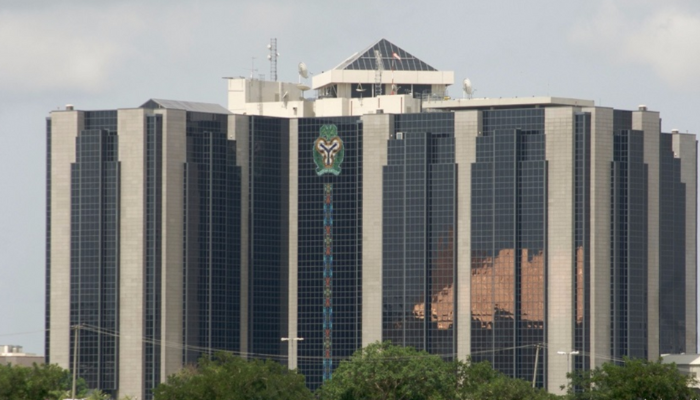
Financial institutions’ total loans to the government rose by 38.06 per cent, or N9.43 trillion, to N34.22 trillion in December from N24.79 trillion in October 2025, latest data released by the Central Bank of Nigeria (CBN) shows.
New Telegraph’s analysis of updated “money and credit statistics,” recently released by the apex bank, indicates that net credit to the government increased from N24.79 trillion in October 2025 to N26.35 trillion and N34.22 trillion at the end of November and December last year respectively.
Further analysis of data obtained from the CBN shows that in contrast with previous quarters of last year, net credit to the government maintained an upward trend throughout Q4’25. Financial experts have said that the surge in net credit to the government in the last three months of 2025 raises concerns about the government’s appetite for borrowing.
They warn that this could lead to a crowding out of the private sector and the widening of the fiscal deficit. According to the 2026 Budget proposal presented by President Bola Tinubu, Nigeria is projecting a budget deficit of N23.85 trillion for the 2026 fiscal year, with projected total expenditure standing at N58.18 trillion and projected total revenue put at N34.33 trillion.
Analysts also note that apart from net credit to the government heading north, credit to the private sector likewise maintained an upward trend in Q4’25, even though, after it reduced the Monetary Policy Rate (MPR)- the country’s benchmark interest rate- by 50 basis points to 27.00 per cent at its September meeting, the CBN’s Monetary Policy Committee (MPC) left the rate unchanged at its last meeting of 2025 in November. For instance, in a recent report, analysts at FBNQuest Research said:
“At its November meeting, the MPC reinforced its anti-inflation stance by maintaining policy rates at c.27%, despite seven consecutive months of disinflation.
The committee acknowledged progress in curbing inflation but emphasised that current double-digit headline inflation remains elevated. “Consequently, it adopted a cautious stance on policy easing to avoid eroding the gains from previous tightening measures and to sustain the ongoing disinflationary trajectory.
To stimulate credit expansion to the real sector, the MPC eased financial conditions by adjusting the asymmetric corridor around the MPR. The corridor was widened to +50/-450bps from +250/- 250bps.
“The adjustment of the upper limit (Standing Deposit Facility) is significant, as it lowered the cost of accessing liquidity from the CBN, incentivising borrowing from the CBN, which could translate into increased lending to the private sector.