
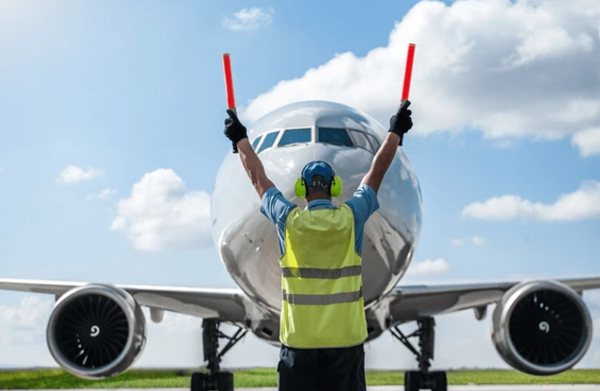
Nigeria’s aviation sector has entered a “perfect storm” this December. While airlines have increased their fleet capacity compared to last year, ticket prices have surged to astronomical levels, with one-way fares to cities like Enugu, Owerri, and Asaba ranging from N350,000 to N700,000.
The phenomenon of insensitive domestic airfares despite perceived overcapacity is a common source of frustration for travellers. While basic economics suggests that more seats (supply) should lead to lower prices, the aviation industry often defies this logic due to its unique cost structures and pricing technologies.
For the average Nigerian traveller, the math doesn’t add up. Traditionally, over capacity more seats than passenger leads to lower prices. But in 2025, the industry is defying gravity. Airlines argue that these “outrageous” fares are not a choice, but a survival tactic.
They listed several factors, including the tax burden, and alleged that 20 different taxes and levies are baked into a single ticket. Stakeholders report that up to 35 per cent of the total fare goes directly to government agencies such as the Nigeria Civil Aviation Authority (NCAA) and the Federal Airports Authority of Nigeria (FAAN) before any fuel is purchased.
The report also noted that nearly 69 per cent of an airline’s costs are denominated in US Dollars. From “C-checks” (heavy maintenance) performed in Europe to every spare bolt and tyre, airlines are battling a volatile exchange rate that has tripled their operational overhead.
The outcry has reached the halls of the National Assembly. Last week, the House of Representatives urged a 50 per cent reduction in aviation taxes to provide festive relief. Meanwhile, the Federal Competition and Consumer Protection Commission (FCCPC) has expanded its investigation into “coordinated price manipulation.”
“We are not a price control board,” says FCCPC CEO, Tunji Bello. “But the law empowers us to check the exploitation of consumers. When prices spike in a synchronised manner across multiple airlines despite empty seats, we must investigate if competition is being undermined.”
A businessman, who spoke on condition of anonymity with Sunday Telegraph at the Murtala Muhammed Airport 2 (MMA2) yesterday, said: “To take my wife and three children to Owerri and back will cost over ₦4.5 million.” Staring at a booking app, he stated: “The airlines have the seats, but they don’t have the people.
It’s a tragedy of capacity.” As 2025 draws to a close, the Nigerian skies remain busy but increasingly exclusive, leaving millions to wonder whether air travel will ever return to being a public service rather than a luxury for the elite. The Managing Director of Aero Contractors, Capt Ado Sanusi, said: “ I keep saying it.
I don’t think 100 to 200 per cent increase is not justified but I think this a call for us as an industry to come and see what is the problem because if the airlines are saying it is demand and supply and the consumers are saying, no, it is a big problem”.
“There is a need for us to come together and actually look at it. Is it actually a demand-supply issue, or is it a price gouging issue, or is it a capacity issue”? Managing Director of Belujane Konsult, Mr Chris Azu Aligbe, admitted that the fares are totally not justifiable, further describing the increase to the plight of passengers as ‘insensitive’.
“The increases are not fair to the industry and to the Minister of Aviation and Aerospace Development, Mr Festus Keyamo, who has done so much to improve the status of the airlines. They are bringing his efforts almost to nought because with increases, people are criticising the NCAA and the Minister”.
Aligbe further stated that high taxes are a mischievous diversionary tactic, noting that taxes have not changed; they have remained the same for a long time. He said: “It is very insensitive. FAAN has not increased their charges. No other people have increased charges.
That is why I said it is very insensitive and exploitative”. The carriers’ actions, he said, have justified the emergence of state-owned airlines, describing existing airlines as Pelicans that think they are pecking at wood. Still, they peck themselves because the emergence of a state-owned airline is now justified.
“Invariably, even for those of them who stand up against national flag carriers, they have brought up the issue that justifies the fact that there is an urgent need for a national flag carrier. In our country, there is no benchmark. No airline is a benchmark for airline operations.
There is none of them. They want to get into a monopoly or quasi-monopoly. It shows that airline operations in our country are far from what they are in other climes”, he added. Chief Commercial Officer of ValueJet, Trevor Henry, said the sharp increase is simply due to the season, which typically drives higher airfares, and attributed it to leased aeroplanes for the Christmas operations.
He said: “These aircraft arrived in November; they’re going to be here till February and March next year, most probably. If you take November, December, January, February, or mid-November through to mid-April, now, the high season falls away from mid-February.
Then we have a normal market. In fact, we go from high to low. We go from high to low. We start picking up as we approach Easter.” “So, what you are doing? What these airlines are doing is they’re trying to fill their coffers with some revenue.
It’s like a bear that hibernates. And that’s what the airlines are doing. Now, the people that they are charging those rates to are people who are earning good salaries.” Henry admitted the huge capacity on the domestic market with over a dozen airlines, saying: “Today, we have a dozen and a half airlines.
So, there’s extra capacity. Umza came along, United has now got leased aircraft on the ground. So, what has actually happened is, if they did not bring in those aircraft, we all would have had a full flight.” “Our market actually has too much capacity. Not tomorrow, but next week or next month.
Call me in midJanuary, or one month from today, and I will tell you all the flights are empty. And we’re all going to be selling around N100,000-N120,000. And there will be someone amongst us that will sell for N60,000, N70,000, N80,000.”