
Recently, the National Automotive Design and Development Council (NADDC) in collaboration with the House of Representatives hosted a capacity building workshop for the media to strengthen legislative reporting on Nigeria’s automotive industry development, PHILIP NYAM reports on the submissions of stakeholders at the event
In its quest to transform the Nigeria’s automotive policy into law, the National Automotive Design and Development Council (NADDC) in collaboration with the House of Representatives Committee on Media and Public Affairs, organised a capacity building workshop for the House Press Corps; an event powered by Tatiti Leadership and Professional Development Academy, Abuja. Themed “Strengthening Sectoral Policy Communication and Legislative Reporting on Nigeria’s Automotive Industry Development,” the workshop was aimed at opening up the sector to the larger public for more enlightenment and participation.
From NADDC
Speaking at the event, the Director General of NADDC, Otunba Joseph Osanipin, stressed the need to transform Nigeria’s automotive policy into law. He said investors will remain cautious unless the industry’s regulatory framework is backed by legislation. He also noted that Nigeria has made progress in local automotive innovation, including the design and production of tricycles using locally sourced materials and growing capacity in compressed natural gas vehicle assembly.
According to the DG, the Nigeria Automotive Industry Development Plan provides direction for the sector, but long-term industrial growth requires legal certainty. He said manufacturers considering large scale investment in vehicle assembly and component production need assurance that policy incentives will endure beyond administrative cycles.
He disclosed that the council plans further engagement with lawmakers at the National Assembly to advance efforts aimed at strengthening the legal foundation of the automotive development framework, adding that the automotive industry is one of the most capital-intensive sectors globally, requiring sustained policy consistency before investors commit resources.
He further explained that legislative backing will provide stability, deepen local production and accelerate industrialisation. He therefore urged journalists covering legislative and economic issues to situate policy decisions within their broader industrial context, particularly measures designed to protect domestic production.
Drawing comparisons with global trade practices, he noted that countries routinely adopt protective measures to support local industries and build technological capacity. Such policies, he said, are aimed at job creation, technology transfer and long-term economic resilience. Osanipin disclosed that Nigeria has made progress in local automotive innovation, including the design and production of tricycles using locally sourced materials and growing capacity in compressed natural gas vehicle assembly.
The council, he added, has trained more than 15,000 technicians nationwide to strengthen after sales services and technical sustainability within the sector. He disclosed that Nigeria currently spends trillions of naira annually on vehicle imports and spare parts, a trend the council aims to reverse through a localisation programme targeting domestic production of selected automotive components.
The DG, who further revealed that global manufacturers including Toyota, Volkswagen and Ford have inspected Nigerian facilities and expressed surprise at the level of infrastructure available in the country, he said some advanced production equipment in Nigeria ranks among the most sophisticated on the continent, yet receives limited visibility in public discourse.
The council’s chief executive linked automotive development to broader economic goals, noting that Automotive Council’s search for legislative cooperation the sector supports industrial diversification, conserves foreign exchange and positions Nigeria to benefit from continental trade frameworks through stronger local content.
The House
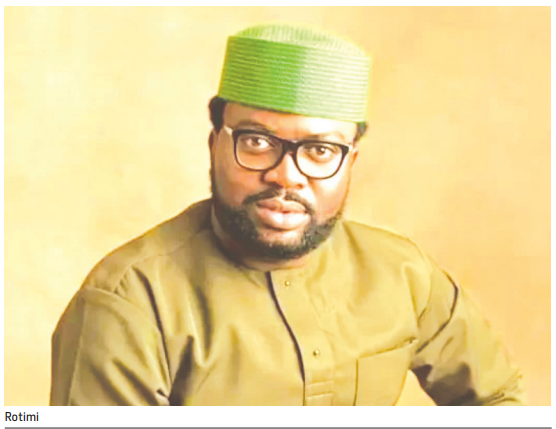
In his presentation, the chairman of the House Committee on Media and Public Affairs, Hon. Akintunde Rotimi, underscored the need for specialised knowledge among legislative reporters, saying informed media coverage is essential to translating industrial policy into public understanding and national development outcomes. He said the engagement reflects a deliberate strategy by the House to strengthen professionalism within its parliamentary media ecosystem and ensure legislative reporting keeps pace with increasingly complex policy issues. He conveyed the goodwill of the Speaker of the House of Representatives, Tajudeen Abbas, and members of the 10th Assembly, describing the programme as part of broader institutional reforms aimed at improving policy communication and democratic accountability. According to him, legislative work does not end with lawmaking or oversight but is completed when policies and reforms are clearly understood by citizens. He said the press corps plays a pivotal role in translating legislative intent, oversight outcomes and sectoral frameworks into public knowledge that strengthens transparency and trust. The lawmaker explained that the House has institutionalised a structured and continuous capacity development programme for its media teams, designed to be progressive, sector focused and responsive to national priorities. He, therefore, described the automotive industry training as a continuation of that reform agenda, stressing that the sector sits at the intersection of industrialisation, local content development, job creation, technology transfer and economic diversification. According to him, the focus aligns with the House legislative agenda on economic growth, which prioritises diversification away from oil dependence, investment friendly reforms and sustainable industrial expansion. He commended the automotive council for providing technical depth and institutional leadership, noting that its work in policy formulation, industry regulation, innovation support and local manufacturing promotion contributes directly to Nigeria’s industrial development objectives.
The House committee chairman said the primary goal of the training was to improve the depth, accuracy and context of parliamentary reporting on the automotive sector while enhancing public confidence in policy initiatives. He explained that oversight of government agencies includes ensuring that legislative media teams understand sectoral mandates and policy directions, enabling more effective collaboration between institutions and the public.
The lawmaker emphasised that institutional support for professional excellence remains a priority for the House, citing recent welfare initiatives including the facilitation of health insurance coverage for members of the press corps. He encouraged public institutions and private sector partners within the automotive industry to consider supporting journalists through corporate social responsibility initiatives that improve mobility and operational efficiency.
Rotimi commended the automotive council for initiating the engagement and described the partnership as one that would strengthen policy narratives and contribute meaningfully to national development. He reaffirmed the commitment of the House to initiatives that enhance professional capacity, improve policy communication and support reforms across critical sectors of the economy.
The media
The chairman of the Nigeria Union of Journalists (NUJ), FCT council, Grace Ike, who called on legislative reporters and media professionals to strengthen policy-focused reporting on Nigeria’s automotive industry, said informed journalism is vital to public understanding, investment attraction and accountability. Ike described the training as a strategic intervention aimed at equipping journalists to translate complex sectoral policies into accessible public knowledge capable of shaping national development outcomes.
She commended the chairman of the House Committee on Media and Public Affairs for what she described as consistent efforts to strengthen professional capacity among parliamentary reporters.
According to her, specialised training for journalists covering policy sectors is essential in a country where the automotive industry holds significant potential for job creation, economic diversification and technological advancement. “Our role as journalists and media aides is to translate complex sectoral policies into stories that resonate with everyday Nigerians,” she said. Ike noted that effective communication ensures that legislative initiatives and policy measures supporting automotive development do not remain confined to official documents but instead stimulate public discourse and attract investment.
She said the training would enable reporters to improve coverage of legislative and regulatory initiatives, including policy frameworks guiding Nigerian assembly and emerging developments in electric vehicle adoption. She likened the relationship between policymakers, legislators and the media to a coordinated system necessary for industrial growth, stressing that alignment among stakeholders is critical to building a viable automotive industry.
The NUJ chairman urged participants to utilise he knowledge gained from the programme to deepen investigative reporting, ask more probing policy questions and produce compelling narratives that enhance transparency. She expressed appreciation to the automotive council and organisers of the programme, describing the engagement as a significant step toward strengthening professional journalism and advancing national development goals.
Ike reaffirmed the commitment of journalists to support informed public discourse and encouraged sustained collaboration between government institutions and the media to accelerate Nigeria’s progress toward automotive self-sufficiency. The chairman of the House of Representatives Press Corps, Mr. Gboyega Onadiran, called for stronger national commitment to local automotive production, warning that Nigeria’s continued dependence on imported vehicles is deepening economic pressure and undermining industrial growth.
He described the current moment as a critical turning point for Nigeria’s economy, noting that rising costs in transportation, logistics, food distribution and industrial production have been worsened by exchange rate volatility and heavy reliance on imported vehicles and spare parts. According to him, local automotive development has moved from a policy aspiration to an economic necessity. Nigeria, he said, should position itself not merely as a destination for imported vehicles but as a production hub capable of supporting domestic demand and regional markets.
He identified long standing dependence on fully built imports as a major contributor to capital flight, pressure on foreign exchange reserves and weak domestic value chains. Strengthening local production, he explained, would conserve foreign exchange, expand manufacturing capacity, create employment across technical and engineering fields and stimulate growth in supporting industries such as steel, rubber, plastics, glass and battery production.
“In today’s Nigeria, industrialisation is no longer optional. It is economic survival,” he said, noting that several assembly plants are already operating across the country, citing locally assembled Peugeot models and production partnerships involving global brands as evidence of growing domestic capacity. He also highlighted the role of indigenous manufacturers such as Innoson Vehicle Manufacturing in producing vehicles tailored to Nigerian conditions.
He said existing installed capacity, supported by the Nigeria Automotive Industry Development Plan, provides a foundation for deeper local content and sustainable industry expansion. Beyond policy, he urged Nigerians to consciously patronise vehicles assembled in the country, stressing that consumer choices directly influence industrial growth, job protection and economic stability. “When we buy locally assembled vehicles, we invest in Nigeria’s industrial future,” he said.
The press corps chairman linked the automotive sector to broader national priorities, including economic diversification away from oil dependence and competitiveness within the African Continental Free Trade Area framework. He noted that while the global automotive industry is transitioning toward electric vehicles and cleaner mobility, Nigeria must first strengthen its industrial base through clear policies, legislative backing and regulatory consistency.
Onadiran emphasised the intersection between legislative action and media responsibility, noting that the House of Representatives plays a central role in enacting industry supporting laws, conducting oversight and ensuring implementation of sectoral policies.
He said policy success depends significantly on public understanding, placing a responsibility on legislative reporters to interpret complex reforms within the broader context of economic realities. According to him, responsible reporting on tariff structures, local assembly policies and regulatory reforms can strengthen investor confidence, highlight business opportunities and promote accountability.
He reaffirmed the commitment of the press corps to professional, fact based and development-oriented journalism, noting that the quality of policy communication can influence the success of national reforms. Onadiran expressed appreciation to the chairman of the House Committee on Media and Public Affairs and other stakeholders for supporting the engagement, describing collaboration between regulators, lawmakers and the media as essential to sustainable development. He said Nigeria stands at an economic crossroads and that success in strategic sectors such as automotive manufacturing would strengthen the country’s long-term prosperity.