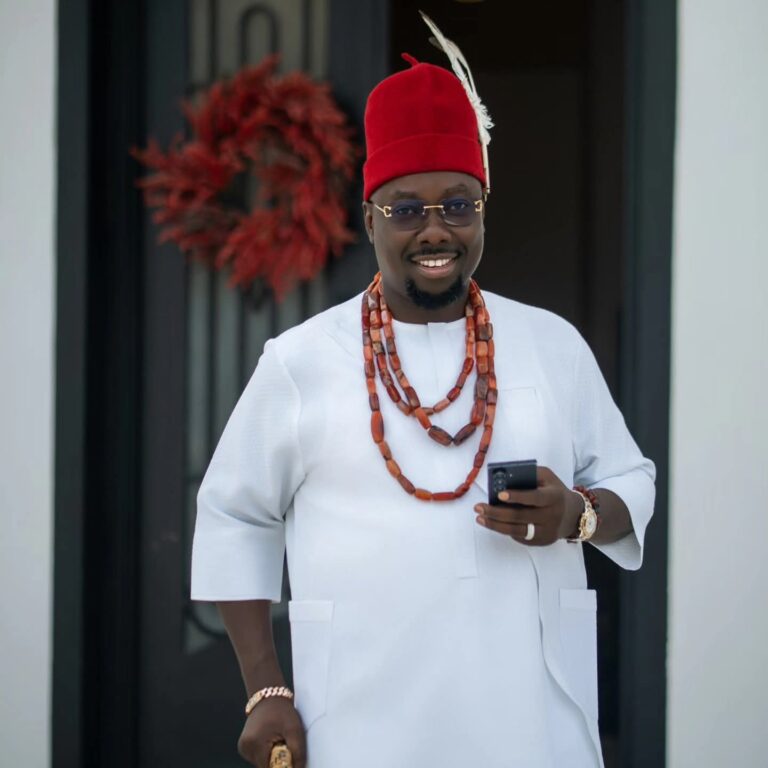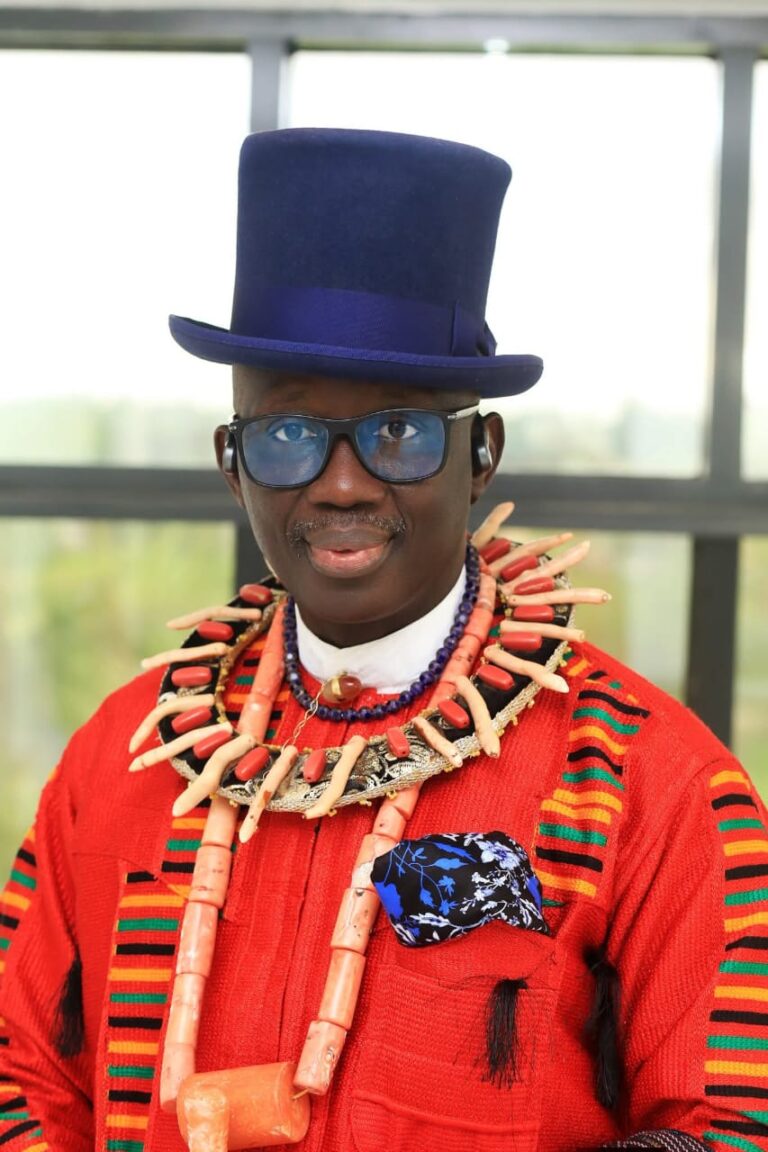

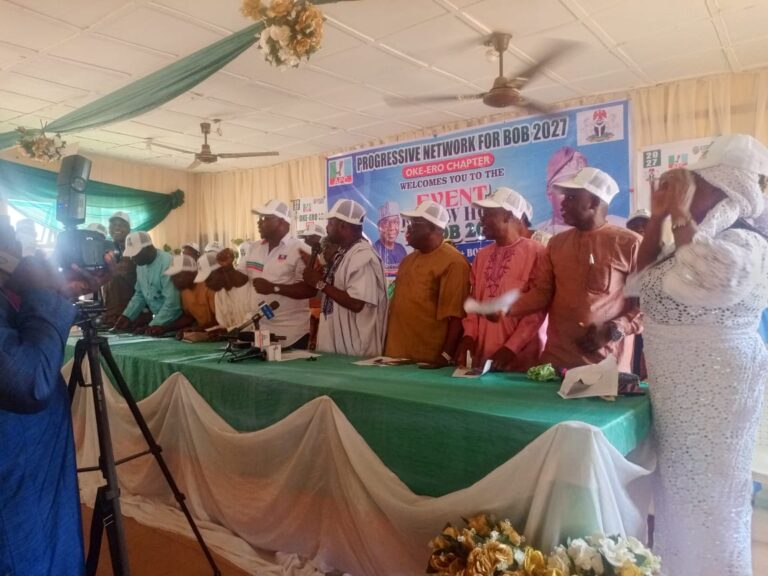
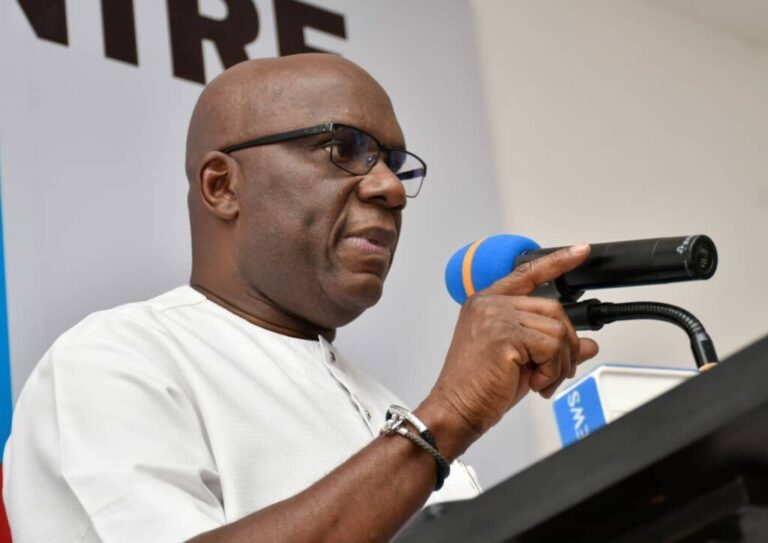
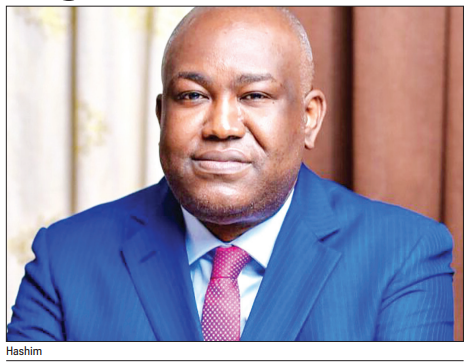
Dr. Gbenga Hashim is a chieftain of the Peoples Democratic Party (PDP) and a 2027 presidential hopeful. In this interview, the former presidential candidate speaks on Nigeria’s security challenges, the way out and recent developments in his party, FELIX NWANERI reports
What is your take on the state of the nation?
What we have seen in this country is progressive regression, particularly since 2007. When President Olusegun Obasanjo was leaving office, Nigeria’s Gross domestic Product (GDP) was $278 billion, but 20 years after, Nigeria’s GDP is $230 billion due to 10 years mismanagement of the economy by the All Progressives Congress (APC) government.
Throughout Obasanjo’s years as president, we were having exponential growth rate of 9.5 per cent, and after that, we moved to double digit. That was sustained under President Goodluck Jonathan, and in 2014, Nigeria became the largest economy in Africa. Within 11 years of APC’s the economy has contracted by 50 per cent, which explains the massive depression in the country. This is a disaster. Besides the economic woes, Nigeria is facing war in all fronts.
The North Central geopolitical zone has been encircled by terrorist forces. From Kwara State to Niger State and right in to the southern part of the North-West, which is Kebbi, that whole corridor is controlled by a more ferocious terrorist group than Boko Haram. The group has a direct group link with the Islamic State in Iraq and Syria (ISIS), operating on their doctrine and propagating the extreme version of militant Islamic ideology, the kind that we have never seen this country before. A lot of you guys are reporting these stories from afar.
I think you really don’t know where we are right now. Nigeria is at real war; the kind of war that we have never seen before and the enemy is so ferocious. The numbers of victims, either kidnapped, injured or killed are astronomic but it looks like the lives of Nigerians are becoming so cheap that this will not prick anybody’s conscience anymore. We’re getting too used to dead bodies and photographs of them. If you have 50 people killed in one day in Europe, the United Nations Security Council will meet.
But people’s lives are becoming too cheap in Nigeria. We have to do something about this immediately; not in 2027. The year 2027 is too long. This is a matter for today. This is a matter for now. So, I need us not be carried away by 2027 politics. Let us just pause a while and look at where we are right now because our people, particularly in the North-West and North Central are passing through tough times.
The government is interested more in public relations to stay in power than to solve the security problem. Every action being taken is to give a semblance of response and to convince the international community that something is being done
In fact, the security challenge in the North-East is a child’s play compared to what is happening in the North Central. In the first two years of President Bola Tinubu’s administration, 10,250 people were killed, according to Amnesty International report. Eighty per cent of them were from Plateau and Benue states. This year alone, thousands have been added to that list. Just recently, Nigeria lost over 500 people in one week.
In Woro, Kwara State, 200 people plus were killed. In Taraba, 300 plus were killed. There are others who are killed every day but not reported. I have many pictures and videos of people killed in various locations in Northern Nigeria that are not reported in the media because there is an official policy of suppressing information about those who are killed but denial cannot be a solution.
So, I want to beg of you to take more interest in what is going on in the North Central, the killings and the need to stop it. This is beyond politics; it is about the survival of our people.
You said that we are fighting a kind of war that we have not seen before. Does it mean that what is going on now is worse than the civil war?
In terms of the scale of the killings and the ferociousness, we have never seen something like this before. And the people being killed are not soldiers in active combat. They are mostly children and women as well as men sleeping on their beds. Communities are bombed and taken over by terrorists.
People are not just being killed, their corpses are burnt. People are also burnt alive. During the civil war, the Nigerian Army did not do these to the Biafrans. They were not fighting the civilians; they fought the soldiers in active combat. But the war going on now across Nigeria is against the civilian population and defenceless people.
What would you blame this war on? Is it because of politics and struggle for power or is it a religious war?
Of course, these are terrorists, with strange extremist ideas I would like to summarize as barbarism because I don’t think any of the religious doctrines that we are familiar with can support this kind of carnage.
But there must be an agenda for the war…
The agenda of the terrorists is to create a caliphate. Of course, I have said this in my press statements. The agenda is to create a caliphate out of Nigeria and which is going to be run through an extremist ideology, a caliphate like ISIS.
This is the objective and the carnage is to spread terror and make the world lose confidence in the ability of the Nigerian state to govern its territory, so that the people can transfer their loyalty to the terrorists. I have said this time without number and I have said it before too that the terrorists have created the capacity to, in the first instance, before 2027, create a terror state between some north western states plus some other border states of the North Central.
That is some parts of Niger, Kebbi, Kaduna, Zamfara and even up to Sokoto. They are softening those places and they collect taxes. They are already functioning as a government. I think this was what drew the interest of the United States and the talk about Christian genocide and that’s why the American government went to Sokoto.
You said the solution to the security challenges should be now and not in 2027…
Yes, the solution has to be now because the Nigerian government has demonstrated complete incompetence to protect Nigerian citizens and we have also seen acts that bother on complicity and compromise.
The government is interested more in public relations to stay in power than to solve the security problem. Every action being taken is to give a semblance of response and to convince the international community that something is being done, so as to hang on to power but not with the intent to take the battle to the terrorists.
Our army is not fighting. A fight means you attack their camps, make arrests and destroy their assets. A fight is not after they attack, you pay condolences and make hundreds of excuses and give explanations. That’s not a fight. That’s not how to fight. They are not fighting at all.
What do you suggest as the solution?
I think that the Nigerian government has no willingness to solve the problem. So, we have to find a solution to address the absence of a willing government to fight. This is the first solution. We need a government that is willing to fight because this government is not willing to fight. This government is maintaining the status quo equilibrium, which is already in favour of the terrorists.
The status quo is that you can go and kill people; we will come and condole with the people. And if you have kidnapped some people, we will pay you some money. That’s not how to fight. So, we need to solve first the problem of having a government in place that has no willingness to fight.
One of the solutions open to Nigerians as some people have suggested, is political. That is change of government through the political system. Do you see the willingness of the people to do this?
The government in power is unwilling to be changed through democratic means. That is why they are resistant to the idea of transparent balloting. That’s why they have also put all their resources to frustrate the opposition. However, those who make peaceful change impossible, make violent change inevitable.
This is one of the most potent statements in history. So, the choice will be that of the Tinubu government; it’s not going to be the Nigerian people. But let me be clear: From our own history, a government gets into trouble in Nigeria when it shows evidently its unwillingness to seek power through civilized means.
When General Yakubu Gowon had a nine-year-old rule and he was promising transition, the very day he said he has no date to end the transition, his government ended in a matter of months. When the National Party of Nigeria (NPN) government was not ready for transparent elections; within three months after they rigged the election, that government came to an end. When General Sani Abacha wanted to transmute, he didn’t succeed.
I hear that some people have 30 governors but Abacha had 36 military administrators, organising rallies for him. Also, all the five political parties at that time adopted him but we know how it ended. So, we have been through this path before in this country. I’m a believer that God loves Nigeria, and I believe that it will end well for Nigeria, while it will end in disgrace for those who want to destroy this country.
What role do you want to play in this search for a Nigerian that works?
I’m going to run for the office of president by the grace of God. And this is the only way, democratically, to bring an end to this misrule that we have. But like said, that is an agenda for 2027. The agenda for now is to find a way to end the killings, and I am putting myself forward because we need to talk to leaders across the zones on how to end the killings.
We also have friends globally. We need help; not just help to occasionally come and bomb some areas. We need more serious help than that. And this help has to come in such a way that it will not undermine the sovereignty of our country. I’ve been speaking about this for about five years. I’m so passionate about this because I happen to come from that geographical region that is now besieged.
I have relationships across communities. When anything happens, they call me or they send me messages. They say, please, what can you do? But I don’t have an army. I can only talk or persuade those who have good intentions to see what they can do to help our country. But, I tell you, this thing is a matter of now. For politicians from the southern region, it looks farfetched, but for us, this is the daily reality of our people and it’s something we cannot really postpone.
Some people can be talking about changing the government in 2027, but what will happen between now and 2027? The people are dying; about 500 per week. Who is going to vote? Most of the people are displaced. In the Internally Displaced Peoples camp, in Makurdi, Benue State, you have over 600,000 people. The whole votes that Tinubu got in Lagos in 2023, to become president is not up to 600,000. So, this matter cannot wait for 2027 political optics. It’s for now.
You mentioned complicity. Can we put the entire blame on the incompetence of the government or do we look at other factors?
The most important duty of any government is to provide security for life and property. What defines a state is the exclusive control of the instrument of organised violence. That is the character of a state. Nobody else can play that role but the state.
So, the question about any other factor does not arise. If you are incapable of controlling the means of violence in your environment, you have ceased to become a state. That is what is called state failure. You cannot be looking for any other factor responsible for why a state cannot provide security in its territory.
When you talk about the urgency of now; who will fight this war because you said that the government is not ready?
This is what you and I have to find a solution to as soon as possible not in 2027, and we need more consultation to be able to achieve the answer. That consultation is ongoing. In the past two months, I have visited some former heads of state and we are not just talking about 2027.
I’ve been talking to these people who took bullets for this country. Two of them still have bullets in their bodies and even in their old age, they are still nursing the wound they sustained took to keep Nigeria one. I am also talking to friends of Nigeria, meeting with international policy formulators because Nigeria is too important to be allowed to fail.
Do you think that these former leaders you’ve been consulting have what it takes to tackle Nigeria’s present situation given the fact that they are no longer in power?
Their experience is very important to shape where we need to be. These were leaders when they were in their 20s and 30s. So, even though they are old, they still continue to serve as inspiration for those of us who feel that the survival of Nigeria is an urgent issue.
There was a glimmer of hope when the President of the United States showed interest in the Nigerian situation, but I’m not sure that many people are still excited about that at the moment. What do you think may have happened?
I know that President Donald Trump and most international partners are seriously concerned about not having another ISIS in Nigeria. That is a strategic national security interest of the United States and the Western world, and I am very clear about that. But when it comes to how they relate with a specific government in power, it is natural that every government will make its case but you cannot override the national security interest of those countries, especially advanced democracies.
Their foreign policies are not driven by personal interest. So, I want to believe that everyone that is interested in international peace and security knows that we cannot afford an ISIS state in Nigeria. It gives me some comfort that we are on the same page with most of Nigeria’s friends and international partners. So, I don’t hate President Tinubu. In fact, I like him.
For us to have an orderly transition, the government in power must be willing to be part of that orderly transition. Where the government shows unwillingness, it cancels its right to act within that transition and other parties reserve the right to exclude it
We used to be close until recently. I am not one of those who have personal problems with him. I am just appalled about his competence. I am shocked about his inability to provide simple solutions. We cannot afford to look at anybody’s face when it comes to the issues we have at hand, especially national security threat where I have seen not just incompetence but complicity by vital institutions of state.
When we are screaming, we are talking because our people are dying in high numbers. It is not about settling scores with President Tinubu. So, if I were Tinubu and I know I cannot do this job, I will resign. What is wrong in resigning if you cannot do a job? Is the presidency not a job? If you take a job and for one reason or the other you cannot perform, the best thing to do is to leave the job and go and enjoy your retirement.
What do you think went wrong with the President because many believed that he has the capacity to turn things around given his performance when he was the governor of Lagos State?
Tinubu as governor of Lagos State was in his 50s, but now as president, he is almost 80 or more than that. He is old and the issues that we have now are more complex, requiring alertness. When it comes to national security, you have to take charge as the president. It is not something that you delegate to your aides. To be the commander-in-chief means to command the troops.
Under President Obasanjo; any time there was crisis in any part of Nigeria, he would call those in charge and they will give him real-time information and he would give specific instructions that must be carried out to the letter. That’s how to be a commanderin-chief. President Tinubu is not a commanderin-chief. He is just a political warlord.
To him, everything is politics but national security is not an election. Look at what happened in Kwara; the same Nigerian Air Force base that intervened in Benin Republic because France acted and it was treated as an emergency, couldn’t intervene in Woro to save citizens of Nigeria. Why was an attack on community that led to the death of over 200 people not sufficient enough for the deployment of the Air Force that is within the same geographical location? So, Tinubu is not commander-in-chief but a political warlord but Nigeria needs a commander-in-chief.
What is your take on how the National Assembly handled the amendment to the Electoral Act?
It is very disappointing that members of the National are not bothered by the increasing loss of confidence in our electoral system, which explains the low turnout during elections. People who vote don’t make up to 30 per cent of Nigeria’s eligible voters. So, basically we don’t have a representative government and the government is a representative of the larger population. When there is an erosion of interest in the electoral system; it is the beginning of end to democracy.
When is the PDP going to resolve its issues?
You know that the internal issues were created by the APC and it is not only about the PDP. Look at the case of Accord Party; immediately Governor Ademola Adeleke joined the party, the next day we found out that Accord had a faction.
We didn’t know they had a faction before. Even if you register a new party, APC will manufacture a faction immediately. One of the political associations went to court because they were not registered but the moment they filed their case, some other people appeared, asking to be joined in matter by a party that had not been registered.
So, even before they get there, they were already helping them to create a faction. But for us to have an orderly transition, the government in power must be willing to be part of that orderly transition. Where the government shows unwillingness, it cancels its right to act within that transition and other parties reserve the right to exclude it.
So, the choice will be for the government. It looks like I’m not answering your question, but it’s tied to the fact that the government is the one orchestrating all the crises and we will continue to put it at their doorstep even as we make efforts to try to talk to the parties. In the PDP where I am now, I’m comforted by the fact that we have moved to a situation where about two months ago no faction was recognised by the Independent National Electoral Commission (INEC).
So, now that a faction that has been recognised that can give nomination, even if the other faction goes to a superior court, ultimately one faction will be recognised. Now, the good thing is that in the various states, apart from the SouthWest, the people are very united behind the PDP and they are not interested in any of the factions. They just like the PDP. There is no polling unit in Nigeria where you don’t have 10 to 20 members of the PDP.
And for most people at the local level, the PDP is a cultural symbol that has been passed from father to children in the past 30 years or thereabout. And when I go to some of these states, they tell me, you people at the top should just find a way of solving this problem because we are still PDP and we are not going to anywhere.
That’s how strong the PDP is in Nigeria. And I can understand that those who claim that they already have 30 governors are still afraid of the PDP, that they still don’t want PDP to have the capacity to produce a candidate. If you have 30 governors, why are you afraid of PDP if PDP is nothing? They know that PDP has everything that can take them out of power.