

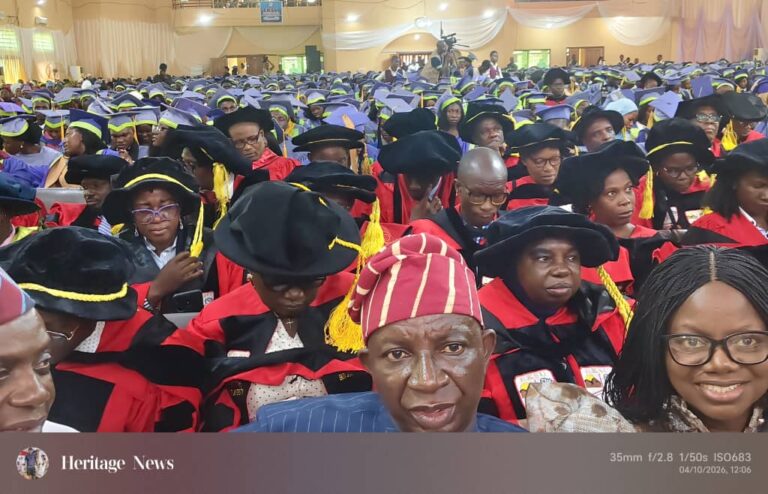


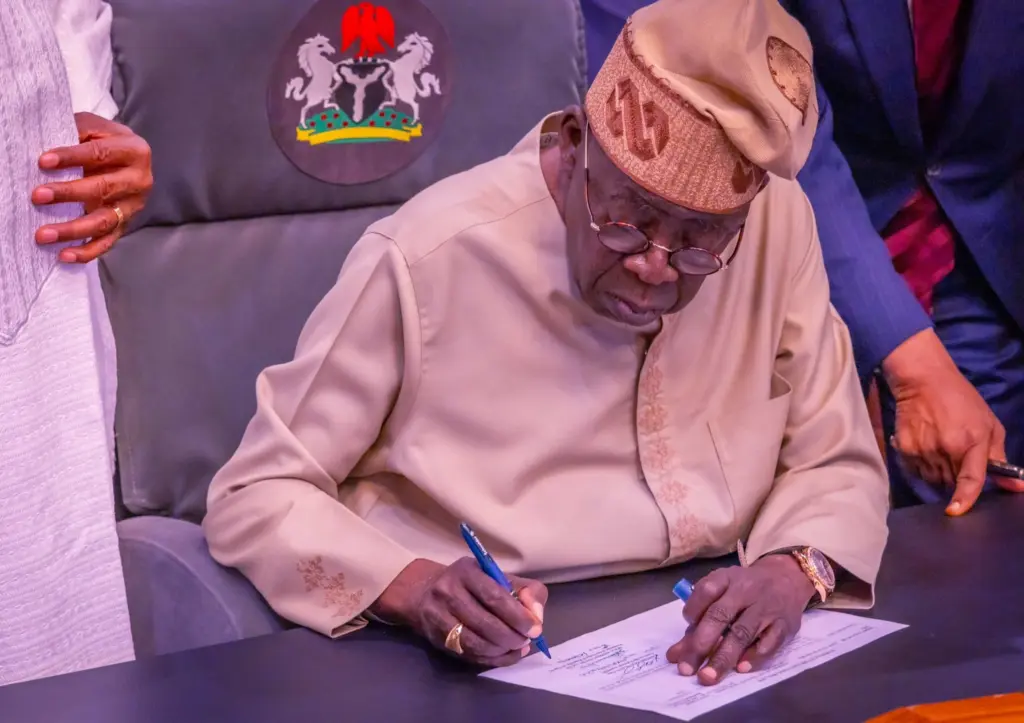
With the passage of the Amended 2022 Electoral Act and the consequent presidential assent, CHUKWU DAVID argues that Nigeria’s electoral process has suffered serious setback which would query the credibility of the next elections.
It’s evident that Nigeria’s entire political space is currently rowdy and chaotic, following the events that recently took place at the country’s highest legislative institution, the National Assembly, which repealed the 2022 Electoral Act, and enacted what is now the 2026 Electoral law, for the country’s future elections.
Nigerians are also very agitated and disappointed in President Bola Tinubu because of the expeditious attention he gave to the bill, by assenting to it in less than 24 hours after it was contentiously passed by the National Assembly. Before the 10th National Assembly ventured into this critical legislative voyage,
Nigerians had high hopes that the lawmakers, knowing the immense socio-political challenges some of the defective provisions in the 2022 Electoral document posed to the credibility of elections in the 2023 general elections, the parliamentarians, would amend the Act to strengthen the nation’s electoral process
Regrettably, people’s expectations were sacrificed and dashed on the altar of selfish and anti-people considerations, as some of the provisions made in the new electoral document further weakened the laws by creating more loopholes that give room for manipulation in the field of elections and in the court of law in events of litigations.
Accordingly, the National Assembly of the Federal Republic of Nigeria, has been in the eye of the storm in the last several weeks, as its amendments to the Electoral Act have sparked widespread controversy, with critics arguing that the changes could undermine Nigeria’s democratic process.
Central to this whole and unending controversy is the National Assembly’s rejection of a provision mandating realtime electronic transmission of election results from polling units to the Independent National Electoral Commission (INEC) Results Viewing Portal (IReV).
It’s pertinent to note that the House of Representatives, in December 2025, when it first passed the Electoral Bill, initially approved mandatory electronic transmission of election results but later reversed their decision, after obvious horse trading and lobbying from relevant stakeholders would have taken place.
This U-turn was reportedly influenced by concerns over Nigeria’s weak digital infrastructure, security vulnerabilities, and the risk of voter disenfranchisement, particularly in rural areas with unreliable internet access. Also, the Senate, in the initial report of its Ad-hoc Committee on Electoral Matters, inserted the provision in Section 60(3), to make electronic transmission mandatory, but ultimately voted to retain the existing provision allowing manual collation where the electronic system fails.
This decision has been seen as a setback for electoral reform efforts and has raised concerns about the potential for electoral manipulation. Critics argue that manual collation will undermine transparency and accountability in the electoral process, while proponents argue that it is necessary to ensure flexibility in areas with poor telecommunications infrastructure.
The Senate’s decision has also been criticized for lacking transparency and accountability, with many arguing that it will undermine the integrity of the electoral process. The controversy has sparked protests and calls for the Senate to reconsider their decision.
Speaking on the issue, Uche J. Udenka, a commentator on national issues said many national Assemblies are undermining democracy across Africa. He said: “Nigerians must insist that realtime electronic transmission of results be written clearly and unambiguously into law.
Not as an option. Not as a guideline. As a command. When elections lose credibility, courts replace voters. When courts replace voters, politics loses legitimacy. And when legitimacy disappears, instability follows. “Nigeria must resist both military coups and constitutional coups.
One arrives with guns. The other arrives with gavels. Both end the same way: in the burial of the people’s will. Democracy does not die suddenly. It dies in committee rooms. It dies in amended clauses. It dies when those entrusted to protect it choose instead to preserve themselves. This Senate must be stopped. Not for the sake of any party, but for the survival of the republic itself.”
Stakeholders’ reactions
The controversy surrounding the action of the national lawmakers on the Electoral Bill had also led to a series of protests outside the National Assembly, with civil society groups and opposition parties advocating for real-time electronic transmission to ensure transparency and credibility in the electoral process.
For instance, the Labour Party Presidential candidate in 2023, Mr. Peter Obi, and other civil society organizations, recently carried a peaceful protest to occupy the National Assembly following the Senate’s rejection of electronic transmission of election results.
In his speech during the protest, Obi described the Senate’s action as a “grave setback to Nigeria’s democratic progress,” warning that it could undermine public confidence in future elections, particularly ahead of the 2027 general elections.
Similarly, former Rivers State Governor, Rotimi Amaechi, also joined other Nigerians as protest against the Senate’s rejection of mandatory electronic transmission of election results continued at the National Assembly. Amaechi alleged that the ruling All Progressives Congress (APC) was opposed to electronic transmission of election results because it fears losing elections.
Moreover, in a recent explosive interview with the Arise TV, former Cross River State Resident Electoral Commissioner, Mike Igini, who vehemently kicked against the action of the National Assembly, urged President Bola Tinubu not to sign the amended bill, warning that it could betray the struggles of prodemocracy activists and undermine the country’s democratic progress.
Igini, who has spent over 30 years working on electoral reforms, argued that allowing manual collation as a backup creates an avenue for manipulation and will lead to chaos. He criticized the amendment for reducing the timeline for INEC to publish a notice of election from 360 days to 180 days, and for barring courts from declaring a runner-up as a winner of an election in which they scored less than 20% of the total votes cast.
Igini emphasized that real-time electronic transmission is crucial for transparency and accountability, and that the Senate’s decision will undermine public confidence in the electoral process.
The controversy has also raised questions about the role of the Supreme Court in Nigeria’s electoral process, with Igini criticizing the court’s recent ruling that declared IREV as merely a “viewing center” of no effect.
Therefore, it has become obvious that this clause is ambiguous and subject to manipulation in the law courts, a development that cropped up after the 2023 general elections when litigations were made for adjudications by dissatisfied politicians.
For instance, in October 2023, the Supreme Court of Nigeria ruled that the electronic transmission of election results was not mandatory under the Electoral Act 2022. The Court affirmed that the Independent National Electoral Commission has the legal authority and discretion to determine the specific mode for transmitting and collating election results.
IReV and Collation: The apex court clarified that the INEC Result Viewing (IReV) portal was not a collation system and was intended only for public viewing. Therefore, the court ruled that failure or unavailability of results on IReV did not invalidate an election outcome or halt the manual collation process.
Statutory Requirements: The ruling emphasized that the Electoral Act 2022 did not explicitly mandate “electronic transmission” only; rather, it allows INEC to prescribe any manner it deems fit, which may include manual or electronic methods.
Presidential Election Petition: This decision was part of the final judgment dismissing appeals by Atiku Abubakar (PDP) and Peter Obi (Labour Party), thereby affirming the victory of President Bola Ahmed Tinubu.
The controversy has also raised questions about the role of the international community in Nigeria’s electoral process, with many calling for international observers to monitor the 2027 elections. The Senate’s rejection of real-time electronic transmission has been seen as a setback for Nigeria’s efforts to join the global community of democracies, with many arguing that it will undermine the country’s credibility.
The controversy has also raised questions about the role of the media in Nigeria’s electoral process, with many arguing that the media should play a more active role in promoting transparency and accountability.
Systems analysts argue that the National Assembly’s rejection of real-time electronic transmission has been seen as a victory for politicians who want to maintain the status quo and manipulate the electoral process, rather than promoting transparency and accountability.
CSOs slam Tinubu for signing bill into Law
Civil Society Organisations (CSOs) have slammed President Bola Tinubu’s assent to the Electoral Act 2026, describing it as a “missed opportunity for transformative reform” and warning that unresolved loopholes could threaten the credibility of the 2027 general elections.
President Tinubu has expeditiously signed the contentious Bill into law, just less than 24 hours after the National Assembly passed the document, notwithstanding the controversy it has provoked in the policy. Nigerians have not stopped talking about it, as they accused him of seeking to manipulate future elections with the Act.
The coalition, which includes Centre for Media and Society (CEMESO), The Kukah Center, International Press Centre (IPC), ElectHer, Nigerian Women Trust Fund, TAF Africa, and Yiaga Africa, criticized the speed and opacity of the legislative process, arguing that it undermines public confidence in the electoral reform.
Some specific concerns raised by the CSOs include: Manual Transmission of Results: The law allows manual collation as a backup, which could lead to electoral manipulation. N50 Million Registration Fee: The fee is seen as a barrier to entry for grassroots movements and youth led parties.
Party Primaries: The restriction to direct primaries or consensus could limit flexibility and increase vote-buying risks. The CSOs are calling on INEC to publish a revised election timetable, issue comprehensive regulations, and conduct a nationwide simulation of electronic transmission.
Prominent figures like Pat Utomi and Femi Falana have also condemned the move, describing it as a “dark day for democracy” and a “coup against the Nigerian people”. Nigeria’s elections have historically been marred by allegations of ballot stuffing, voter intimidation, logistical failures, and manipulation of results. Since the early 2000s, INEC has introduced a series of technological reforms aimed at strengthening the credibility of the process.
Under former INEC Chairman Abel Guobadia, the commission established an ICT unit to modernize election administration. His successor, Maurice Iwu, deployed Direct Data Capture machines for voter registration and introduced satellite-based systems intended to improve result transmission during the 2007 general elections.
Later, during the tenure of Attahiru Jega, biometric voter registration, Permanent Voter Cards (PVCs), and Smart Card Readers were introduced to authenticate voters and reduce multiple voting. With this development, not a few Nigerians believe that Nigeria has not only suffered a major setback, but also given room for vote manipulation and rigging








