
State was hub of terrorists in N’ Central under Buhari–Soyinka
Benue State Governor, Rev. Fr. Hyacinth Alia, yesterday made a sharp detour from his earlier claim that, “there is no religious genocide in the state”, saying he ‘never denied killings in the state by bandits and terrorists’.
Alia, a Catholic Priest turned politician, had declared at a consultative forum on the protection of the rights of Internally Displaced Persons (IDPs) and Forcibly Displaced Persons (FDPs) organised by the National Human Rights Commission (NHRC), that “there is no religious genocide in the state”, countering a narrative pushed by United States government officials to declare Nigeria a Country of Particular Concern.
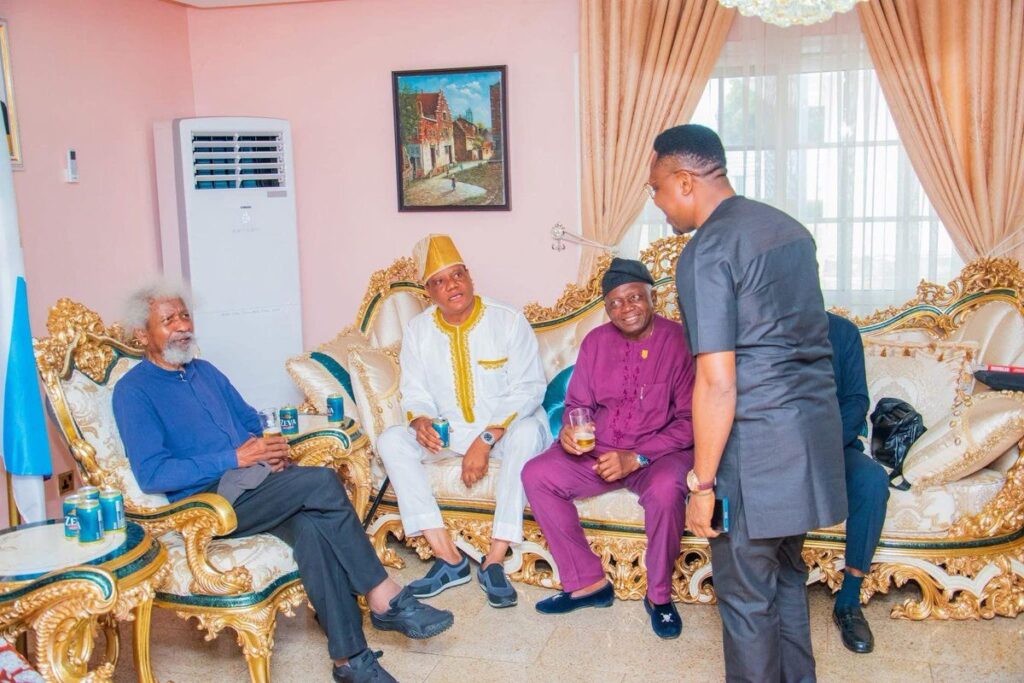
Speaking to journalists at Government House, Makurdi, after a private meeting with Nobel Laureate, Professor Wole Soyinka, Alia stated that it was important for discussions on the crisis to be grounded in accurate interpretation and global understanding.
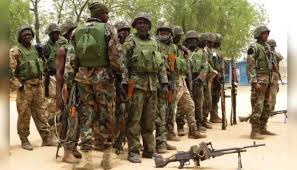
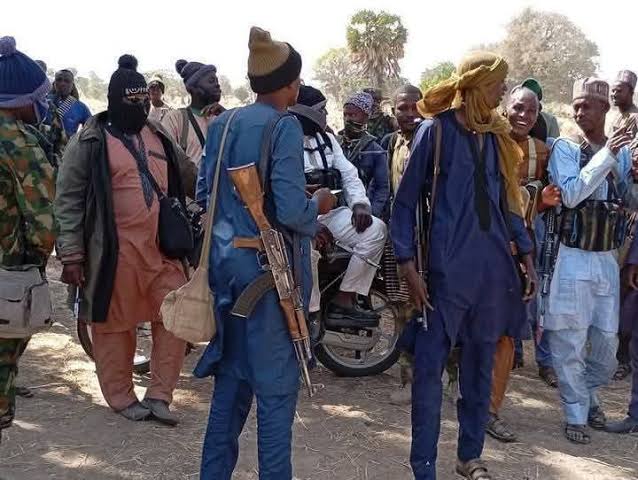
“I never, at any point, denied that my people were being killed. We have bandits and terrorists, who come fully organised to destroy, maim and kill. I have said consistently that their goal is land grabbing. This crisis did not begin as anything religious”, Alia exclaimed.
He noted that the term genocide must be understood from the historical and United Nations standpoint, cautioning that people often use the word without considering its origin, meaning, or the specific criteria required for an event to be classified as such. Governor Alia explained that his earlier statement that the attackers, “executed their plans religiously was simply an idiomatic expression meant to convey consistency, not a reference to religion”.
He accused the media of misreading the metaphor to fuel unnecessary controversy. Alia emphasised that the conflict evolved from farmer-herder clashes into full-blown banditry and terrorism, and warned against reducing the complex situation to a religious narrative.
Alia, who has received serious bashing from the Catholic Church over his genocide utterances, pointed out that victims of both faith backgrounds had suffered attacks, and that framing the violence as religious was misleading and dangerous.
He added that every life lost was, “one too many” and emphasised that the state continues to bear the emotional and humanitarian burden of people displaced from their ancestral homes. He said the presence of multiple IDP camps across Benue was a painful reminder of the scale of the attacks.
In his remarks, Soyinka cautioned Nigerian leaders against seeking assistance from foreign nations, whose interventions might worsen security challenges. He criticised the intentions of former U.S. President Donald Trump, regarding Africa and lamented that Nigerians themselves sometimes worsen national problems by downplaying or rejecting potential solutions.
Soyinka commended Governor Alia’s developmental strides and recalled that during the previous federal administration, Benue became a hub for terrorist activities in the North Central region. He said the failure of former President Mohammadu Buhari to stop the killings led him to openly challenge the administration at the time.
The Nobel Laureate also noted that during his last visit, many displaced children were out of school, prompting him to donate books.
Soyinka said part of his mission to the state this time around was to find out whether those educational materials were being used to support children in IDP camps.
The Nobel laureate later toured parts of Makurdi to inspect ongoing government projects and visited several IDP camps to sympathise with the affected communities.