
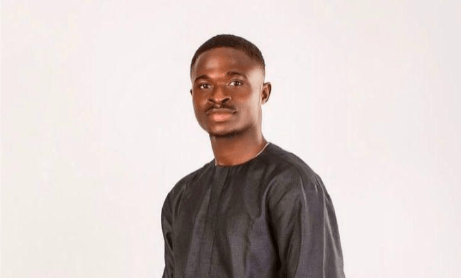
Nigerian artist and cultural advocate, Akintunde Bayo, has called for urgent strategic investment, policy reform, and stronger civic engagement to revitalise the country’s art and culture sector, describing it as one of Nigeria’s most undervalued national assets.
Bayo, whose work has featured in galleries from Lagos to London, said the nation can no longer afford to treat art as a mere luxury but as a powerful tool for economic growth, identity building, and global influence.
“Nigeria must begin to see art not as decoration, but as development — a vital pillar of national progress and global soft power,” he stated.
He noted that despite Africa’s rich cultural heritage and the global appetite for African artistic expression, the Nigerian art ecosystem remains underfunded and largely unstructured.
According to him, the sector’s revival must begin with government action, starting from policy recognition to infrastructural investment.
Bayo urged federal and state governments to integrate the creative sector into national development plans, arguing that art hubs, museums, residencies and public galleries should be treated as essential infrastructure.
He said well-funded art districts in major cities would not only empower local talent but also boost tourism and international visibility.
He also stressed the need for a complete overhaul of art education across all levels of learning.
He observed that Nigeria’s curriculum still treats art as secondary rather than foundational, saying robust programmes that combine fine art, history, business skills and digital innovation would better prepare young Nigerian creatives for global competition.
On private sector engagement, Bayo commended financial institutions such as GTBank, Access Bank and Ecobank for their investments in arts development, saying their initiatives demonstrate that corporate Nigeria has a crucial role to play in sustaining the creative economy.
He highlighted the Yemisi Shyllon Museum of Art (YSMA) at Pan-Atlantic University as a model cultural institution transforming Nigeria’s creative ecosystem.
He described the museum, which houses more than 1,000 works spanning traditional to contemporary art, as a “living classroom” and a vital space for cultural preservation, academic research and public engagement.
Beyond government and corporate support, Bayo emphasised that citizens must also become active cultural stakeholders by buying local art, attending exhibitions and encouraging creativity among younger generations.
He added that archiving and preserving cultural traditions must return to the forefront of Nigerian society.
He further noted that Nigerian art holds tremendous diplomatic value and should be used as a strategic tool in foreign policy, with embassies doubling as cultural outposts to project Nigeria’s creative excellence worldwide.
Bayo said the Nigerian art sector has resilience and abundant talent but requires vision, funding and collective commitment to reach its full potential.
He maintained that with sustained investment and cultural appreciation, African nations can reclaim their narratives and shape global artistic conversations.
According to him, art goes beyond aesthetics — it represents truth, memory, resistance and healing. He called on Nigerians to support the sector actively, insisting the world is watching and the continent must seize the moment to define its cultural future.