


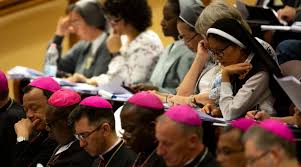
An Information, Communication Technology (ICT) expert, Mr Chinedu Chibuzor, has said that Artificial Intelligence (AI) will not replace Catholic priests in doing their pastoral duties. The ICT expert stated this at the 4th Enugu Catholic Diocesan Synod held on Sunday in Enugu with the theme “Faith and Practice in Enugu Diocese: Opportunities and Challenges”.
The News Agency of Nigeria (NAN) reports that the first and second Synods of the diocese were held in April 1984 and October 2021, respectively, while the third one was held in September 2013. The fourth Synod, which began last week with a Holy Mass celebrated by the Catholic Bishop of Enugu Diocese, His Lordship, Callistus Onaga, ended yesterday.
Chibuzor, who is the Director of ICT, Godfrey Okoye University, Enugu, added that the AI was not a threat to the Christian faith but assisted them to grow their faith. Speaking on the topic “Social Media, AI, Technology And New Evangelism,” Chibuzor urged priests to embrace AI, saying that it would help them in their research within seconds and train youth if their teachings were online.
According to him, AI can never replace priests but aid them in their pastoral work, saying that Christians’ task is to use social media and AI responsibly to help the church in the work of evangelism. The Auxiliary Bishop of Enugu Diocese, Most Rev. Ernest Obodo, added that AI would not replace priests due to the church’s Sacramental reality. The bishop said that priests, being representatives of Christ in Holy Mass and sharing of love between God and man, and others would always be physically present.
“The only exception to these was during the COVID-19 pandemic when some restrictions and conditions were given,” Obodo explained. Also speaking, Bishop Onaga said issues of Social Media, AI, Catechesis, neopaganism, youth empowerment, and others would be the top discussion for the 4th Enugu Diocesan Synod.
The clergyman, while acknowledging the blessings and accomplishments of the diocese, both human and infrastructural, since the last synod, said Christianity was faced with tremendous challenges.
According to him, the challenges cut across the modern world, where some are peculiar to the diocese and others are more prevalent in the urban parishes as well as the rural parishes. He listed the challenges to include: Catechesis, the issue of social media, AI, youth employment, neopaganism, and others.
“Social media today is a big problem, and artificial intelligence that some of us are using without knowing it is a big challenge to the issue of evangelism,” Onaga said. He explained that a synod was the gathering of members of the church to discuss concerned issues and make important decisions, while the diocesan synod deliberated on issues that belonged to the pastoral care of the people in the diocese.
Initially, it was just a gathering of bishops under the presidency of the Pope, which helped the church move in the same direction. “We thank God that we are now gathered here for the opening ceremony of the fourth synod of our diocese, centered on faith and practice, and we have enormous reason to thank God.
Twelve years have passed since the last synod in 2013, and new questions, challenges concerning our faith are bound. But that is not to say that we do not have enormous reasons to say thanks to God









