
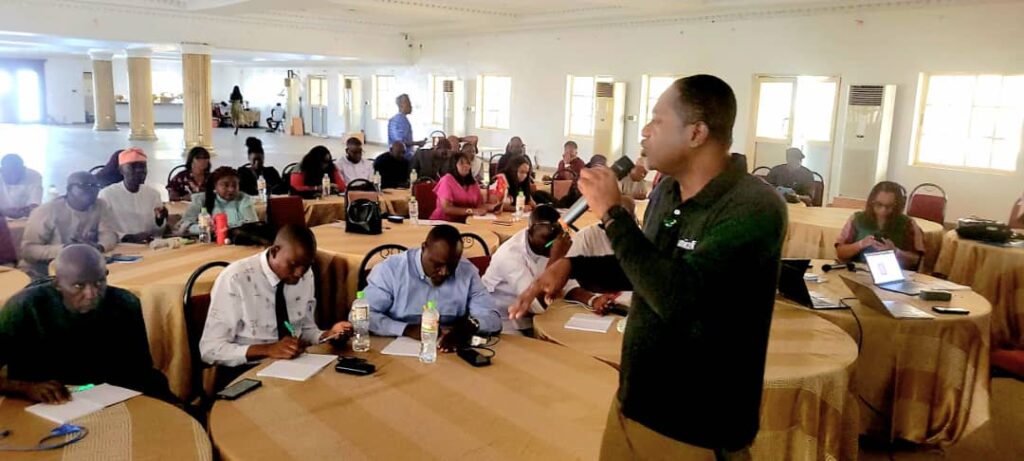
As part of the efforts to tackle the challenge of out-of-school children, Osun State Government and United Nations Children’s Fund (UNICEF) are scaling up initiatives to integrate Artificial Intelligence (AI) and digital learning and skills development into the state’s education sector.
Speaking at a two-day media dialogue on Digital Learning, Artificial Intelligence and Skills Development for Out-of-School Children organised by the Osun State Ministry of Education in collaboration with UNICEF in Ede, Osun State, on Wednesday, the Chief of UNICEF Lagos Field Office, Celine Lafoucriere, described the crisis as one of the most pressing challenges confronting Nigeria’s education sector.
Lafoucriere lamented that only one in four Nigerian children attending school could read proficiently and perform basic mathematics by the age of 14, while millions of others remained completely excluded from formal education.
She explained that about 10 million children in the country are currently out of school, a situation she said threatens their future and the nation’s development prospects.
She noted that the rapid advancement of technology, particularly artificial intelligence, was reshaping the global economy, stressing that children deprived of education risk being left behind in an increasingly digital world.
“The children who understand and can use these technologies will have opportunities. Those who cannot will be left out. Right now, out-of-school children in Nigeria are among those being left behind, and girls are often the most affected,” she said.
The Osun State Commissioner for Education, Hon. Dipo Eluwole, said that digital technology and artificial intelligence offered significant opportunities to bridge educational gaps and improve learning outcomes among vulnerable children.
Eluwole, represented by the Permanent Secretary, Ministry of Education, Muritala Jimoh, said millions of children remained excluded from education due to socio-economic, poverty, cultural, security and geographical challenges, making innovative interventions necessary.
The Commissioner said that the state government, in partnership with UNICEF and other had recorded significant progress in reducing the number of out-of-school children in the state through various intervention programmes.
He identified insecurity and migration as major factors contributing to the challenge, explaining that many of the affected children in Osun migrated from northern parts of the country due to security concerns.
He explained that the state has adopted multiple strategies, including back-to-school initiatives and collaborations with relevant agencies, to integrate such children into the education system.
Eluwole further disclosed that some beneficiaries of UNICEF-supported digital learning programmes were already using artificial intelligence and digital skills to improve their livelihoods and support their families economically.
UNICEF Nigeria Communication Officer, Blessings Ejiofor, said the engagement was organised to deepen the journalists’ understanding of the growing challenge of out-of-school children and the role of digital learning, artificial intelligence and skills development in addressing the crisis.
Ejiofor noted that the media remains a critical partner in amplifying the issues affecting out-of-school children and influencing actions that can improve their access to quality education.
She urged media practitioners to sustain advocacy, stressing that public awareness and accurate reporting are essential to tackling the out-of-school children menace.
UNICEF Communication Specialist, Harold Kpojime, expressed concern over Nigeria’s persistently high number of out-of-school children, describing the situation as one of the country’s most pressing development challenges.
He said that Nigeria accounts for one of the largest populations of out-of-school children globally, noting that one in every three children of primary school age is currently not enrolled in school.
He noted that the crisis extends beyond access, as more than one in five pupils who begin primary education never transition to secondary school, while barely half of Nigerians complete a full cycle of secondary education.