

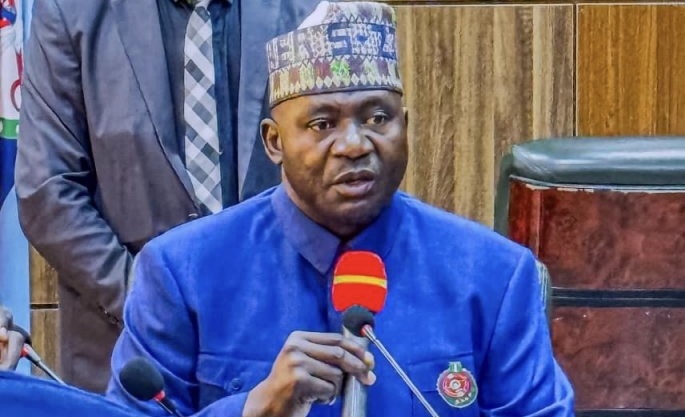
General Christopher Musa is the Minister of Defence and former Chief of Defense Staff. In this interview monitored on Arise Television, he speaks on President Bola Tinubu’s efforts to the battle insurgency and other issues, ANAYO EZUGWU reports
May 29 marked the third anniversary of Tinubu’s administration. You served as Chief of Defence Staff for the first two years of this government. Now, you are the Minister of Defence. What is the security balance sheet after three years of this administration? I think we’re on the right track. There is no country that has 100 per cent security.
There will always be issues. The most unfortunate thing is that measures that were supposed to have been taking place for a long time have not. We are addressing these issues headlong. Terrorism and terrorist attacks in the past, the way it used to be, is not as rampant as it used to be. And just like you mentioned, now we’re having issues of kidnapping more than terrorism.
And why is that so? The failure of family values, failure of law and order. Because the society has become very materialistic, people think that no matter the way and manner they make money, the society will still applaud them, and that is an ill we have to fight.
This challenge is a Nigerian challenge and all Nigerians must put hands together to fight it. The President is doing so much; he’s committed to ensuring that there is peace. The armed forces and the other security agencies are doing their best. So, we’re appealing to all Nigerians not to get discouraged.
Every country goes through such situations. Like we call it, it’s the desert of life; the ups and downs of life, nobody ever thought 20 years ago that Nigeria was going to go through this. Now, we are facing it. It’s our turn to face it. I think it’s good that we stand together, hand in hand, and defeat these enemies of the states.
How do you respond to Nigerians who say insecurity has escalated under your watch?
Like what I’m saying that Nigeria is going through its trying periods; countries go through this. It is what you make out of it that makes you better or worse. And I think we’re addressing it holistically. The armed forces and other security agencies cannot cover the entire length and breadth of Nigeria.
Nigeria has over 927 square kilometres. What they do is because they want to show that there is disorder or there is insecurity, they look for soft spots, where there are no security agencies and they want to attack or they want to kidnap. And the trajectory is this. Criminality starts when people break laws and order.
Then it gets to kidnapping. Then it gets to banditry. Then it gets to terrorism. And once you start dealing with terrorism, it now falls back towards banditry, getting back to petty crimes. This is what we’re going through. You see that we have more kidnappings now than acts of terrorism.
And what it shows is that it is going down and that we need to come together to be able to address that because the security forces cannot be everywhere. I’m sure you’re aware that even the developed countries are facing issues of kidnappings. It’s not only Nigeria. All I’m saying is that we need to come together instead of people throwing blames here and there.
The security forces are doing very well, putting in their best, considering the situation we’re in, to address this. Border security is one issue where we have to look at. And for us, we need the states to partner with the federal government. The Federal Government, I think, is doing its best. States are getting their funds as required more than they ever had.
The issue is that we need to have our local governments work because there are steps that we need to take to address these issues. Our local governments must be up and doing because crime is local. If local governments are working, they’ll be able to tackle these things within their own area before it gets to the state, before it gets to the federal. So, I think it’s a whole of society approach to security.
You’re talking about border security; you commanded Operation Hadin Kai in the North-East from 2021 to 2023. You know the terrain; you know the tactics. Why are we still seeing these midnight raids?
Border security is such that we have to be in tandem with our neighbours. You know, we have some issues with Niger. We share about 1,500 kilometres with Niger and 1,650 with Cameroon. We have some level with Benin Republic and the Atlantic Sea and with Chad. So, what the terrorists do actually is that when you attack them more, they move to the next country.
You need the other country too to also be able to block its own side of the border, so that they don’t have any safe haven. We’re working together with the two, the multinational joint task force to ensure that we address this. We have seen a level of threats coming in between Benin, Nigeria and Niger border.
We are through the multinational joint task force, so we’re establishing a new sector to address those areas, so that from Burkina Faso, they don’t penetrate to Benin into Nigeria. We want to stop it. The question is: Why do we seem to have this penetration? As Africans, we share a lot of community within ourselves, we have cultural areas. We have religious tribes that cut across border. And because asymmetric warfare is such that the enemy is usually within, it’s that person you are protecting that could be your enemy.
And that’s where it’s most difficult. In conventional warfare, the enemy is within states, so you can easily take him out. Now, it’s difficult and you know the situations we’re having. Most times, you want to conduct any attack, these guys blend within civilians and you are forced to call off the attack.
This prolongs it because we want to avoid killing innocent civilians. Again, we want to appeal to the media to understand that we are partners in progress. We’re not enemies. We have had some media houses that have taken it upon themselves to spread falsehoods. There are situations where even when there were no attacks, they report that 40 people have been killed or this has happened but only to find out nothing as such.
We must come together to understand this is our country. If Nigeria fails, if the armed forces fail, nobody will be able to even sit in any office to write any report. We must understand this. The more we support each other, the more we work together as a team, the more we succeed.
You transitioned from Chief of Defence Staff to Minister of Defence. What are you doing differently now that you couldn’t do then, and more importantly, what has changed in strategy or even execution?
As a Minister of Defence, I’m now dealing with policy making to support members of the armed forces. As the Chief of Defence Staff, I was directly involved, so I could move troops. Now, what do is that we use mission command. We tell them; we need this place to be secured. The way and manner they do it is left to them to be able to carry out. And the troops are actually doing their best considering the situation we’re in.
We want to also ensure that they get the required equipment because we need to change our equipment. We need to improve on the equipment we’re having. We don’t produce what we need and that’s one of the greatest challenges we’re having. The President has approved and signed the DICOM Bill, which enables us to partner with other countries that produce such equipment, countries like Turkey, Brazil, South Africa, Egypt and China.
We are working with them and we have started producing some of these items. Our youths have started producing the drones that we need. If we don’t produce what we need, it’s always very difficult, even with your money to get what you need to fight with.
If you were to rate this government’s performance on security from zero to 10, where, of course, 10 is complete security and zero is total collapse, what score would you give it?
I’ll give it 65 to 70 per cent because no nation is totally free from crime and criminality. I’m sure you are sure that the level of terrorism across the country has drastically reduced. Now we have acts of terrorism, and terrorism, like I said, is a social vice, failure of family values.
We have seen fathers kidnapping children, children kidnapping each other, brothers kidnapping sisters. It tells you that there’s something wrong with the family. We need to also look inward to see how we can now develop those aspects. Again, the issue of education, people should understand that to make money, they have to work very hard, not looking for shortcuts.
Most of these people taking part in these kidnappings are looking for shortcuts. Again, you can’t rule out politics because most of these people that are kidnapping are people, who don’t have anything to offer. You kidnap somebody and ask for N1 billion even when you know that the individual you kidnapped cannot offer that.
So, what are you doing, who are you expecting to pay that money? And that’s to tell you that there are some times you can look at that acts of sabotage to make the government look weak or to make the country look ungovernable or whatever. But the armed forces and security forces are working tirelessly to address those issues. And I can tell you that Nigerians are working with us and I want to appreciate them. The level of support we are getting is a lot better than what it used to be and we’re making more inroads.
You’re aware that we’re working with our partners, the Americans, the British, the French, and all lovers of Nigeria that want us to succeed. They are bringing out those platforms we don’t have and we’re working. The recent killing of a deputy commander of ISIS is a painstaking operation. It started since last year. We followed and ensured that we were sure what we’re doing.
And then when we struck, we got them just rightly. And that’s what we’re doing. It’s a very difficult operation. No country should allow asymmetric warfare to commence. Don’t allow acts of terrorism. It’s a very difficult operation. We have seen examples of other countries and how long it took them. Turkey has taken 40 years. It is now that they’re getting over it.
We’re learning from them because they have been able to develop capacity to produce drones and military equipment. Now, we’re partnering with them. We’re developing our special forces. We’re getting experiences from them. We’re working with the French, with the Brazilians. So, everybody is putting hands on deck to ensure that we achieve success.
You just made mention that terrorism has reduced in Nigeria. Can you explain to Nigerians what terrorism really means?
In the past, we hear almost on daily basis, about IEDs exploding here and there. You keep on hearing about vehicle-borne IEDs and body-borne IEDs.
You don’t hear them again. You hear them maybe once in a while and most of them are political, I can say. The last ones that happened in Maiduguri were meant to dissuade the President from visiting the United Kingdom. It was deliberate. And if you look at it, what was the intent?
The intent was to make sure that the President doesn’t go there or even if he goes there, he doesn’t have any leverage to want to speak. And to tell you that it was intentional, people deliberately planned that and conducted it just to make that point. It’s very unfortunate. But we want to appeal to Nigerians not to allow anybody to use them for whatever reason.
Your country is your country. If you allow your country to get destroyed, you’ll go to somebody’s country and you’ll be a second-class citizen. We have seen it happen. I was in Sierra Leone. We were in Liberia. We were at different places. War is not good. It’s important that we come together, address this issue and stop it.
Can you talk about Operation Safe Corridor, which has now graduated over 744 repentant terrorists, offering them vocational training, psychological support, and reintegration into the society. Is Nigeria rewarding perpetrators while abandoning its heroes?
Not at all! I told you earlier that I had the privilege of being the operation officer when I was a major in Sierra Leone and we disarmed the terrorists that were operating in Sierra Leone at that time. And one of the things I observed then was that a lot of emphasis was placed on the terrorists themselves and not the victims. So, we didn’t want to repeat the same thing here in Nigeria.
When I was in Maiduguri, international law says once your enemy surrenders, you are bound to treat him humanly. That is international law and it’s unfortunate, but that’s just the truth. Again, sometimes when we do some things, people come against us and say we are killing innocent civilians.
So, it’s always a thin line between what you do. Now, Operation Safe Corridor is a set up avenue where you take out those supposedly terrorists. Now, let me explain in detail. When we started arresting, I was the theater commander in the North-East, when the terrorists started surrendering. And what happened, we were able to take out their crossing points, their feeding, the oxygen that keeps them going.
They couldn’t get ammunition, they couldn’t get food, they couldn’t get water and they couldn’t get any fuel. So, those of them that was really tired and fed up of this, started surrendering. When they came out, what we did was that we worked together with the Borno State government. They provided the transport and the management and administration. We were able to disarm those ones that came out and what we found out that there are three categories of people.
Firstly, they were conscripted by force. What the terrorists were doing then is when they attack a village, they bring out all the male to one side and ask them to either join them orthey die. Those that joined were left. Those that didn’t join were beheaded, so those ones were forced into it.
There were different groups that were picked for one reason or the other. They were used as farmers to assist them in farming and they were using them as slaves. And then there were the real perpetrators who were the combatants. Now, we’re able to identify these three sets. Those first two sets were kept.
Those are the ones we normally send to Operation Safe Corridor for rehabilitation. The terrorists are the ones we handed over to the Attorney General of the Federation. And I’m sure you’ve heard of recent that some of them were jailed. Now, because of the legal system, it takes a long while because you have to bring proof. You have to bring exhibits that you’re going to use against them. So, the military provides camp to keep them.
Meanwhile, the Attorney General of the Federation is profiling them, taking them to court when they have cases and jailing those that were found guilty. So, I want to make that clarification because some people think that we just carry everybody, put them in and give them uniforms and give them food. So, I know that the ones that were enslaved, the ones that were conscripted and forced into it, we kept them on one side. They joined because they were deceived to believe that they were fighting for God.
Some of them were deceived because they were poor and they felt that was the only way they can survive because those guys had money to give them. They enticed them with money and promised them all sorts of things and they joined them. So, when we treat those ones and they were given some skills, they are held back into the community and I can tell you that we keep monitoring them and there is none that has really gone back.
But those perpetrators are kept on one side. Now, in Borno, the governor, I remember we had a stakeholders meeting where an individual came because we had to bring one of the representatives of the victims and I remember very clearly that he said that they killed nine of his family members, but that if forgiving them is going to bring peace, he’s ready to do it.
So, whatever you do, you still have sit down at the table. In South Africa, they had the truth and reconciliation programme. In Rwanda, they had it after all the killings. So, no matter what you do, you must have a round table where you sit down and discuss these issues. Those ones that are found guilty will face the law. That’s just the rule.
Are you saying that Nigeria is not rewarding the killers; the ones that have been found guilty of this crime?
We’re not rewarding acts of crime. It would be stupidly and foolhardy for us to do that. We can understand the sentiments. People feel aggrieved and naturally they will feel everybody that is there should be killed, but we can’t do that because the same Nigeria will come and say, we’re also killing innocent civilians.
We’re not paying terrorists salary. Those ones that were terrorists, those commanders and those ones that perpetrators are facing the law, the Attorney General is dealing with them and they’ve been jailing them for several times. I’m sure a few weeks ago some of them were also jailed.








