

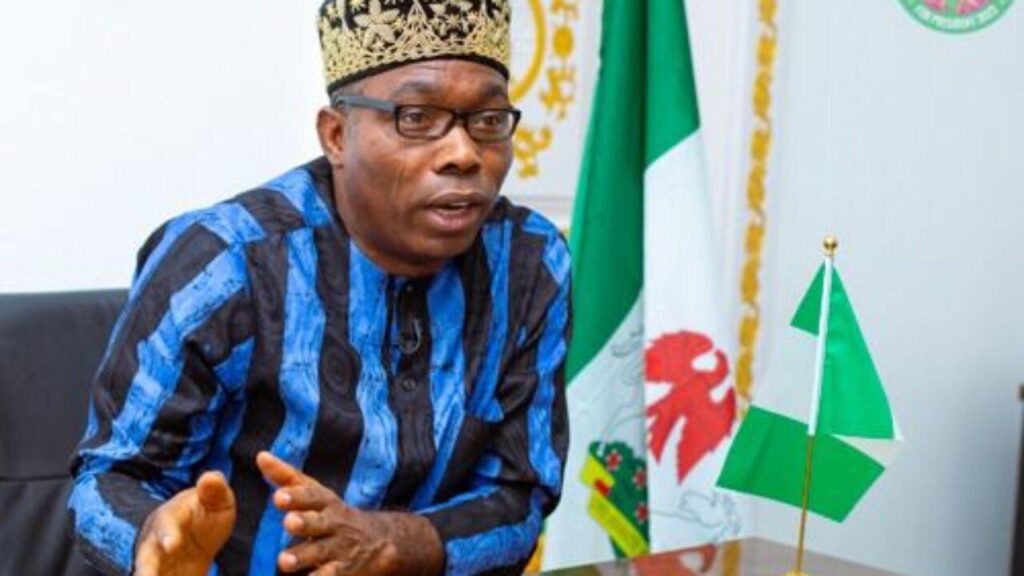
The candidate of the Social Democratic Party (SDP) in the 2027 presidential elections, Adewole Adebayo, has dismissed claims of economic progress under President Bola Tinubu, insisting that the administration’s celebrated macroeconomic gains have failed to translate into improved living conditions for ordinary Nigerians.
Speaking during a television interview marking the third anniversary of the Tinubu administration, Adebayo argued that the government’s economic performance should be judged by the realities facing citizens rather than official statistics.
According to him, only those in government can claim to be better off today, while the majority of Nigerians continue to struggle with rising living costs, declining purchasing power, unemployment and worsening poverty.
“No one’s life is better off except those who are in government. When all economic policies crystallise, they are reflected in what people pay for food, rent, transportation, healthcare and education. In all these objective indicators, no one’s life is better off than before.”
The SDP leader faulted attempts by government officials to present positive economic indicators as evidence of success, arguing that an economy that is genuinely improving would not require extensive official explanations to convince citizens.
“The economy belongs to all of us. If it is working, everybody will know it is working. Farmers, industrialists, traders, workers and consumers will feel it,” he said.
Adebayo also questioned why the ruling All Progressives Congress (APC), which has governed Nigeria since 2015, continues to attribute current economic challenges to inherited problems.
He maintained that the economic conditions inherited by Tinubu in 2023 were themselves products of eight years of APC governance, making it difficult for the party to shift responsibility elsewhere.
“The same political party and largely the same political actors produced the situation they now describe as terrible. Nigerians voted for them twice and those conditions emerged under their watch,” he said.
The Ondo Prince businessman further accused the administration of creating what he described as an “illusion of progress” through currency devaluation and heavy borrowing.
According to him, increases in government revenues and foreign reserves often cited by officials do not reflect genuine economic growth but are largely consequences of naira depreciation and debt accumulation.
“What they suffer from is what economists call the illusion of money. The devaluation of the naira creates the appearance that more money is coming in, but that money has lost purchasing power.”
He argued that the government’s macroeconomic indicators are “faulty and incorrect” because they do not correspond with the realities experienced by households and businesses.
Adebayo said the widening gap between official economic statistics and citizens’ living standards demonstrates that government policies are not producing meaningful results.
He cited rising unemployment, increasing poverty levels and declining purchasing power despite official reports of GDP growth and moderating inflation.
“The average Nigerian wants to know whether he can buy food tomorrow. That is the true test of economic policy,” he said.
The SDP leader also blamed the administration’s foreign exchange policies for worsening the financial position of state governments and businesses, arguing that projects awarded before the naira devaluation have become significantly more expensive to execute.
He noted that most state governors belong to the APC and are implementing policies aligned with those of the Federal Government, making it difficult to separate state-level outcomes from federal economic decisions.
Adebayo further criticised the government’s borrowing strategy, claiming that much of the growth recorded in Nigeria’s foreign reserves is linked to loans rather than productive economic expansion.
“They have engaged in heavy borrowing since coming into office, and a significant portion of the reserves being celebrated is already spoken for,” he said.
He also questioned the credibility of official inflation figures, arguing that they fail to capture the realities of fuel prices, transportation costs and the broader cost-of-living pressures confronting Nigerians.
The SDP stalwart maintained that until economic policies result in tangible improvements in the daily lives of citizens, claims of success by the administration would remain disconnected from reality.
“The president and the country are better served by an honest assessment of the economy than by defensive arguments that do not reflect what Nigerians are experiencing,” Adebayo said.