- Security, economic reforms headline Tinubu’s performance assessment
FELIX NWANERI examines how far President Tinubu has gone in fulfilling his campaign promises to Nigerians as his administration marks three years in office today
It is another day of stock taking for Nigerans as President Bola Tinubu marks two years in office, having been sworn-in as the country’s 16th head of state and seventh democratically elected president on May 29, 2023. The Tinubu presidency came at a time Nigeria was deeply divided after the intensely contested presidential election.
It was also at a time high level dissatisfaction and discontent in the polity as well as economic downturn compelled most Nigerians to seek for a new beginning. The quest was not out of place given the state of the nation at that time. The nation faced several existential threats such as banditry and kidnapping, farmers/herders clash, oil theft as well as agitation for selfdetermination, which portrayed Nigeria as a nation at war with herself.
Perhaps, it was against these backdrops that Tinubu promised economic reforms to tackle poverty; provision of meaningful education and jobs for the youth; new opportunities in the FINTECH sector, the creative and entertainment industries, digital skills and other areas, during the campaigns. His policy document was tagged “Renewed Hope: Action Plan for a Better Nigeria.”
On his plans for the economy, Tinubu said he will engage the private sector to drive economic development across the country. He expressed the belief that the private sector, being the fulcrum of economic progress, must be energised as fundamental flaws impede it from playing the role it ought to. His words: “My belief that the private sector is the fulcrum of economic progress is evident and documented.
However, fundamental flaws with the basic design of our national economy imperil the private sector from playing the role it ought to and adding the value it is capable of. In this instance, the government must act as a catalyst. “We shall do this on all fronts. We will address the conflict between monetary and fiscal policies. Budgeting will be based on the projected spending levels needed to push real annual growth rate above seven percent, while reducing the unemployment rate, so that we can double the economy in 10 years.”
On agriculture, he said his administration will place emphasis on the use of technology to improve the agricultural sector for better production and contribution to the nation’s economy. He, therefore, assured Nigerians that roads, rail, access to ports, and storage infrastructure would be prioritised to radically transform the agriculture sector and increase its value to the nation. He also promised to address problems associated with petroleum sector.
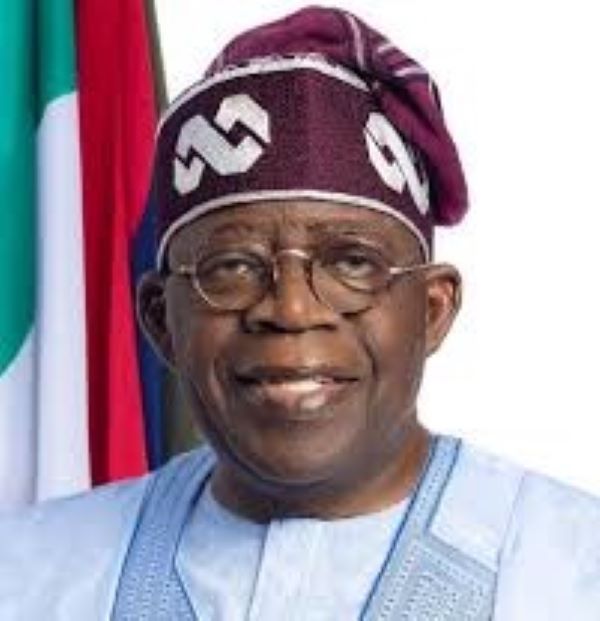
President Tinubu has changed the landscape of the country and renewed hope among the people
He, particularly, described Federal Government’s fixing of petrol price as a broken model. “The Federal Government as regulator and operator and price fixer is a broken model and one that we fully intend to fix. “We have privatised power distribution in Nigeria and generation to a certain degree. What we need to do, going forward is to improve the enabling environment and further reform the legal and regulatory framework to attract more private investments in the sector as we have experienced in the telecom industry,” he said.
On power, he said his administration will be committed to energy sufficiency through reforms. He also pledged that his administration will provide student loans and reform the Almajiri system in the northern part of the country as well as recruit and train more teachers as a way of boosting education. He also gave a clue on how he intends to tackle the country’s security challenges.
“I am convinced, as I am sure most of us are that the broad principles that enabled successive Nigerian governments to interface development and security, and establish an organic link between national security and economic development with regional peace and prosperity, is both impeccable and remains relevant. It is an approach which I commit myself to upholding and advancing,” he explained.
At his inauguration on May 29, 2023, President Tinubu reiterated his readiness to lead Africa’s most populous nation, when he declared: “Our administration shall govern on your behalf but never rule over you. We shall consult and dialogue but never dictate. We shall reach out to all but never put down a single person for holding views contrary to our own. We are here to further mend and heal this nation, not tear and injure it.”
However, three years down the line, Nigerians are still expecting the gains of the Tinubu’s Renewed Hope agenda despite claims that his administration’s “bold reforms” have started yielding positive results. While some analysts are of the view that the Tinubu administration has taken bold steps in implementing tough economic policies, there is no doubt that most Nigerian are yet to feel their impact.
They argued that the timing and manner in which the government initiated and implemented some of its economic policies, was not strategic, which according to them, explains the hardship Nigerians continue to face since then. Recall that President Tinubu announced the removal of fuel subsidy in his inauguration speech but many argued that he ought to have made wide consultations across board and come up with workable strategies to cushion the harsh economic effects of the removal before the pronouncement.
Security challenges persist despite new measures
There is no doubt that government’s inability to come up with sustainable strategies to confront rising insecurity and violence across the country has continued to pose a big threat to Nigeria’s development. From the Boko Haram insurgency ravaging the North-East geopolitical zone to banditry and kidnapping in the North-West; farmers/herders clash in the North Central; militancy cum oil theft in the South-South and agitation for self-determination in the South-East, the picture about Nigeria is a nation at war with herself.
While these security threats dates back to previous administrations, seemingly emboldened criminal elements have upscale their attacks on citizens under the present government. The states that are worst hit in the renewed killings are Plateau and Benue. North Central states of Kwara, Kogi and Niger are also not left out. The terrorists groups have also advanced down South given the recent development in Oyo State, where students and their teachers were not only kidnapped but one the teachers beheaded and another shot dead.
The killings and kidnappings are despite President Tinubu’s promise in his inaugural speech to “defend the nation from terror and all forms of criminality that threaten the peace and stability of our country” and effectively tackle the menace by reforming the nation’s security doctrine and architecture as well as huge budgetary allocation to the defence sector. Nigeria allocated N5.41 trillion for the combined defence and security sector in the 2026 federal budget. Out of this, N3.15 trillion is specifically dedicated to the Ministry of Defence to fund military personnel, capital projects, and operations.
Unfortunately, this has not translated to better results given resurgence of insurgency in the NorthEast, banditry, kidnapping and emergence of new terror groups in the North-West and North Central, while Nigerians continue to live in fear. However, the cheering news is of late, is that the partnership between Nigeria and the United States in the war against terrorism is gradually yielding positive results. A senior ISWAP leader and ISIS global secondin-command, Abu-Bilal al-Minuki, was killed on May 16, during a joint precision assault conducted by Nigerian and U.S. forces in the Lake Chad Basin.
The operation, which also eliminated over 40 of al-Minuki lieutenants, serves as a massive blow to insurgent operations in sub-Saharan Africa. The joint US-Nigeria offensive against ISIS/ISWAP in the North-East Nigeria has also led to elimination of 175 militants in one month. Also, the Defence Headquarters recently announced that across all six military theatres, troop operations neutralized 317 terrorists, arrested 314 suspects, and rescued 221 kidnapped civilians within the period under review.
While officials of the government, are celebrating this feat, there are indications that terror war is far from over as the United States Commission on International Religious Freedom has alleged that about 30,000 armed militants are operating across Nigeria. The May 2026 report, titled “Nonstate Violators of Religious Freedom in Nigeria: Fulani Militants,” stated that the militants, operating in groups ranging from 10 to 1,000 members, have become some of the deadliest non-state actors driving religious freedom violations in Nigeria.
According to the report, attacks carried out by the armed actors intensified insecurity across the Middle Belt and Southern regions, leaving thousands dead, displacing communities, and deepening tensions between religious groups. “Violence by militants caused the highest number of deaths among all religious communities in Nigeria over the last year as compared to attacks by organised insurgent groups and criminal gangs,” the report stated.
The commission said many of the attacks were directed at Christian communities, though Muslim communities had also suffered raids, killings, and kidnappings. The report also detailed several attacks carried out in 2025 and early 2026, including mass killings in Benue and Plateau states.
Bold economic reforms, minimal impact
On the economy, the government’s position is that its reforms in all sectors are already yielding positive and viable results which are becoming noticeable to Nigerian people. President Tinubu had shortly after his after his inauguration, introduced bold and ambitious economic reforms, including foreign exchange unification, tax reforms, financial autonomy to the government governments and aggressive non-oil revenue generation among others, all with the aim of resetting the country’s economy.
While the opposition political parties believe that these reforms have driven more Nigerians to poverty, government on its part, insist that they have started yielding the desired results, citing a major boost in revenue generation, with the three tiers of government now having more funds at their disposal for developmental purposes.
The government also referenced increased confidence in the economy by both foreign and domestic investors showing willingness to do business in Nigeria, the Students Loans Scheme and the appreciation of the naira in the foreign exchange market.
Among landmark developments include N2.5 trillion invested in road infrastructure in 2025, the highest in the country’s history; creation of new ministries for regional development and livestock, to accelerate regional economic growth and unlock billions in agricultural opportunities; earmarking of N200 billion for economic assistance to small scale businesses; direct investment of over $450 million in Compressed Natural Gas (CNG) infrastructure under the Presidential CNG Initiative and establishment of CreditCorp, allowing Nigerians to access credit for housing, healthcare, and other essential needs, among other milestones.
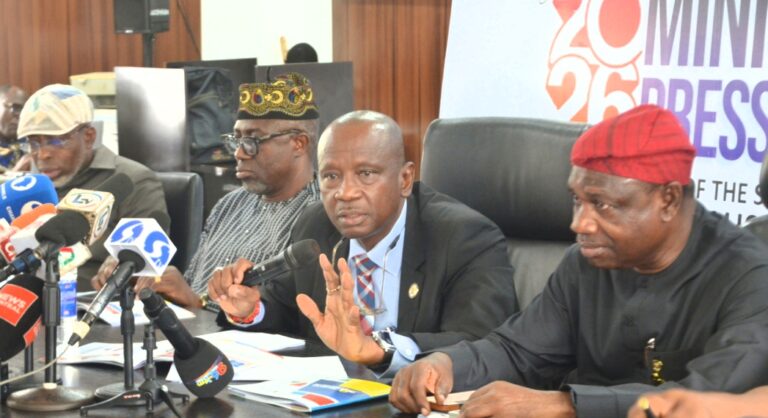
Special Adviser to the President on Information and Strategy, Bayo Onanuga, who spoke on the President scorecard, while briefing journalists before a recent media tour of government projects, noted that what the Tinubu administration has achieved demonstrates its seriousness and commitment to transforming the country. He noted that ongoing government’s projects, which cut across all sectors of the economy and are spread across the federation, once unveiled, will prove to Nigerians, the extent of the administration’s impact.
“By the time these projects are presented to Nigerians, it will be evident that President Tinubu has changed the landscape of the country and renewed hope among the people,” he said. While the President’s spokesperson believes that growth is being recorded because of deliberate policy interventions, analysts faulted government’s assumption that its policies are working without hearing from the people.
According to the analysts, the standard yardstick to measure the performance of any economy is the wellbeing of the people and not in the sheer size of taxes levied and revenue the government generates. It was further argued that despite rebasing inflation to achieve significant drop in numbers, prices have never really gone down, while transportation and electricity costs remain troubling.
A joint report by the World Bank and the National Bureau of Statistics (NBS), which supports this concern, estimates that more than 129 million Nigerians – over half of the country’s population – presently live below the national poverty line, a steep rise from 104 million in 2023. Experts link this surge to the combined pressures of subsidy removal, soaring inflation and stagnation in the job market. Sadly, a review of the National Minimum Wage in 2024, which saw a significant increase from N30,000 to N70,000, following demands from labour unions and the Renewed Hope Conditional Cash Transfer Scheme aimed to distribute N75,000 each to 15 million households over three months, have not achieved much amid deepening economic distress.
Still wait for promised restructuring
Eyes are still on President Tinubu to fulfill his campaign promise of restructuring Nigeria through devolution of power to the states in order to pave the way for genuine development and growth. Tinubu, had while sharing his perspective on restructuring during the campaign, said that devolution of power to the component units of the country will pave the way for genuine development and growth.
“We can’t flourish with the over concentration of power in the centre. Some of the 68 items on the Exclusive Legislative List should be transferred to a Residual List as it was in most of our several constitutions,” he said. He premised his argument on the 1963 Constitution that conceded extensive powers to the regions because of their closeness to the people, a development, he said, enabled them to carry out immense responsibility as they deemed.
He also noted that items such police, prisons, stamp duties, taxation, regulation of tourist traffic, registration of businesses, incorporation of business and companies, censors and traffic on federal trunk road passing through states, among others, that were transferred from the Concurrent to the Exclusive List, should be treated as state matters. His words then: “Our system remains too centralized with too much power and money remaining within the federal might. This imbalance leads to relative state weakness. We need to overhaul how revenues are allocated between the states and the Federal Government.
I must state what for many of us may seem a novel idea. But this concept is one that has directed the fiscal policies of other nations for several decades. “If we are to catch these other nations in development, it is a prerequisite that we match them in the efficiency of governmental fiscal roles and operations regarding the national government and our subnational political units.”
However, brilliant as the President sounded then, many started doubting his commitment to restructuring, when he was quoted to have told the National Leader of Afenifere, Pa Reuben Fasoranti, during a visit that certain structures need to be put in place before that could be done. Those who expressed the doubt, said while the President should be commended for speaking up on the contentious issue of restructuring on assumption of office, it may be likely a calculated political gambit to buy time.
They further argued that the President’s position that the economy should be fixed before restructuring, amounts to putting the cart before the horse because there can hardly be any socio-economic advancement if the nation’s faulty structure is not addressed. A chieftain of Ohanaeze Ndigbo, Chief Chekwas Okorie, who spoke on the issue in an interview with New Telegraph, said a lot is expected from President Tinubu, being a wellknown champion of true federalism. His words: “I have always insisted that except Nigeria is restructured in such a manner that every federating unit is given the latitude to develop at its own pace, no president, no matter how well his intentions are, will succeed because Nigeria is structured to retrogress.
So, it needs to be restructured. “The president we have now, at one time, was one of the champions of true federalism. All of us were in the trenches at that time, so I expect him to beyond anything he is doing, give us a Nigeria that is restructured to develop. All the talks about oil theft and illegal mining of our solid minerals will be a thing of the past if Nigeria is restructured and every federating unit is allowed to control its resources and contribute to the national coffers as obtained during the First Republic, when allocation was 50 per cent by derivation.
Violence by militants caused the highest number of deaths among all religious communities in Nigeria over the last year as compared to attacks by organised insurgent groups and criminal gangs
“I believe that President Tinubu understands how transient power is and that his name would be written in gold as someone, who laid the foundation for Nigeria to achieve nationhood and exponential growth if his administration restructures Nigeria.”
No doubt restructuring of Nigeria is not something that could be done by presidential fiat, but there is no disputing the fact that President Tinubu deserves commendation for initiating the process that granted financial autonomy to s country’s 774 local government areas, following the judgement of the Supreme Court, which ordered that funds from the Federation Account in the credit of the councils must be paid directly to their respective bank accounts.
In the unanimous judgement of the seven-man panel of Justices, the Supreme Court agreed with the Attorney General of the Federation and Minister of Justice, Lateef Fagbemi, that the Constitution of the Federal Republic of Nigeria recognised local governments as the third tier of government and therefore barred governors from directly or indirectly receiving, tampering or withholding funds meant for the local governments. The apex court also barred governors from dissolving democratically elected officials of local governments.
It is also kudos for President Tinubu for his commitment towards establishment of state police aimed at complementing the Nigeria Police to ensure better security for citizens’ lives and property, which some analysts describe as a major step towards restructuring of the country., However, hile the Tinubu administration insists that it has made appreciable progress despite the initial hardship over its reforms, it should be reminded that the deterioration of any government begins with the decay of the principle on which it was founded.